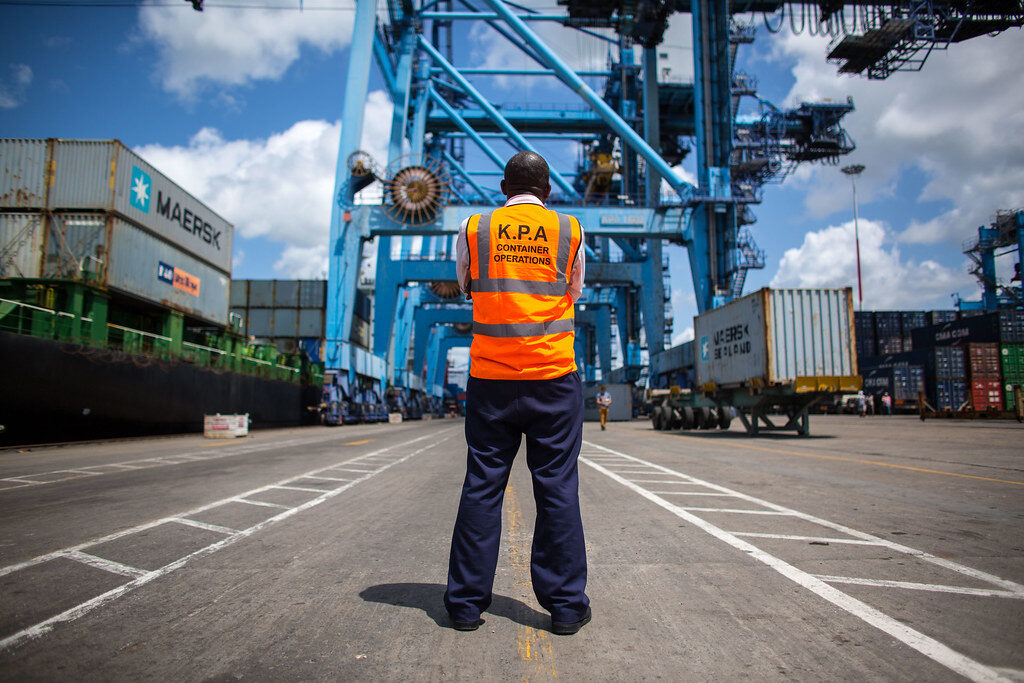
IN SHORT: Kenya’s Lamu port received 74 vessels in the first two and a half months of 2026, approximately one-third of all vessel calls since it opened in 2021, compressed into ten weeks as global shipping companies reroute around Africa. Mombasa container dwell times have been cut to 4.5 days. Dar es Salaam cargo turnaround has fallen from 30 days to 36-48 hours after a DP World upgrade. Tanger Med handled 11 million containers in 2025, up 8.4%. Kenya and Tanzania are competing intensely for landlocked DRC, Rwanda, Uganda and Burundi freight corridors, with both governments accelerating infrastructure investment to lock in their positions as the world’s shipping lanes are permanently redrawn.
Africa’s ports are not just handling more cargo. They are being tested for whether they can absorb the permanent rerouting of global trade that the Hormuz closure and Red Sea insecurity have forced, and those that have invested in technology, efficiency and connectivity over the past five years are passing that test while those that have not are watching the vessels queue.
The transformation of East African ports from peripheral logistics nodes into strategic global trade gateways has been compressed into months rather than decades by the combination of Hormuz and Red Sea disruptions that have together made the Cape of Good Hope route the world’s default shipping corridor.
- Lamu’s surge is the most dramatic single data point in African port history. The port received just two container ships in the entire first quarter of 2025. In the first two and a half months of 2026, it received 74 vessels, representing approximately a third of all vessel calls since its 2021 opening in a ten-week window. Kenya Ports Authority Managing Director Capt. William Ruto confirmed the shift: “We are experiencing a lot of traffic, more so transshipment, in Lamu and Mombasa.” With only three of its planned 32 berths currently operational, Lamu is absorbing this surge on infrastructure that was never designed to handle it at this scale, making the case for accelerated completion of its remaining berths economically urgent. The AfDB’s $239 million commitment to complete the Mombasa-Kampala-Kigali road network, targeting a reduction in transit times from 7-10 days to 5-6 days, directly strengthens Lamu’s corridor value proposition.
- Dar es Salaam’s transformation from one of East Africa’s most congested and inefficient ports into a competitive transshipment hub is the result of a deliberate digital overhaul. The Tanzania Ports Authority deployed the Tanzania Electronic Single Window System, an AI-powered platform that consolidates documentation across customs, shipping agents and port operators into a single interface. A parallel upgrade of the Tanzania Customs Integrated System to its fifth generation added real-time risk assessment and automated clearance for low-risk cargo. The DP World partnership that followed brought container vessel waiting times from as long as 30 days to near-zero, with cargo turnaround now consistently 36-48 hours. The AfDB’s $696 million partial credit guarantee for the Central Corridor SGR connecting Tanzania to Burundi and the DRC adds the rail component to a port that now has the digital infrastructure to move cargo efficiently.
- The competition between Kenya and Tanzania for landlocked market share is intensifying as both recognise that the Hormuz window represents a once-in-a-generation opportunity to establish lasting routing relationships with global carriers. The DRC accounts for 11.8% of transit cargo through Mombasa and more than 42% of Dar es Salaam’s Central Corridor volumes since 2020. Uganda, Rwanda and Burundi route primarily through Mombasa’s Northern Corridor. The carrier that establishes deep operational relationships with these port systems during the current surge is unlikely to switch back to Middle East routing even after Hormuz reopens.
- South Africa’s bunkering role adds a different commercial dimension to the Cape route’s Africa economics. Ships transiting from Asia to Europe via the Cape of Good Hope require refuelling stops, and Durban, Cape Town and Port Elizabeth are providing bunkering services, anchorages and ship-to-ship transfer facilities at volumes not recorded since before the Suez Canal era. The additional commercial activity is a direct revenue stream for South African port operators and a capital investment trigger: facilities that were adequate for pre-rerouting volumes need expansion to serve the post-rerouting baseline.
- Egypt’s $7 billion Suez Canal toll revenue loss in 2024 represents the inverse of Africa’s port gain. Every container that travels through Tanger Med rather than the Suez Canal, every tanker that refuels in Durban rather than transiting the Red Sea, is a transaction that the Egyptian state is not collecting toll revenue on. The Egyptian government has been managing its IMF programme with reduced canal revenues as a permanent fixture of its fiscal planning. If the Hormuz closure extends through October as the IEA has projected, 2026’s Suez Canal revenue loss will exceed 2024’s.
- The UN Conference on Trade and Development cautioned that Mombasa and Dar es Salaam still lack the operational depth to absorb large volumes of major container vessels. Ship draught limitations, berth availability and yard capacity remain constraints. UNCTAD’s assessment is accurate but misses the directional point: both ports are upgrading, accelerating and investing at a pace that would not have been possible without the commercial urgency that the Hormuz crisis has created. The crisis is the forcing mechanism that African port investment has needed for a decade.
Shipping analysts assessed in late March that routine Hormuz transit is unlikely to resume for the remainder of 2026. IEA confirmed this week that the global oil market could remain materially undersupplied through October even if Hormuz reopens next month. Both assessments point to at least five more months of Africa-routed global shipping at current volumes.
The Bigger Picture: East Africa has now absorbed two consecutive global shipping crises, the Red Sea disruption since late 2023 and the Hormuz closure since March 2026, and each has left its port infrastructure better capitalised, more technologically capable and more deeply integrated into the routing decisions of the world’s major carriers. The ports that existed before these crises as secondary facilities serving primarily regional trade have been transformed by necessity into global logistics infrastructure. Whether they use the crisis window to complete the investment in berths, equipment, digital systems and connectivity that would make that transformation permanent is the defining infrastructure question for East Africa’s economy in the next five years.
Source: Energy Capital Power / InonAfrica / Kenya Ports Authority / Tanzania Ports Authority, May 2026