
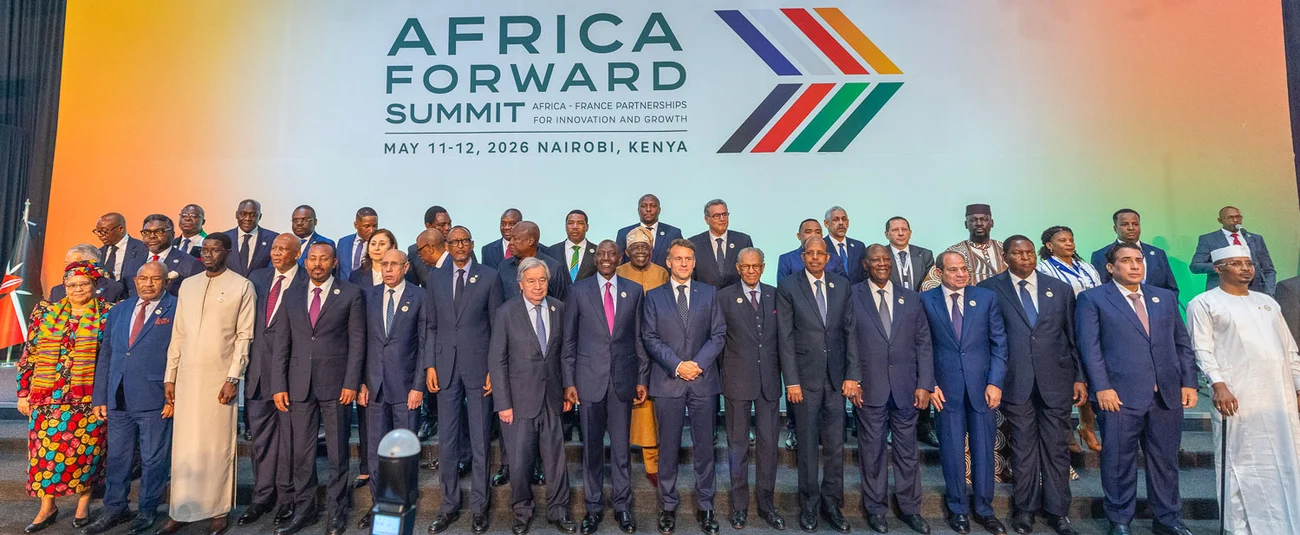
IN SHORT: Forty companies announced plans to invest approximately $31.5 billion across 30 projects in Africa at the Africa Forward Summit in Nairobi on May 11-12, in what organisers described as the largest private sector investment commitment package in the history of France-Africa relations. Energy attracted the largest share at $16.3 billion. TotalEnergies committed more than $10 billion in new African investments by 2030. CMA CGM committed $700 million to modernise the Mombasa port terminal. EDF confirmed plans for 2 gigawatts of hydropower capacity across multiple African countries. The 40 companies projected the investments would generate a combined $116.5 billion in revenue and employ more than 600,000 people across the continent.
The Africa Forward Summit did not just produce a political declaration. It produced the most commercially specific package of private sector investment commitments Africa has received from European companies in a single event, with individual companies putting dollar amounts, project names and country locations on the table in a format designed to be tracked and held accountable at the G7 in Evian on June 15-17.
The commitments were announced during a closed-door CEO forum held alongside the main summit, attended by French President Macron, Kenyan President Ruto and leaders from more than 30 African countries. Executives from TotalEnergies, CMA CGM, EDF, Kenya Airways, Rubis Energy, Meridiam, Global Telecom Holding, AXIAN Group and Schneider Electric were among those making specific commercial commitments.
- TotalEnergies committed more than $10 billion in new African investments by 2030, the largest single-company commitment at the summit. The total includes $2 billion for renewable power projects in Rwanda and $400 million for clean cooking initiatives across Kenya, Uganda and Tanzania. TotalEnergies is also co-developing the 1.5-gigawatt Mphanda Nkuwa hydropower project in Mozambique alongside EDF, one of the largest infrastructure investments under active development in sub-Saharan Africa. The company’s African renewable commitment signals a strategic pivot from its historically hydrocarbon-dominant African portfolio toward lower-carbon industrial infrastructure, driven partly by the European clean energy mandate and partly by African governments’ explicit demand for industrial rather than extraction investment.
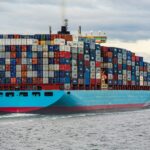
- CMA CGM’s $700 million commitment to modernise the Mombasa terminal is the most commercially consequential single deal for East African trade logistics. The French shipping giant, which is the world’s third-largest container carrier, is not making a development finance gesture. It is investing in infrastructure it will use operationally as it routes an increasing share of its global fleet through East African waters in response to the Hormuz closure. The investment will enable Mombasa to accommodate next-generation container ships using energy-saving smart port systems, adding capacity at precisely the moment when Hormuz rerouting has maximised demand for East African transshipment.
- EDF confirmed plans for 2 gigawatts of hydropower capacity across several African countries. This adds to its existing Mphanda Nkuwa involvement and other African hydropower projects in Cameroon and Malawi. The 2-gigawatt commitment is structurally significant: it represents base-load renewable generation at a scale that can anchor industrial development rather than simply connecting households to the grid. Africa’s industrial growth bottleneck is reliable large-scale power, not household electrification, and EDF’s focus on hydropower at scale addresses the right constraint.
- Kenya Airways and Rubis Energy signed an agreement to jointly develop Africa’s first sustainable aviation fuel production facility in Kenya. If implemented, the facility would make Kenya the first African country to produce SAF domestically, creating a commercial supply chain that could serve East Africa’s fast-growing aviation sector and reduce reliance on imported aviation fuel. The Hormuz crisis has demonstrated how expensive imported aviation fuel becomes when global supply chains are disrupted; domestic SAF production addresses that vulnerability structurally.
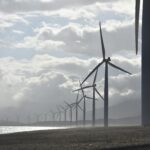
- Meridiam committed $200 million to double the capacity of Kenya’s Kipeto wind farm from 100MW to 200MW. Global Telecom Holding pledged $350 million for a 250MW solar farm in Zambia. AXIAN Group committed $280 million to co-develop digital and energy infrastructure across multiple African markets. Schneider Electric pledged $20 million to its GAIA Energy Impact Fund II, which invests in African clean-tech startups. A $1.7 billion pipeline network in Ivory Coast was also announced, one of the largest single infrastructure commitments in West Africa’s energy sector this year.
- The broader context is France’s strategic repositioning in Africa after losing influence in Francophone West Africa, where military governments in Mali, Burkina Faso, Niger and Guinea have expelled French forces and reduced commercial ties. By hosting the summit in Kenya, an English-speaking country with no historical French colonial relationship, Macron demonstrated an intent to build pan-African commercial relationships rather than reinforce Francophone ties. Whether the $31.5 billion in commitments translates into disbursed capital and operational projects will be the test of whether that repositioning is substantive or performative.
Ruto at the summit: “Africa has a historic opportunity to not only participate in the global energy transition but to help lead it. For Africa, this energy transition must also be an industrial transition.” The framing reflects the consistent African demand throughout the summit: investment in manufacturing and industrial capacity, not just resource extraction and generation assets.
The Bigger Picture: Forty companies committing $31.5 billion is a large number. The question that African finance ministers, development economists and institutional investors will ask over the next 12-18 months is how much of that $31.5 billion reaches financial close, breaks ground and employs workers. Summit investment pledges have a long history of failing to translate into operating assets: the gap between announced commitments and disbursed capital is Africa’s most persistent development finance problem. The Africa Forward Summit’s accountability architecture, with its G7 Evian follow-through mechanism and its specific project-by-project structure, is better designed than most. Whether TotalEnergies’s $10 billion, EDF’s 2 gigawatts and CMA CGM’s $700 million are in the ground by 2028 will tell us whether this summit was different or whether it was another high-quality press release.
Source: Mongabay News / Mongabay News / Washington Post / CNBC Africa, May 12-16, 2026