
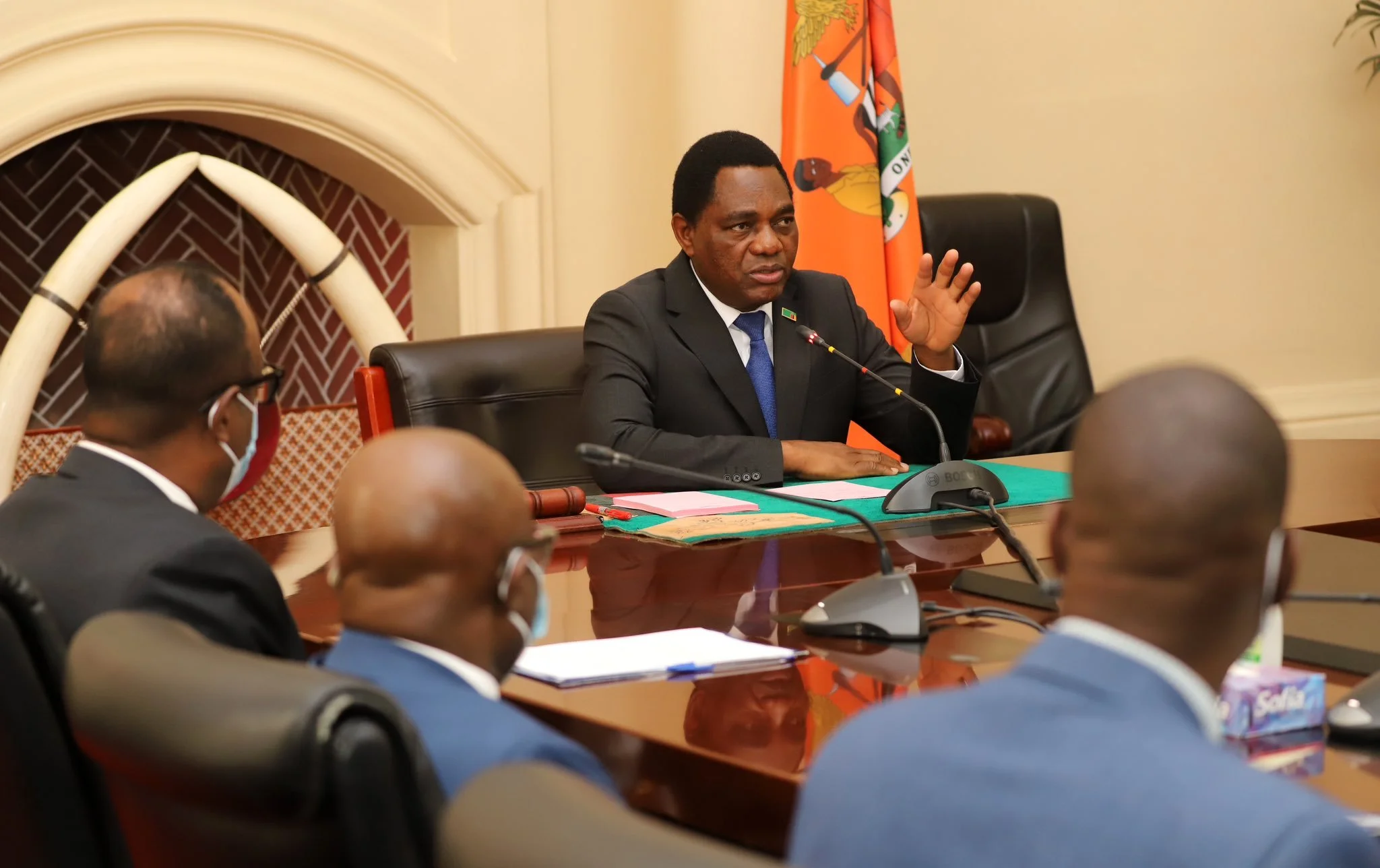
Zambia has refused to sign a $1 billion US health funding deal after revised drafts included a clause linking the aid to mining sector cooperation and a controversial 10-year data-sharing agreement. The decision puts Zambia alongside Zimbabwe and Kenya as African countries pushing back against conditions they say compromise national sovereignty.
Key Points
- The deal would have funded HIV, malaria, maternal health and disease outbreak programmes over five years. Zambia would also be required to contribute $340 million in co-financing under the same agreement.
- A draft reviewed by Reuters reveals the funding will be cancelled if Zambia and the US fail to agree by April 1 on a separate “bilateral compact” proposed by Secretary of State Rubio to President Hichilema in November 2025. Three sources confirmed that compact is tied to mining collaboration.
- Zambia’s Ministry of Health publicly denied the deal has any mining link, but said a problematic section “did not align with the position and interests of the government” and requested revisions.
- Health advocates warn that the data-sharing clause is one-way: Zambia sends health data to the US for 10 years with no clear benefit-sharing mechanism in return. One NGO officer described it as information that “will benefit the US.”
- Zimbabwe pulled out of a similar $367 million deal the same day, citing data sovereignty concerns. Kenya’s $1.6 billion deal is suspended pending a court case. Nigeria and Uganda have signed.
- At least 16 African countries have signed versions of the deal, part of a broader restructuring of US global health funding under President Trump’s “America First” strategy following the dismantling of USAID.
Context
Zambia is Africa’s second-largest copper producer and holds significant reserves of cobalt, nickel, manganese, graphite, lithium and rare-earth elements. In December 2025, the US publicly confirmed it was offering Zambia a “substantial grant package” in exchange for “collaboration in the mining sector and clear business sector reforms,” making the link between health aid and mineral access explicit on the American side even as Zambia denied it. The deal was originally due to be signed in November 2025 but stalled after new sections were inserted into revised drafts.
Why It Matters
This is not an isolated bilateral dispute. It is part of a continent-wide pattern in which the Trump administration is using health funding, one of the most critical levers of US soft power in Africa, as leverage to secure strategic mineral access and health data. For Zambia, where US-backed programmes serve hundreds of thousands of people living with HIV, the stakes of walking away are real. Africa CDC Director-General Dr. Jean Kaseya has backed countries pushing back, stating that Africa must own its own data and its own future. The April 1 deadline makes this an urgent decision with consequences on both sides.
Source: The East African