
Uganda sits on copper, cobalt and rare earth minerals at the precise moment the global economy is most desperate for them. Electric vehicles require four times more copper than combustion engines. Every AI data centre being built across the United States, Europe and the Gulf is consuming thousands of tonnes of it. Global copper demand is projected to face a supply deficit of up to 30 percent by 2035. And deep in the Rwenzori foothills, Kilembe Mines sits largely quiet, waiting. The question Uganda must answer before that window closes is the same one every resource-rich African nation has faced and mostly failed: will you build wealth from what is in your ground, or simply ship the ground away?
The story of copper in the 21st century mirrors what oil was in the 20th, with one crucial difference. Oil was consumed continuously: every engine that ran required a fresh supply. Critical minerals, including copper, cobalt, lithium and rare earths, power a construction boom. Once the wind turbines are up, the solar farms are wired, the electric vehicle fleets are on the road and the AI data centres are running, demand for new material plateaus. Analysts believe global demand for some critical metals could peak within two to three decades. For Uganda, that means the window to convert geology into lasting industrial capacity is real but finite.
The numbers driving that urgency are significant. The world consumed approximately 28.6 million tonnes of refined copper in 2024. An electric vehicle uses roughly four times more copper than a conventional car. A single 100-megawatt AI campus absorbs several thousand tonnes before accounting for the grid infrastructure feeding it. Copper demand from data centres alone is forecast to more than double from 1.1 million metric tonnes in 2025 to 2.5 million by 2040. The United States has announced nearly $1.5 trillion in data centre investment. Every tonne of that infrastructure needs copper, and the supply pipeline is falling behind.
What Uganda actually has
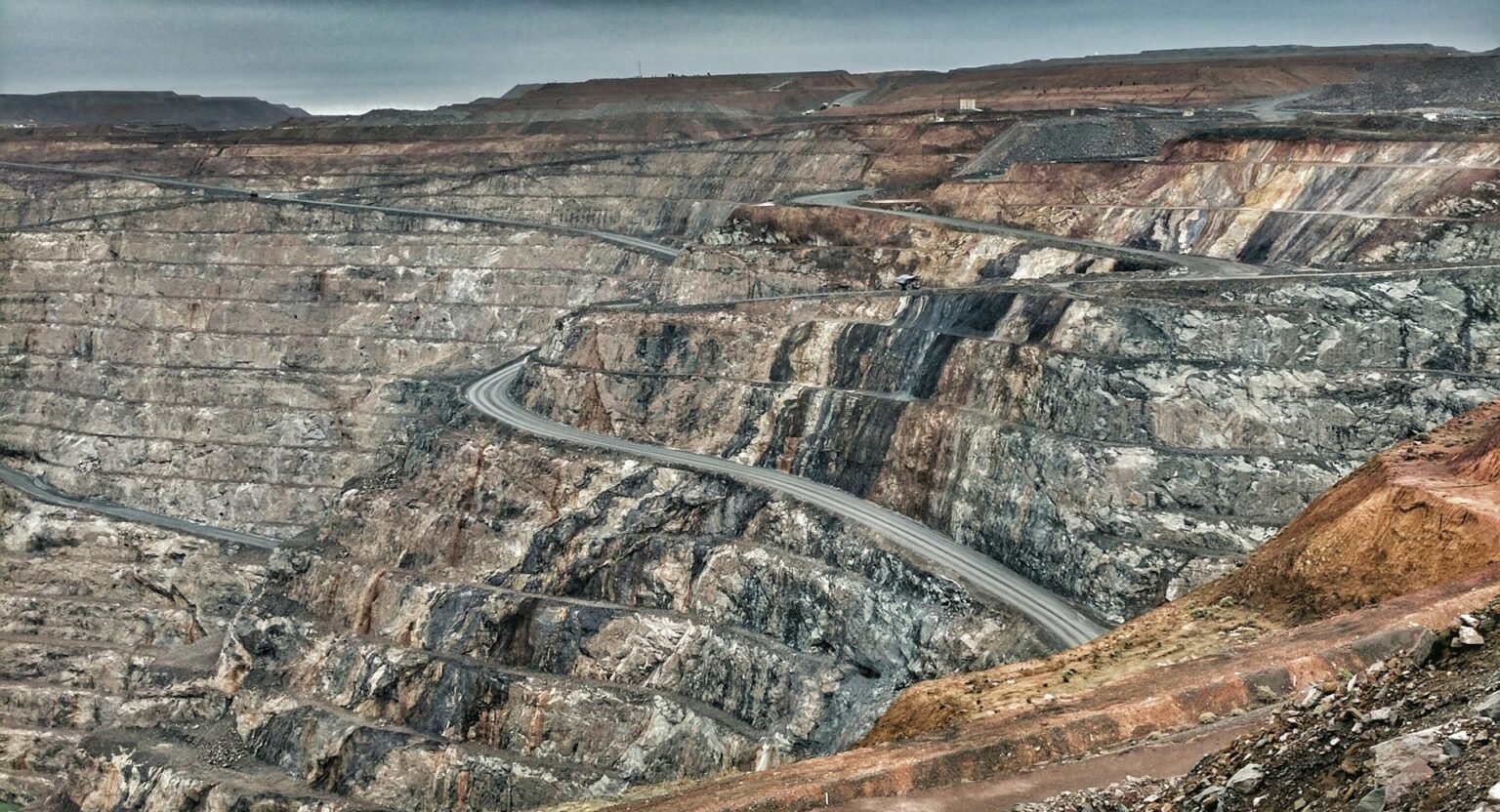
The Kilembe deposit in the Rwenzori foothills near the DRC border was once one of East Africa’s most important copper operations, supporting an industrial township in Kasese at its peak. Government estimates indicate the deposit still holds millions of tonnes of copper-bearing ore alongside cobalt. The site has attracted interest from Tibet Hima Ltd, Chinese battery giant CATL, and most recently SARAI Group in 2026. Geological surveys point to additional deposits of critical minerals in Buyende, Kigezi and Bugisu, with rare earth elements identified in eastern Uganda. The government has passed the Mining Act 2022, created the Uganda National Mining Company, and designated minerals as a strategic pillar within its 10-Fold Growth Strategy. Dozens of exploration licences have been issued.
The institutional architecture is taking shape. The geology is confirmed. What Uganda has not yet resolved is the harder question: what are the conditions under which foreign capital is allowed to extract?
Three countries, three outcomes
The Norway versus Nigeria framing captures the fork in the road with uncomfortable clarity, and both examples are instructive precisely because they involve the same commodity type, petroleum, and wildly divergent outcomes rooted entirely in governance decisions.
Nigeria at independence had a diversified agricultural economy: groundnuts, cocoa, palm oil. Oil arrived, and within a generation those industries had collapsed, hollowed out by petrodollars that made everything else uncompetitive. Today, despite decades of oil wealth, Nigeria struggles with chronic power shortages, deindustrialisation, and over 130 million people living in poverty. The oil did not cause the poverty. But it funded the political arrangements that produced it.
Norway resisted the same temptation. When North Sea oil arrived in the 1970s, Oslo ring-fenced revenues from the operating budget and built what is now the world’s largest sovereign wealth fund at $2.2 trillion. It invested in education, infrastructure and future generations rather than immediate consumption. The geology was not different. The discipline was.
The DRC offers the most pointed lesson for Uganda specifically, given the shared border. Congo holds some of the world’s largest deposits of cobalt, coltan and copper. Its minerals are in virtually every smartphone, electric vehicle and laptop on earth. The Congolese state is among the poorest and most fragile on the planet. Decades of extraction have enriched foreign companies, armed militias and successive governments while average Congolese citizens have seen almost none of it. The resource is not the problem. The terms of extraction are.
Africa’s top mining investment destinations in 2026 are the countries, including Botswana, Namibia, Morocco and South Africa, that have built the governance and legal architecture to attract capital on terms that also serve domestic development. The ranking is not purely about geology.
The Indonesia model: what value addition actually looks like
The most instructive contemporary example is not Norway. It is Indonesia.
Indonesia holds among the world’s largest nickel reserves. For decades it exported raw ore cheaply to Chinese smelters and captured marginal value. In 2020, the government banned raw nickel exports entirely, forcing foreign companies, primarily Chinese, to invest in domestic processing capacity if they wanted access to Indonesian supply. The move was controversial, challenged at the WTO, and universally described by international investors as too aggressive. It worked. Indonesia is now a major refined nickel producer, capturing the processing margin that previously flowed to China. It transformed itself from a raw material supplier into a strategic industrial power in less than a decade.
Uganda’s President Museveni has made the same argument repeatedly, framing raw material export as a form of economic subjugation. The ban on raw iron ore exports is an early application of that principle, with Tera International and Devki Mega Steel now establishing processing facilities in Ntungamo and Tororo respectively. The logic extends directly to copper. A tonne of raw ore exported to China captures roughly $1,000. Refined copper wire, electrical components and battery materials carry a multiple of that value. The margin is where industrialisation actually happens.
Zambia is pursuing a version of the same model, targeting a tripling of copper output to 3 million tonnes by 2031 while simultaneously building domestic processing capacity. Over $12 billion has flowed into Zambia’s mining sector since 2022. The difference between Zambia and Uganda at this moment is that Zambia is already producing and Uganda is still mostly exploring. That gap matters in a race with a closing window.
The geopolitical context Uganda cannot ignore
Uganda’s minerals do not exist in a neutral market. The US, EU and allied governments are actively scrambling to reduce dependence on Chinese processing capacity, which dominates large portions of the global critical minerals refining industry. Beijing, meanwhile, is tightening its grip on supply chains it already controls. African and Latin American governments with mineral deposits are being courted and in some cases pressured by rival economic blocs desperate to lock in long-term supply.
This is an opportunity and a risk simultaneously. Uganda can negotiate better terms now precisely because its copper and cobalt are strategically valued by multiple competing actors. But strategic value is not permanent. Countries that move decisively in the next decade, building processing infrastructure, training engineers and locking in partnerships that require domestic value addition, will capture the long-term benefit. Those that delay, issuing exploration licences without an industrial vision, will watch the window close.
The EAC, a market of over 300 million people, could act as a coordinated bloc of mineral suppliers rather than competing against each other for foreign investment on the weakest possible terms. That coordination has not happened at scale. It should.
Bigger Picture: The Rwenzori copper does not know it is sitting in a country that has watched the DRC next door export its wealth for a century and seen nothing come back. It does not know about Norway’s sovereign wealth fund, or about Indonesia’s nickel export ban, or about Botswana’s diamond negotiation with De Beers that secured 50 percent of the equity in a national processing company. All of that knowledge belongs to the people making decisions in Kampala right now. Uganda’s minerals are not destiny. They are a test of institutional quality, political discipline and the willingness to resist the easiest short-term deal for the hardest long-term one. The window is open. The question is whether the architecture is being built before it closes.
Source: The Independent Uganda