

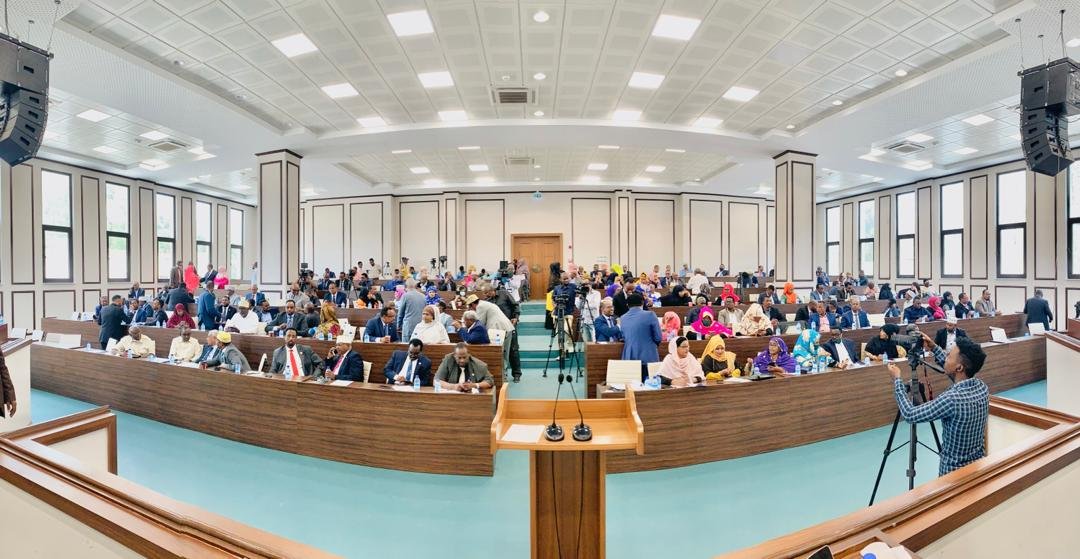
Somalia’s federal parliament voted 223 to zero on March 4 to adopt the country’s first official constitution, ending a decades-long reliance on provisional governance frameworks and formally cementing the federal system into law. The vote closes a constitutional gap that has shadowed every Somali government since the state collapsed in 1991. It signals that Mogadishu’s institutions are now capable of legislating at a foundational level.
- The joint session of both chambers was chaired by Speaker Sheikh Adan Mohamed Nur, who declared the constitution officially adopted after the results were announced.
- 186 members of the House of the People and 37 senators of the Upper House voted in favour, giving the constitution unanimous cross-chamber endorsement.
- The review and amendment process covered all 13 chapters of the constitution, addressing the division of powers between federal and regional authorities, democratic governance structures, and institutional frameworks.
- State Minister for Foreign Affairs Ali Mohamed Omar, who also serves as a member of parliament, described the vote as progress in moving the country beyond its provisional framework and clarifying the federal system.
The significance of the vote extends well beyond its legal effect. Somalia has operated under a provisional constitution since 2012, a document always understood as a temporary scaffold rather than a permanent foundation. The comprehensive 13-chapter review signals that the federal government and regional states have reached sufficient alignment on the core question of power sharing to codify it in law, a process that has collapsed multiple times over the past decade. For international partners, the constitution provides a clearer legal basis for the investment and security commitments they are being asked to sustain in the country.
The Bigger Picture: A ratified constitution does not resolve Somalia’s security situation or its fiscal dependence on external support, but it materially changes the legal architecture within which both are managed. Investors and business operators who have avoided Somalia precisely because of its uncertain governance framework now have a codified federal structure to reference. The Horn of Africa’s most fragile major economy has just given itself the one document that underpins every other institution. Whether the political will to implement it holds is a separate question. That it was passed at all, unanimously, across both chambers, is the more immediate story.
Source: Shabelle Media Network