
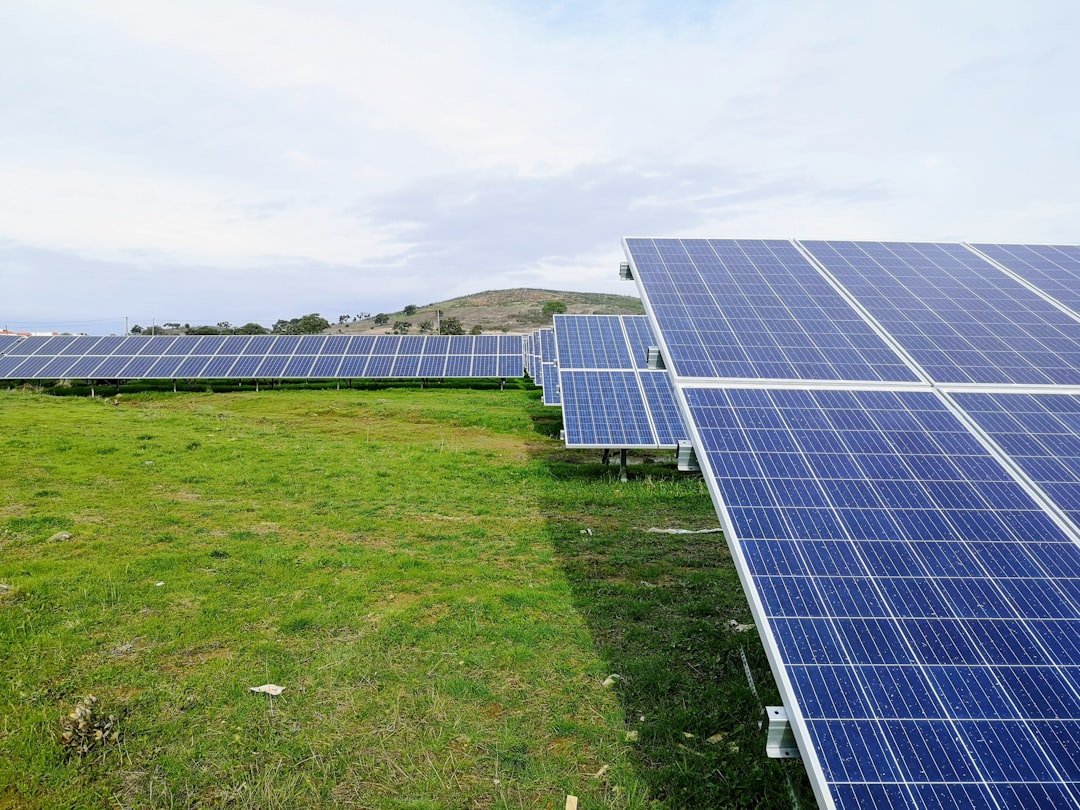
Nigeria’s Rural Electrification Agency is executing a $750 million solar mini-grid programme that its managing director, Abba Aliyu, has described as the largest publicly funded renewable electricity project ever undertaken anywhere in the world, targeting 17.5 million Nigerians currently without reliable power. The programme, known as DARES (Distributed Access through Renewable Energy Scale-Up), is backed by a World Bank loan and structured to draw an additional $1.1 billion in private sector co-investment alongside the public funds.
- DARES will deploy 1,350 mini-grids across Nigeria, of which 250 will be interconnected mini-grids feeding electricity directly into the national grid. The remainder will serve isolated communities currently beyond the reach of grid infrastructure.
- The World Bank loan of $750 million is structured in three tranches: $350 million, $250 million, and $150 million, each covering different components of the project. The Rural Electrification Agency and the Lagos State Electricity Board are joint implementing agencies.
- Separately, President Tinubu approved N100 billion for the National Public Sector Solarisation Initiative, providing hybrid solar systems to government institutions including the EFCC, ICPC, DSS, and the National Hospital in Abuja. The REA’s total 2026 budget stands at N170 billion.
- Nigeria already crossed a continental milestone in 2025: over 1,000 mini-grids deployed nationwide, and more than 50 interconnected mini-grids that collectively inject over 200 megawatts into the national grid. The REA’s Energising Education Programme has completed 18 solar projects at federal universities and teaching hospitals, including a 12 MW installation at the University of Maiduguri.
- Nigeria’s electricity access gap remains severe: more than 85 million Nigerians lack reliable power. Installed national grid capacity exceeds 13,000 MW but actual generation typically runs between 3,500 MW and 5,000 MW, leaving most of the country dependent on diesel generators.
The investor signal embedded in DARES is specific and deliberate. The programme’s subsidy structure provides minimum capital cost grants to private mini-grid developers and operators, lowering the return threshold for commercially viable projects in communities that would otherwise be uneconomical to serve. This is the mechanism through which the public $750 million is intended to pull in the $1.1 billion in private capital. Developers already active in Nigeria’s mini-grid market include US-based Husk Power, which has committed to 500 deployments in the country, and a range of European and Asian investors who have tracked Nigeria’s regulatory evolution closely since the Electricity Act 2023 devolved power sector oversight to state governments, opening 36 separate state-level electricity markets simultaneously.
The Bigger Picture: Nigeria is the world’s most populous country without reliable electricity, and DARES is the most credible attempt yet to change that at scale. The $1.1 billion in private co-investment the programme is designed to unlock is not hypothetical: Nigeria has demonstrated since 2018 that a well-structured subsidy framework attracts serious capital into off-grid energy. Over $900 million in solar investment has already entered the country in that period. For international investors, the combination of World Bank risk mitigation, a functional regulatory framework, a massive unserved market, and falling solar hardware costs makes Nigeria’s mini-grid sector one of the most investable energy opportunities on the continent. The question is not whether the market exists. It is whether project development pipelines, land tenure, and community engagement processes can keep pace with the capital now available to deploy.
Source: Punch Nigeria