
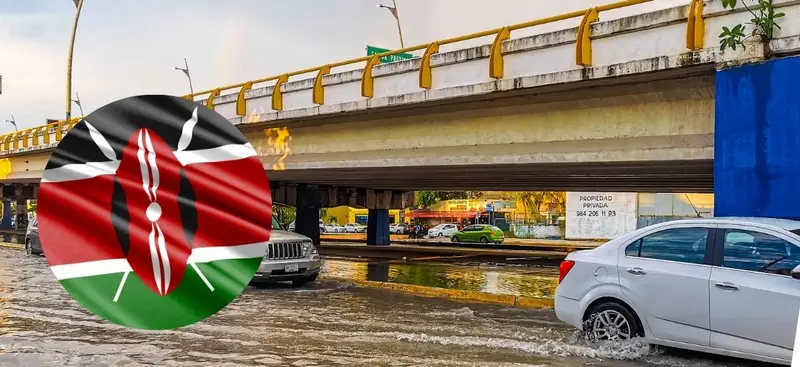
Nairobi County has unveiled a Ksh38.1 billion water and sanitation investment under the Ksh80 billion Nairobi Rising urban renewal programme, targeting a city of nearly six million people whose water and sewer systems have long lagged population growth. The announcement came days after March 6 to 7 flash floods damaged pipelines across the city and exposed the depth of the infrastructure deficit.
- The Ksh38.1 billion is ring-fenced for water and sewer projects within Nairobi Rising, a joint initiative between Nairobi City County and the national government. A further Ksh23.1 billion within the same programme is allocated to roads, bridges, pedestrian walkways, and 40,000 streetlights.
- Key water works include upgrading the Ngethu to Gigiri transmission pipeline and extending last-mile connections to estates currently dependent on water vendors.
- On sanitation, a 27-kilometre trunk sewer line will run along the Nairobi River corridor, directing wastewater to treatment facilities. A new treatment plant will be built at Kariobangi.
- The March floods disrupted supply to Buruburu, Kariobangi, Dandora, Eastleigh, Kiambiu, and Korogocho after pipeline sections near river crossings were damaged. The Nairobi City Water and Sewerage Company deployed engineers for emergency repairs.
- The programme also includes relocation of an estimated 300,000 street vendors into designated market spaces, and rehabilitation of river corridors for flood resilience.
- Nairobi Rising faces a legal challenge at Milimani High Court. Petitioners argue the joint national-county structure undermines devolution provisions under Kenya’s constitution.
The timing of this announcement matters. Nairobi’s flooding crisis, which killed 23 people and prompted President Ruto to deploy the KDF, has made the infrastructure deficit impossible to ignore. For years, expansion of water and sewer networks failed to keep pace with the city’s growth. The new investment, if delivered, would represent the most significant upgrade to Nairobi’s water systems in a generation. The legal challenge to the programme’s governance structure is the principal risk to execution: if courts restrict the national government’s role in county-level delivery, implementation timelines and funding flows could be disrupted.
Bigger Picture: Nairobi’s infrastructure gap is not a new story but the floods have given it political urgency. A city of six million people cannot run on water distribution built for a fraction of that population. The Ksh38.1 billion commitment is substantial, but the test will be execution speed and governance clarity. Investors and businesses operating in Nairobi should track the High Court proceedings: the outcome will determine whether this programme proceeds at the pace the city needs or gets tied up in constitutional disputes about who holds the keys.
Source: Business Today Kenya