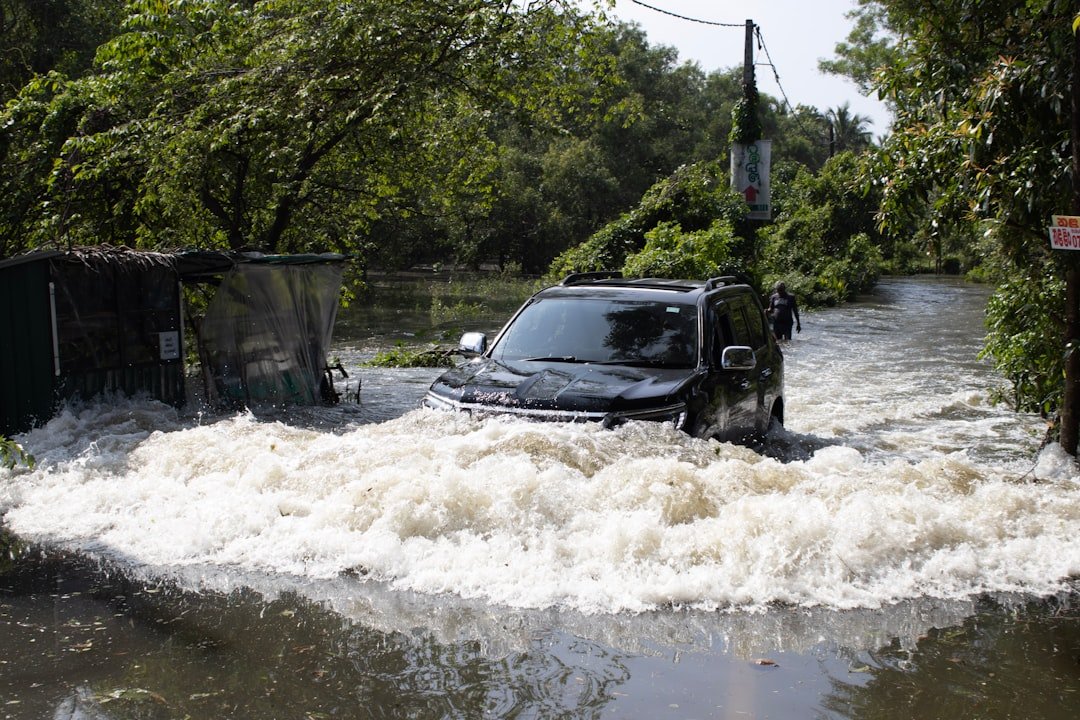
President William Ruto has deployed a multi-agency emergency force including the Kenya Defence Forces after overnight flooding killed at least 23 people in Nairobi and displaced thousands, ordering the immediate release of food from national strategic reserves and directing the government to cover hospital bills for all flood victims in public facilities. The disaster, triggered by heavy rainfall on the night of March 6 to 7, submerged large sections of the capital and paralysed major arteries. The National Police Service confirmed that rescue teams had already pulled 29 people to safety from various locations across the city.
- The KDF’s Rapid Response Unit was deployed on Friday night even before Ruto’s formal statement, working alongside police and disaster management agencies to assist motorists and residents trapped in high-risk situations. At least 71 vehicles were stranded across the city as roads became impassable.
- Hardest-hit neighbourhoods include Mukuru, Kibra, Mathare, Huruma, South B, South C, Pipeline in Embakasi, Roysambu, Kahawa West, Githurai and parts of Westlands. Major highways including Uhuru Highway, Mombasa Road, the Thika Superhighway, Jogoo Road, Enterprise Road and Lang’ata Road were submerged in sections, effectively cutting off large parts of the city.
- The emergency response is coordinated by the Ministry of Interior and National Administration, working with the KDF and other agencies. The national government is operating in partnership with Nairobi City County and other county administrations.
- The Kenya Meteorological Department has warned that moderate to heavy rainfall is likely to persist across Nairobi and neighbouring counties, raising the risk of additional casualties and displacement.
The Nairobi flooding is a recurring crisis that has repeatedly exposed the gap between policy commitments and infrastructure delivery. Ruto pointed to the ongoing Nairobi River Regeneration Programme as the government’s long-term response, a programme aimed at restoring river ecosystems, improving drainage and reducing flood risk across the city. The challenge is structural: Nairobi’s drainage infrastructure was built for a far smaller population, and rapid urbanisation has seen informal settlements expand into riparian zones and flood plains that are inherently high-risk. The 2024 flooding season killed over 200 people nationally and triggered a national day of mourning, yet the same neighbourhoods flooded again in 2025 and now again in March 2026. The government’s response this time includes direct coverage of hospital bills for victims, an additional relief measure beyond the food aid and humanitarian support deployed in previous events. The Kenya Meteorological Department’s warning of continued heavy rainfall means the death toll and displacement figures are likely to rise before conditions improve.
The Bigger Picture: For Nairobi’s business community, the immediate cost is visible: roads paralysed, supply chains disrupted, workers unable to reach offices and factories. The deeper cost is harder to quantify but real. Nairobi’s chronic flood vulnerability is now a material risk for commercial real estate, logistics and any business dependent on road freight through the capital. The Nairobi River Regeneration Programme is the right long-term response, but it requires consistent funding and execution over years, not emergency press statements. For investors, the floods are a signal to stress-test any Nairobi supply chain for flood exposure, and to track whether the government accelerates the drainage and river restoration work it has been promising since at least the 2019 flooding season.
Source: The Star / Kenyans.co.ke