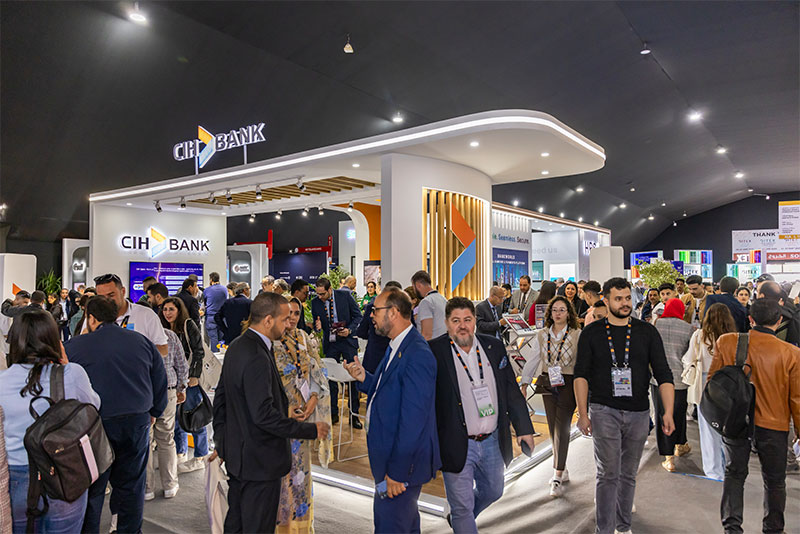

IN SHORT: Morocco has signed an agreement for the Nexus AI Factory, described as Africa’s first sovereign AI infrastructure platform, with an initial investment of $1.2 billion to deliver 500 megawatts of computing capacity powered by Nvidia technology. The signing took place on the sidelines of GITEX Africa 2026 in Marrakech with the US Ambassador present, positioning Morocco as the AI gateway for North Africa, Europe, and beyond.
Morocco signed a $1.2 billion agreement for the Nexus AI Factory on the sidelines of GITEX Africa 2026, committing to 500 megawatts of sovereign AI computing capacity powered by Nvidia and backed by US government presence at the signing, in a deal that positions the country as the continent’s first national AI infrastructure platform and a regional hub connecting North Africa, sub-Saharan Africa, and European digital economies.
- Investment: $1.2 billion initial commitment. Infrastructure: 500 megawatts of AI computing capacity. Technology partner: Nvidia. The platform is framed as Africa’s first sovereign AI infrastructure, meaning it is designed to keep data and compute within Moroccan jurisdiction rather than routing through European or US cloud providers.
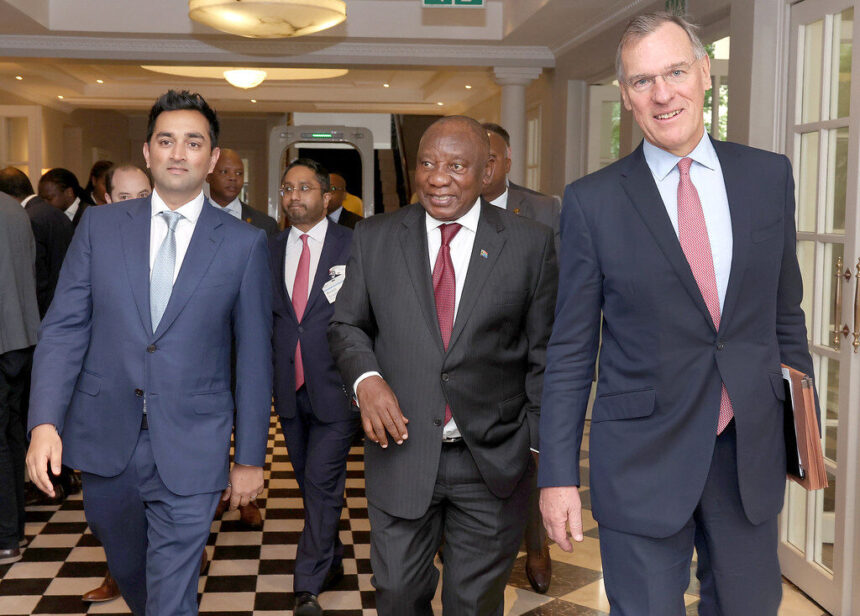
- US Ambassador Duke Buchan was present at the signing alongside Moroccan officials, reinforcing the US-Morocco digital partnership that Buchan had emphasised in his GITEX Africa opening remarks, where he highlighted Cisco, Dell, Salesforce, Oracle, and other major US firms already active in Morocco’s digital transformation.
- The Nexus AI Factory is expected to create new opportunities for African AI startups, data centre innovation, and local talent development across Morocco and neighbouring markets.
- Morocco launched its 5G networks in November 2025 with all three operators activating simultaneously under the Digital Morocco 2030 strategy, which targets MAD 80 billion ($8 billion) in investment through 2035. Morocco has also surpassed 1.4 million fibre-optic home subscriptions and received its first major cloud hyperscaler investment.
- The Nexus AI deal follows Morocco’s rise of 14 places in the government AI readiness index in 2025, as announced by Prime Minister Akhannouch at the GITEX Africa 2026 opening. Morocco is the only African country with an investment-grade credit rating and is increasingly positioned as the continent’s most credible tech investment destination for Western capital.
- The 500MW AI factory will serve not only Moroccan government and enterprise clients but is explicitly designed as a regional platform, with connectivity to European AI markets through Morocco’s geographical position as a bridge between the Atlantic, Mediterranean, and the African continent.
The framing of "sovereign AI infrastructure" is deliberate and significant. The global scramble for AI compute capacity has made data centres a geopolitical asset. Countries that own AI infrastructure have leverage over their data, their public services, and their competitive position in the digital economy. Countries that rely entirely on US or Chinese cloud providers have exposure: their data is subject to foreign jurisdiction, their pricing is set by foreign firms, and their AI capabilities are ultimately dependent on foreign goodwill. Morocco’s Nexus AI Factory is a direct response to that dependency, and the $1.2 billion price tag reflects how seriously the government is taking it.
The Bigger Picture: Morocco is executing a coherent, well-resourced digital infrastructure strategy at a speed that few African economies can match. The combination of 5G rollout, fibre expansion, cloud hyperscaler investment, and now a sovereign AI factory at 500MW creates a technology stack that is genuinely competitive with smaller European digital economies. The question is whether Morocco can convert infrastructure into an ecosystem: attracting AI startups, building local talent, and generating the data flywheel effects that make AI platforms self-reinforcing. The Nexus AI Factory gives Morocco the hardware. Building the software and human capital layer on top of it is the harder and longer challenge.
Source: Business Tech Africa