
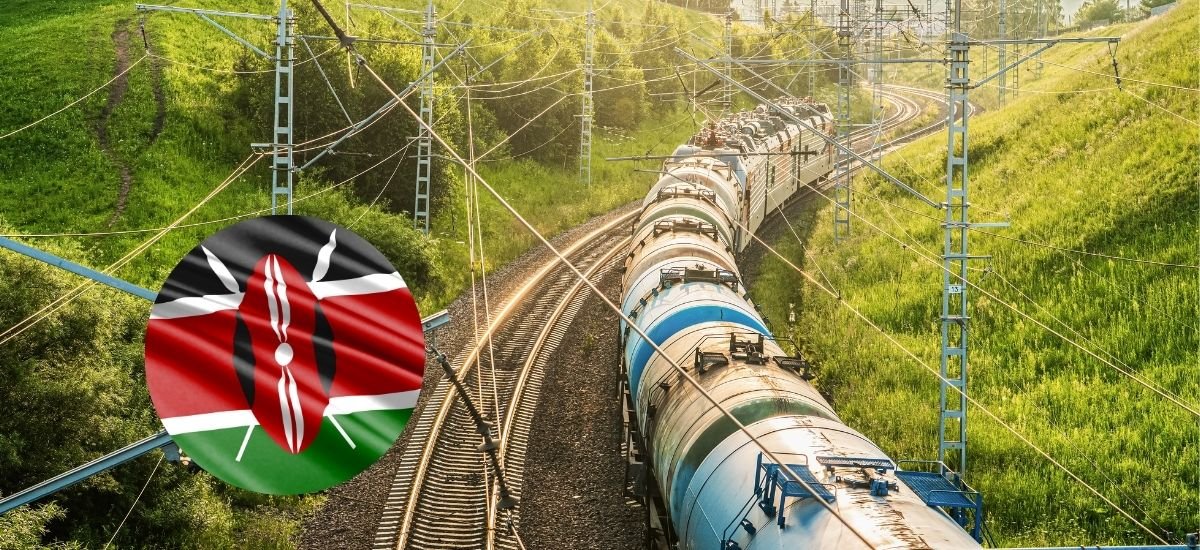
Kenya has abandoned plans for a Sh193 billion crude oil pipeline and will instead extend the metre gauge railway 640 kilometres to Turkana at a cost of Sh220 billion ($1.7 billion), with first oil exports targeted for December 2026 and rail evacuation operational by January 2032.
Documents tabled in Parliament confirm the strategic shift. Gulf Energy, which holds Blocks T6 and T7 in the South Lokichar basin, will truck early production of 20,000 barrels per day to Mombasa from December 2026 while the rail infrastructure is built. Output then more than doubles to 50,000 barrels per day from January 2032, when the MGR takes over.
- The MGR extension runs from Rongai in Nakuru to South Lokichar in Turkana County, with a further spur to Nakodok on the South Sudan border. Completion target: December 2031.
- Phase one (2026 to 2032): 600 trucks per day transport 20,000 stb/d to Mombasa. Phase two (from 2032): 155 insulated, steam-heated rail wagons loaded daily; crude transferred to Kenya Petroleum Refineries storage at the port. Gulf targets two export vessels per month.
- An SGR extension to South Lokichar was costed at over Sh300 billion, making MGR the cheaper option. Feasibility assessments are still examining both rail gauges, and a final government decision is pending.
- Gulf Energy acquired Blocks T6 and T7 from Tullow Kenya in a $120 million deal closed in October 2025. The Cabinet approved Gulf’s Field Development Plan late last year. Parliamentary ratification within 90 days clears the path to production.
- Gulf has secured a drilling rig from Great Wall Drilling Company of the UAE for $15 million on a long-term lease. The rig is expected in Kenya before the end of March 2026.
- LAPSSET officials have raised concerns: the original plan included a Lokichar-Lamu crude pipeline that would also have carried South Sudanese oil to Lamu port. Removing that pipeline component, they told Parliament, undermines the integrated design of the entire corridor.
Kenya has waited 14 years to become an oil exporter since commercial deposits were confirmed in Turkana in 2012. The pipeline plan fell apart because $1.5 billion in financing could not be secured and delivery risks mounted. The rail pivot solves the financing problem by phasing the capital requirement and leveraging existing MGR infrastructure already running from Mombasa to Malaba. Uganda will become the second EAC country to export crude oil from October 2026, with TotalEnergies and CNOOC producing from Tilenga and Kingfisher. Kenya’s December 2026 first-oil target puts it directly behind Uganda in the East African oil race. For the broader energy picture facing Kenya, including the impact of the Iran-US war on petroleum supply, see our earlier Africaspoint analysis.
Bigger picture: The switch from pipeline to rail is pragmatic but not without cost. The MGR is ageing infrastructure built for general freight, not heated crude oil wagons at scale. The 155 specialised wagons needed daily represent a significant rolling stock procurement challenge. The LAPSSET corridor, already struggling for momentum, loses its anchor revenue stream. And South Sudan, which was counting on the pipeline route to monetise its own stranded reserves via Lamu, is left without a clear evacuation path. For Gulf Energy, the commercial logic is sound: the MGR extension is cheaper, faster to approve, and does not require multilateral financing. For Kenya as a sovereign oil producer, the December 2026 milestone matters enormously for fiscal credibility and investor confidence in East African energy.
Source: Business Daily Africa