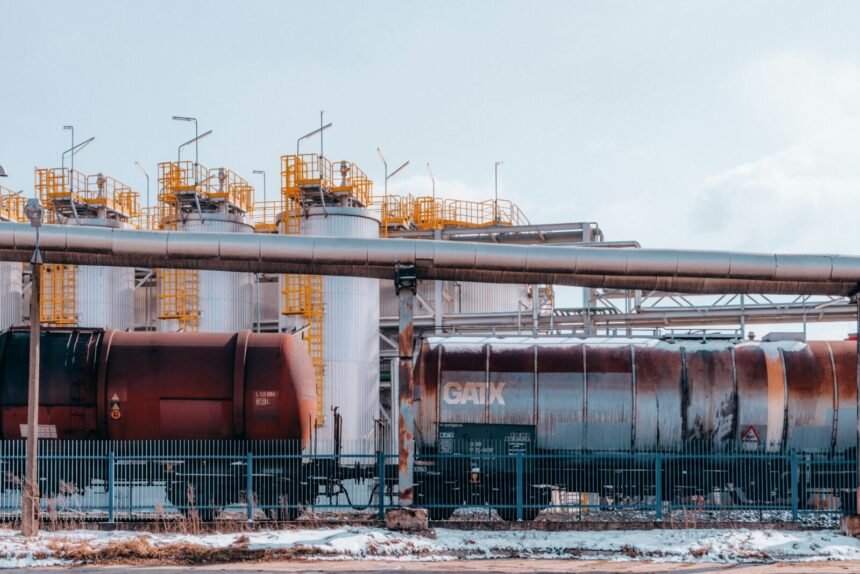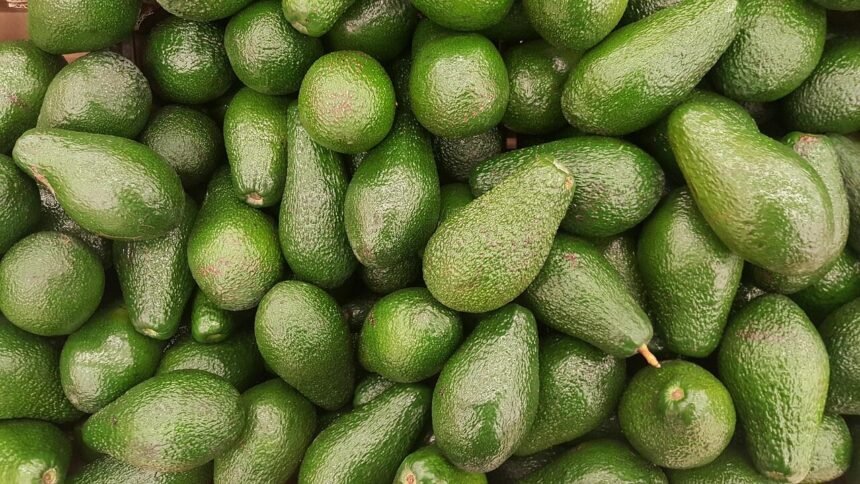

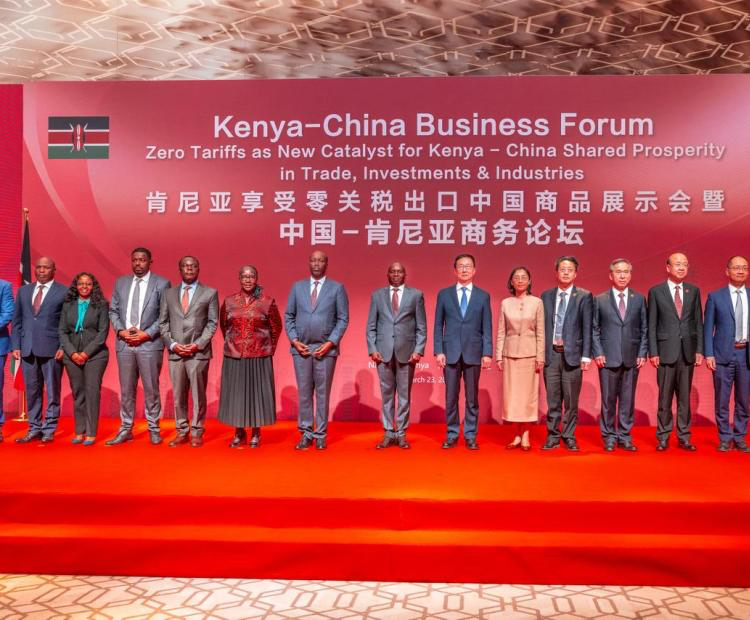
Kenya has flagged off its first shipment of exports to China under the new zero-tariff framework, a 54-container consignment carrying avocados, avocado oil, coffee beans, hides and skins, dry grains, pet feed, and recyclable materials, departing from the Nairobi Railway Terminus. Deputy President Kithure Kindiki and Chinese Vice President Han Zheng presided over the ceremony, which came hours after co-hosting the High-Level Kenya–China Business Forum. Kenya exports approximately $210 million in goods to China annually against imports of around $4.32 billion, a deficit of roughly $4 billion ($3.24 billion, or more than Ksh500 billion).
The zero-tariff arrangement was agreed under a Framework Agreement on Economic Partnership for Shared Development signed by President William Ruto and President Xi Jinping in April 2025. The terms take effect from May 1, 2026, granting Kenyan goods access to a consumer market of 1.4 billion people without tariff penalties. Kenya is among 53 African nations covered by the arrangement, which China announced in the context of the Forum on China-Africa Cooperation.
At the business forum, Kindiki named the commodities Kenya is positioning as its primary export offer: coffee, tea, avocados, macadamia, and fish. He cited Kenya’s status as Africa’s leading avocado producer and its second-place ranking in macadamia as specific competitive advantages. Value-added agricultural products and manufacturing partnerships featured in his framing of the medium-term trade strategy.
"Our shared goal is to grow Kenya’s exports into the Chinese market, especially value-added agricultural products, while strengthening manufacturing partnerships and moving progressively towards balanced trade between our two economies," he said.
Kindiki also acknowledged the infrastructure dimension of the relationship, noting that Chinese financing and construction of the Standard Gauge Railway has improved logistics between production zones, the Port of Mombasa, and export markets. The government’s extension of the SGR to Kisumu and Malaba, groundbreaking for which happened three days earlier, is expected to deepen that connectivity.
Bigger Picture: The 54-container first shipment is a symbolic gesture as much as a commercial event, but the symbolism matters. Kenya has been on the wrong side of a $4 billion trade deficit with China for years, and the combination of zero-tariff access and a senior Chinese delegation willing to be photographed at the port sends a message to Kenyan exporters that the window is real and open. The harder question is whether Kenya can actually scale export volumes fast enough to move the needle on a $4 billion gap. Avocados, coffee, and tea are the obvious candidates, but Kenya’s export agriculture faces constraints in cold chain logistics, phytosanitary certification, and processing capacity that no tariff arrangement can fix. The zero-tariff framework is necessary but not sufficient. What follows in terms of trade facilitation infrastructure, regulatory alignment with Chinese import standards, and private sector coordination will determine whether this shipment was the start of a trend or a photo opportunity.
Source: Capital FM Kenya