

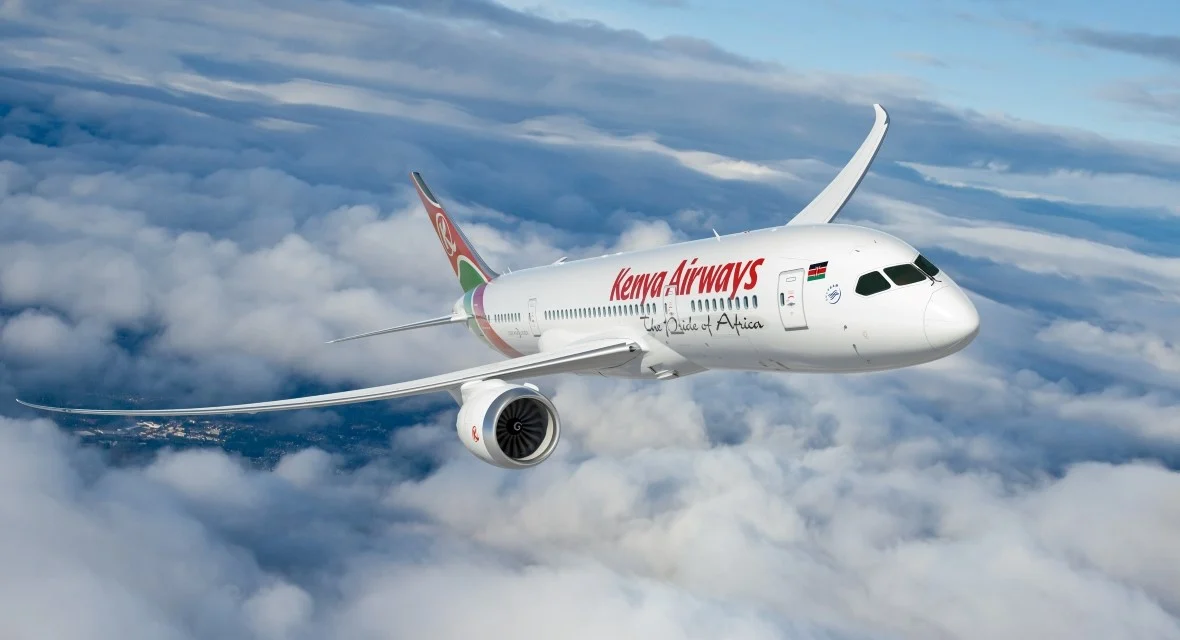
Kenya Airways has signed a codeshare agreement with US carrier JetBlue, placing KQ flight codes on JetBlue-operated domestic routes out of New York’s JFK airport and giving East African travellers single-ticket access to more than a dozen American cities. The deal extends KQ’s effective US footprint without adding aircraft, turning JFK from a terminus into a connecting hub across JetBlue’s domestic network.
- Under the unilateral codeshare, KQ will place its flight code on JetBlue routes from JFK to Los Angeles, Chicago, Boston, Orlando, Phoenix, San Francisco, Raleigh-Durham, West Palm Beach, San Juan, Fort Lauderdale, and Atlanta. Passengers book on a single ticket and transfer at JFK on what officially registers as a Kenya Airways service.
- The arrangement is unilateral, meaning KQ places its code on JetBlue flights but not the reverse. JetBlue gains feeder traffic from Nairobi; Kenya Airways keeps most of the ticket revenue while avoiding the cost of operating US domestic sectors it cannot profitably fly alone.
- JetBlue is a New York-based carrier known for competitive fares, extra legroom, and free onboard Wi-Fi. Its dense northeast and Sun Belt domestic network is the primary commercial logic for Kenya Airways choosing it as the connection partner rather than a legacy US carrier.
- The deal is directly relevant to Kenya’s diaspora in the United States, the largest concentration of which is in cities including Boston, Atlanta, and the San Francisco Bay Area, none of which KQ currently serves with its own metal.
Kenya Airways operates a single daily Nairobi to New York JFK service, leaving it exposed on the US side of the journey compared to carriers with broader American domestic feeds. The JetBlue codeshare addresses that gap without the cost of new routes or wet-lease agreements. It follows a period of severe disruption for KQ’s international network: the airline suspended all Dubai services in late February after Gulf airspace closures tied to the Iran conflict, a reminder of how thin the margin for error is on an airline operating a limited long-haul network. KQ is also in the middle of a government-led process to bring in foreign strategic investors and a Ksh 258 billion equity offer that would transform its capital structure. In that context, partnerships that improve revenue yield without requiring capital are exactly what management needs.
The Bigger Picture: Kenya Airways flies to 5 US cities on paper but only operates its own metal to one, New York JFK. Codeshares are how mid-size carriers like KQ compete with Gulf and European carriers that offer superior US onward connectivity through Doha, Dubai, Amsterdam, and London. The JetBlue deal is modest in scale but structurally sound: it converts a single hub entry point into reach across roughly 50 US cities via JetBlue’s network. For the Kenya diaspora, who represent a significant share of KQ’s premium and business cabin demand on the Nairobi to New York route, the ability to buy one ticket Nairobi to Boston or Nairobi to Atlanta is a genuine product improvement. The test will be whether JetBlue’s pricing synchronises well enough with KQ’s fares to make the through-ticket competitive against rival itineraries via the Gulf.
Source: Business Today Kenya