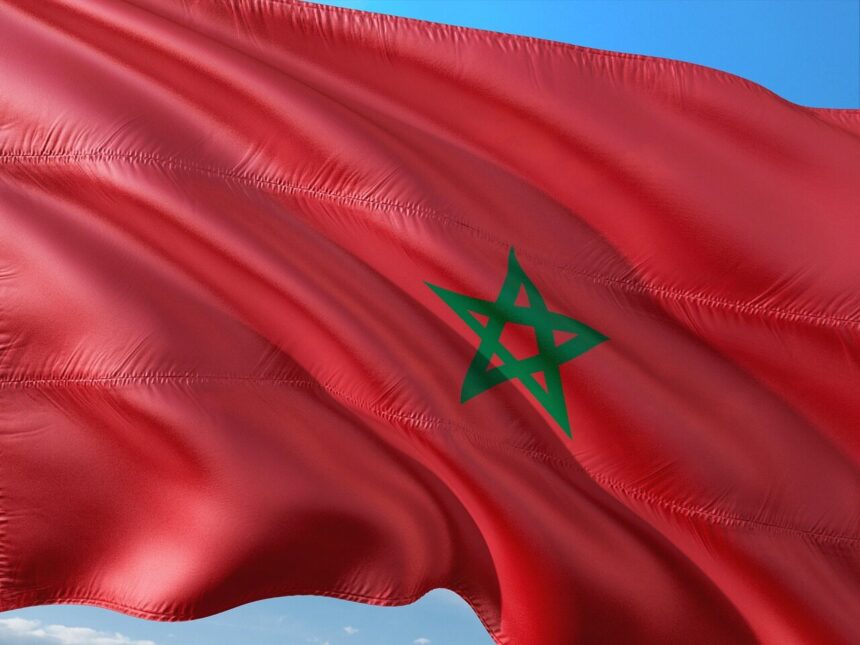

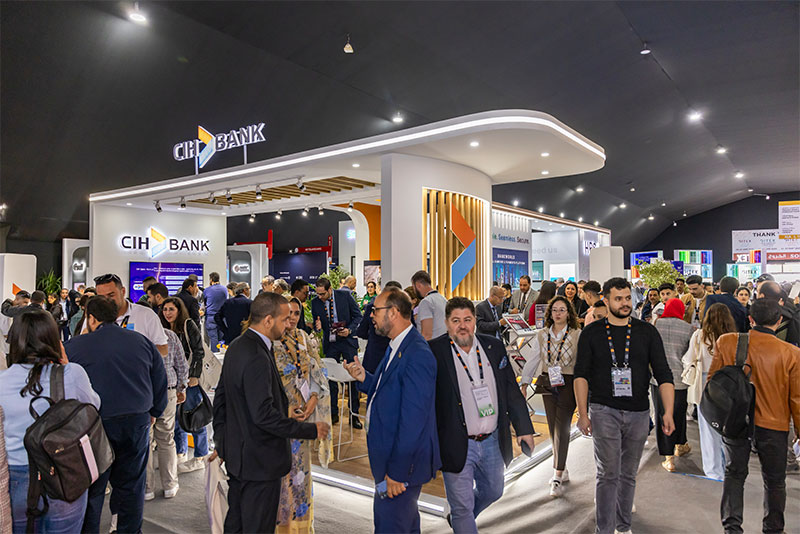
IN SHORT: GITEX Africa 2026 opened in Marrakech on April 7 under the theme "Catalyzing Africa’s Digital Economy in the Age of AI," drawing 1,450-plus exhibitors from 145 countries and 55,000 attendees across three days. Organisers expect over $5 billion in deals. Morocco used the opening to announce it has risen 14 places in the global government AI readiness index and launched the continent’s first private industrial 5G network.
Africa’s largest technology and startup gathering opened in Marrakech on April 7 with more than 1,450 exhibitors from 145 countries, 55,000-plus attendees, and 400 investors managing over $350 billion in assets, as Morocco deployed its first private industrial 5G network, showcased 300 local startups under the Morocco 300 initiative, and positioned itself as the continent’s leading digital gateway in a geopolitical moment where AI infrastructure is becoming as strategically contested as energy supply.
- Morocco’s Prime Minister Akhannouch opened GITEX Africa 2026, announcing the country had risen 14 places in the government AI readiness index in 2025, passed 1.4 million fibre-optic home subscriptions, and received its first major cloud hyperscaler investment, creating over 700 jobs.
- Moroccan telecom operator inwi announced deployment of the continent’s first private industrial 5G network in partnership with China Mobile International, serving a 52-hectare factory in Morocco’s Oriental region. The factory targets Industry 4.0 status, with inwi providing fully dedicated, privatised connectivity across the entire site.
- Morocco 300 showcased 300 Moroccan startups selected for the event, part of a government programme combining financing, mentoring, and international market access to accelerate domestic tech ecosystem growth.
- The US Embassy reaffirmed strategic tech partnerships at GITEX, with Cisco, Dell Technologies, Salesforce, Oracle, and other major American firms active in Morocco’s digital transformation. The US Ambassador described Morocco as the “only country in Africa with an investment-grade rating” and confirmed a $310 million new US consulate opening in Casablanca this month.
- French-Moroccan digital ties were formalised through a Technopark Morocco and French Tech Casablanca partnership signed at the event in the presence of France’s Minister for AI and Digital Affairs Anne Le Hénanff.
- A dedicated Data Centre Intelligent Infrastructure section featured Schneider Electric, Vertiv, Nokia, Huawei, and APL Data Centre working with governments to build and expand computing infrastructure across Morocco and the broader continent.
- Korea’s presence continued for the third consecutive year, with seven Korean startups spanning healthcare diagnostics to AI-powered agricultural solutions exploring African market entry.
GITEX Africa has become the single most concentrated deal-making event in African tech, outpacing individual country investment conferences in terms of cross-border private sector engagement. The Marrakech edition lands at a pivotal moment: African sovereigns are projected to raise $155 billion in commercial borrowing in 2026, AI is reshaping every sector from fintech to agriculture, and the Strait of Hormuz crisis has accelerated interest in African energy alternatives. Morocco, which has positioned itself simultaneously as an Atlantic gateway, a renewable energy hub, and a digital infrastructure centre, is the natural host.
The Bigger Picture: GITEX Africa’s expansion from a niche tech gathering to a 55,000-person event in four years mirrors a broader pattern: Africa’s digital economy is no longer a promise or a projection. It is happening now, faster than the infrastructure required to support it. The Data Centre Intelligent Infrastructure section at this year’s event captures the fundamental constraint: Africa needs computing power at scale, and the race to build it is now genuinely geopolitical. The US is pushing trusted vendors over Chinese alternatives. China is already embedded through Huawei and China Mobile. Morocco has been smart enough to take investment from both without closing the door to either. That is the posture every African digital economy needs to master.
Source: Morocco World News / Morocco World News