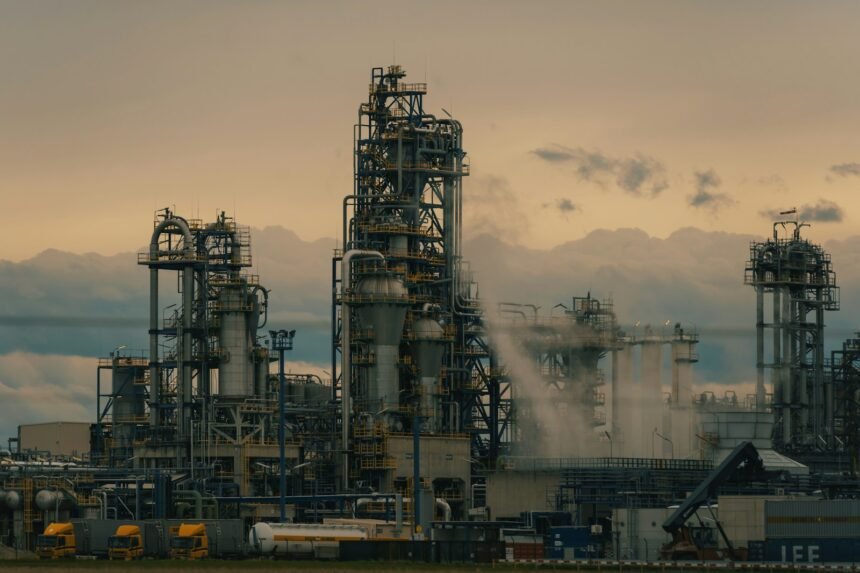

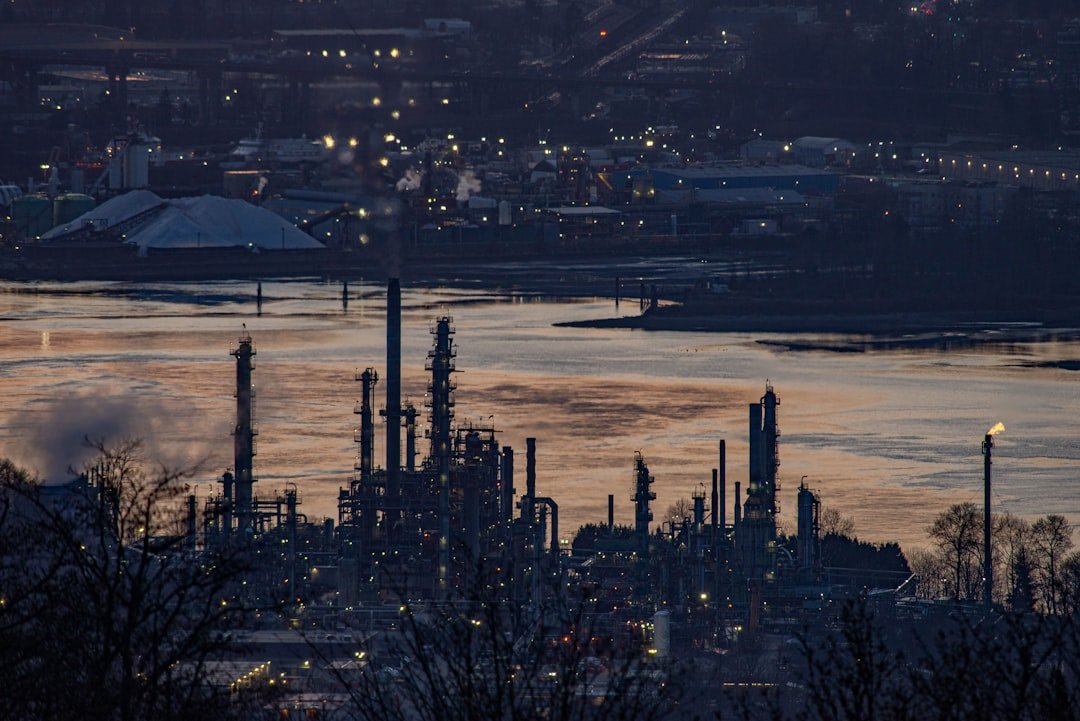
Ghana’s Tema Oil Refinery is pushing to reach full capacity of 45,000 barrels per day, integrating a second furnace to more than double its current output in a bid to slash the country’s $10 billion annual fuel import bill.
TOR restarted crude processing on 19 December 2025 after nearly five years offline, initially running at 28,000 bpd, just 62% of its design capacity. The path to full output now hinges on a single technical integration that is actively underway.
- TOR is connecting the F-61 furnace to the existing F-1 furnace to jointly power the Crude Distillation Unit (CDU). Once complete, output rises from 28,000 to 45,000 bpd.
- The capacity rehabilitation project, contracted to Italy’s Vergaengineering, is 95% complete according to industry data.
- A brief operational pause is required to complete the furnace tie-in. TOR management dismissed reports of a shutdown, calling it a planned transition into the second phase of its ramp-up.
- Ghana imported approximately $10.2 billion worth of petroleum products in 2024, according to the Bank of Ghana. TOR’s restart targets a significant reduction in that outflow.
- In the medium term, TOR is targeting CDU capacity of 60,000 bpd and plans to replace a 6,500 bpd catalytic reformer with a 10,000 bpd continuous catalytic reformer. A new 100,000 bpd refinery and petrochemical plant is also under consideration, though no timeline has been set.
- Nigeria’s Dangote Refinery supplied an estimated 27,000 bpd of fuel to Ghana in 2025. TOR’s revival is expected to reduce that dependency significantly.
TOR was first commissioned in 1963 and is Ghana’s only refinery. It sat largely idle for years due to maintenance backlogs and funding gaps. President John Mahama confirmed the restart publicly in late February 2026, and a new management team appointed in May 2025 under Edmond Kombat was specifically mandated to return the CDU to operation. Ghana also hosts the privately owned 40,000 bpd Sentuo refinery, currently running at maximum first-phase capacity, giving the country meaningful but still insufficient domestic refining capability relative to demand. For context on how the broader oil price environment is affecting Ghana, the Iran-US war driving crude above $100 has added cost pressure to every barrel of refined product the country still imports covered in an earlier Africaspoint analysis.
Bigger picture: Ghana is making a deliberate push to stop exporting foreign exchange on fuel it could refine at home. At full TOR capacity of 45,000 bpd, the country processes roughly 35% of its current import volume of approximately 128,000 bpd of clean petroleum products. That is meaningful but not transformative on its own. The real prize is the longer-term plan: a 60,000 bpd CDU upgrade, a potential 100,000 bpd new refinery, and the Sentuo expansion, which could collectively bring Ghana close to domestic self-sufficiency in refined products. For investors and trading houses, the signal is clear: Ghana is building the infrastructure to become a regional refining hub, not just a crude exporter. The question is whether the operational discipline and capital to execute the full roadmap will follow the ambition.
Source: Business Insider Africa / Argus Media / Africa News Agency