
On March 6, 1957, Ghana became the first country in sub-Saharan Africa to gain independence from colonial rule, a moment that reverberated across the continent and the world. Sixty-nine years later, Ghana is a multiparty democracy with one of West Africa’s most stable institutions, a growing services economy, and a diaspora that punches far above its weight globally. The road here was not straight. It ran through coups, debt crises, painful reforms, and the slow, grinding work of building a state from scratch. Today, on the anniversary of that first midnight, it is worth telling the full story, including the names that rarely appear in the headlines.
The road to March 6
Ghana, then the Gold Coast, had been under British colonial administration since the late 19th century, its economy structured around cocoa exports and gold extraction for the benefit of the empire. The resistance to that order built slowly over decades before it broke into the open.
- Kwame Nkrumah is the name history reaches for first, and rightly so. Educated in the United States and Britain, he returned to the Gold Coast in 1947 to lead the mass independence movement, founded the Convention People’s Party in 1949, and led the country to independence as its first Prime Minister and later President. His vision of Pan-Africanism, the idea that African nations must unify to be truly free, shaped a generation of continental leaders.
- J.B. Danquah deserves equal standing in any honest account. A lawyer, scholar, and statesman, Danquah founded the United Gold Coast Convention in 1947, the first major nationalist political party, and was the man who invited Nkrumah back from London to organise it. He coined the name Ghana for the new nation, drawing on the ancient West African empire. The two men became rivals, and Danquah died in detention under Nkrumah’s government in 1965, a fate that complicates easy narratives. His intellectual contribution to the independence framework was foundational.
- Araba Koomson and the women of the market who organised boycotts of British goods in the 1940s and 1950s rarely appear in textbooks outside Ghana. The market women of Accra were a political and economic force who used their control of local trade to apply sustained pressure on colonial commerce. When Nkrumah called for boycotts, they enforced them. Their collective action was integral to the Positive Action campaign of 1950 that accelerated the timetable toward independence.
- Ako Adjei, a founding member of the UGCC and a childhood friend of Nkrumah, was among the Big Six arrested by the British in 1948 following the Accra riots sparked by the killing of ex-servicemen. That arrest turned the six into symbols, radicalised public opinion, and shifted the momentum irreversibly toward independence. Adjei later served as Foreign Minister.
- Obafemi Awolowo, though Nigerian, deserves mention in any regional account: his correspondence with Gold Coast leaders and his role in the pan-West African intellectual networks of the 1940s helped frame independence not as a local project but as a continental one. Ghana’s independence was understood from its first day as belonging to all of Africa.
After independence: the hard years
The euphoria of March 6, 1957 was real. Nkrumah’s declaration that the independence of Ghana was meaningless unless linked to the total liberation of Africa gave the moment a scale that went beyond one country’s borders. But the years that followed were difficult.
- Nkrumah’s government became increasingly authoritarian through the early 1960s, jailing opponents and concentrating power. A military coup removed him in 1966 while he was abroad. He never returned.
- Between 1966 and 1981, Ghana experienced four coups. The economy, heavily dependent on cocoa, was battered by falling commodity prices, mismanagement, and the absence of stable institutions.
- Jerry Rawlings came to power through a coup in 1979, handed over to an elected government, then took power again in 1981. His second government is one of the most complex chapters in Ghana’s history: initially brutal in its suppression of opponents, it also implemented the IMF structural adjustment programme in 1983 that, despite enormous social pain, stabilised the economy and set the foundation for the growth that followed.
- The structural adjustment years were defined by fuel subsidy cuts, currency devaluation, civil service retrenchment, and rising poverty for millions of Ghanaians. The medicine worked economically. The human cost was severe. That tension has never been fully resolved in the national memory.
The wins: what Ghana built
Against that difficult backdrop, Ghana assembled a record that stands out clearly on the continent.
- In 1992, Ghana adopted a new constitution and returned to multiparty democracy. In 2000, it achieved something rare in Africa at the time: a peaceful transfer of power from a ruling party to the opposition, when John Kufuor defeated the NDC’s John Atta Mills. That election set a democratic standard that Ghana has maintained across every subsequent cycle.
- John Atta Mills is a figure worth honouring specifically today. A quiet, deeply principled man who died in office in 2012 before completing his first term, Mills governed with restraint and integrity in a political environment that rewards neither. His legacy is not loud but it is durable.
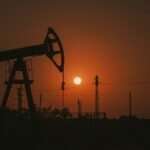
- Ghana struck oil in commercial quantities in 2007, with the Jubilee field coming online in 2010. The management of that windfall, through the Petroleum Revenue Management Act of 2011, was cited internationally as a model of resource governance for a developing country. It did not solve everything. But it was serious institutional work.
- Ghana achieved lower-middle-income status in 2011. Its education system, while strained, produces a diaspora that leads in medicine, law, finance, academia, and tech globally. Ghanaian communities in the UK, US, and Canada are among the most economically productive African diaspora groups anywhere.
- The Year of Return in 2019, the government’s invitation to the African diaspora to visit Ghana on the 400th anniversary of the first enslaved Africans arriving in America, was a masterstroke of soft power. It drew tens of thousands of visitors, generated an estimated $1.9 billion in economic activity, and repositioned Ghana internationally as the spiritual home of the African diaspora.
Where Ghana stands today
Ghana entered 2026 under the leadership of John Mahama, who returned to the presidency after winning the December 2024 election, defeating the NPP’s Mahamudu Bawumia. The economy is recovering from a severe debt crisis that forced Ghana into an IMF programme in 2023, its most painful since the 1980s. By the end of 2024, Ghana had completed key restructuring milestones, returning to the Eurobond market and stabilising the cedi. GDP growth is projected at around 4% for 2026. Inflation has come down sharply from its 2022 peak above 50%.
The structural challenges remain significant. Ghana’s public debt-to-GDP ratio, though declining, remains elevated. The cocoa sector, still the backbone of rural livelihoods for millions, faces climate stress and price volatility. The domestic revenue base is too narrow. Youth unemployment is a pressure point that no government has yet addressed at scale.
And yet Ghana is, on balance, a success story by the measure of what the continent has had to work with. It has held democratic elections and transferred power peacefully across party lines for over two decades. It has functional courts, a combative press, and a civil society that holds government to account. Its universities produce graduates who compete globally. Its culture, from Afrobeats to fashion to film, is shaping the world’s image of modern Africa.
The Bigger Picture: Ghana’s independence was not just a political event. It was a proof of concept for a continent that colonial powers had argued was unready for self-governance. Sixty-nine years later, the proof stands, imperfect and incomplete, but standing. The people who built it include the famous and the forgotten: the market women who enforced boycotts, the lawyers who argued in British courts, the soldiers who handed back power when they could have kept it, the civil servants who built institutions when there were none, and the ordinary Ghanaians who voted in election after election because they believed it mattered. Independence is not an event. It is a practice. Ghana is still practising. Happy Independence Day.
Source: Africaspoint Editorial