
IN SHORT: Ethiopia’s Invest in Ethiopia 2026 forum closed on March 27 with $13.1 billion in signed investment deals across manufacturing, energy, mining, and green ammonia. Chinese firm Ming Yang Smart Energy Group alone accounted for over $10 billion in renewable energy and hydrogen commitments. The forum drew investors from China, India, Poland, Singapore, and Kenya.
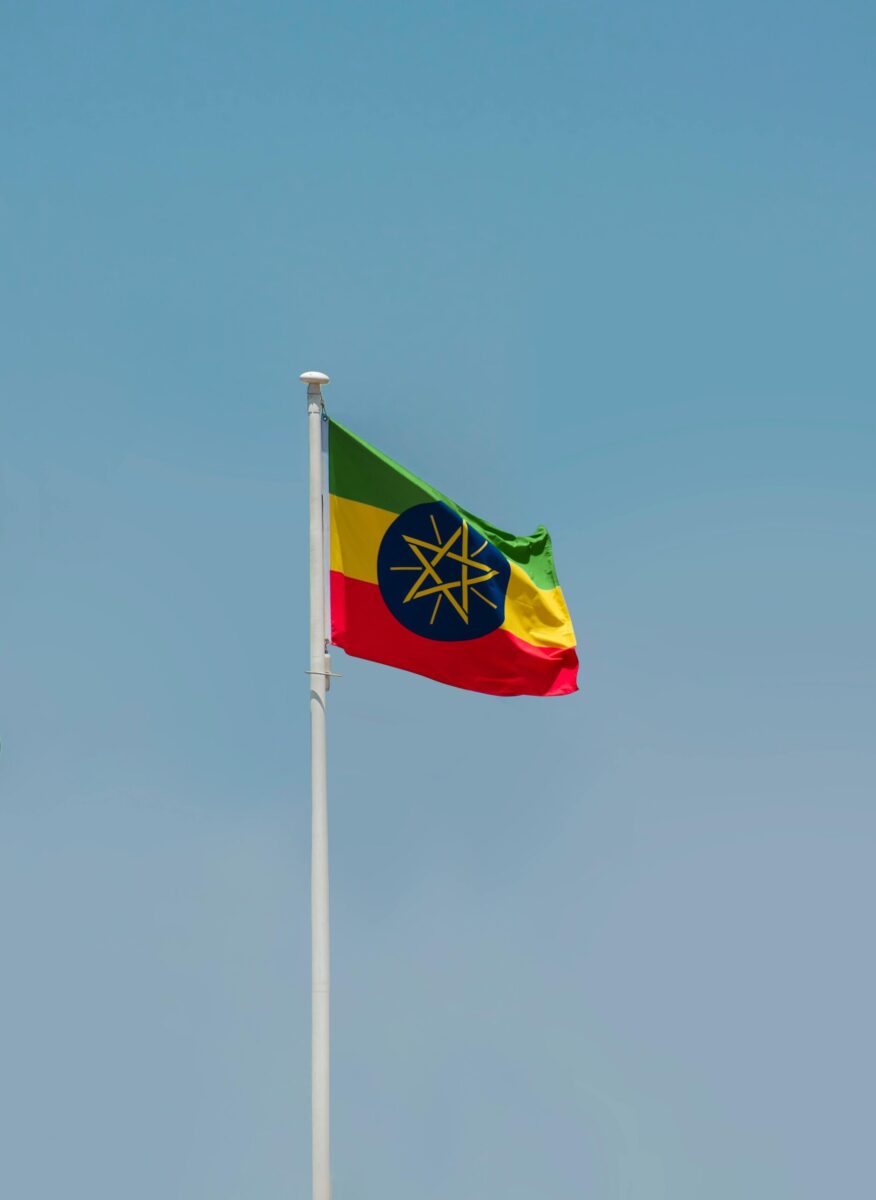
Ethiopia has sealed $13.1 billion in investment deals at its fourth annual Invest in Ethiopia forum in Addis Ababa, with Chinese firm Ming Yang Smart Energy Group accounting for more than $10 billion of that total through commitments to renewable energy, hydrogen, and green ammonia infrastructure. The forum, held under the theme "Ethiopia: Ready for Business," attracted hundreds of investors across seven deal signings spanning manufacturing, agriculture, energy, construction, and real estate.
- Ming Yang Smart Energy Group, a Chinese renewable energy conglomerate, committed more than $10 billion to develop infrastructure in renewable energy, hydrogen, and green ammonia production in Ethiopia.
- China’s Liaoning Fangda Group pledged over $500 million to establish steel and pharmaceutical manufacturing facilities.
- Solar firm Sun King committed $150 million to deploy off-grid power systems for homes and small businesses over five years, targeting underserved rural communities.
- Investors came from China, Kenya, India, Poland, and Singapore, spanning a broader range of source markets than prior editions.
- The forum significantly exceeded its own target: organisers had aimed for $2.4 billion in commitments, itself already up from the $1.6 billion secured at the previous edition.
- China remains Ethiopia’s largest trading partner and FDI source, with Chinese firms accounting for around 60% of approved FDI projects. Ethiopian authorities issued 1,477 investment permits to foreign investors over the past five years.
- Ethiopia has been implementing wide-ranging economic reforms since 2024, including currency liberalisation, removal of foreign exchange controls, and opening sectors such as financial services to foreign participation.
The forum also surfaced implementation concerns. CCCC Ethiopia Branch general manager Wei Qiangyu told a high-level panel that existing three-to-six month visa arrangements are misaligned with the operational timelines of major long-term projects, and called for flexible visa options of up to ten months. Customs clearance times of four to eight weeks were also flagged by participants as a material drag on economic efficiency. Ethiopia’s Investment Commission acknowledged the gaps and pointed to ongoing reforms in inter-agency coordination as the response. Kenya, which recently concluded its own investment conference targeting $2.9 billion in new deals, is the most comparable regional benchmark for Ethiopia’s positioning.
The Bigger Picture: $13.1 billion in a single forum is a headline that competes with any investment conference on the continent, but the composition matters as much as the total. More than 75% of the announced value is concentrated in a single Chinese counterparty’s energy commitments, which makes execution risk the key question. Ming Yang’s $10 billion is a pledge, not a disbursement, and Ethiopia’s track record on converting large-scale Chinese energy commitments into operational infrastructure has been mixed. What the forum does confirm is that Ethiopia’s post-2024 reform programme, covering currency liberalisation, FX controls, and sector opening, is generating genuine investor interest across a widening range of source markets. The challenge is converting forum momentum into project completion, which is where visa processing times, customs delays, and regulatory bottlenecks become the decisive variables.
Source: Reuters / The Reporter Ethiopia