
Sometime around 615 CE, before Islam had reached Medina, before the Prophet Muhammad had consolidated the faith across Arabia, a small group of his earliest followers boarded boats and crossed the Red Sea. They were fleeing persecution in Mecca. They landed in the Kingdom of Aksum, in what is now Ethiopia. The Aksumite king, the Negus Ashama ibn Abjar, heard their case and granted them protection. He refused to hand them back to the Meccan envoys who demanded their return. Islam arrived in Africa, in other words, before it arrived almost anywhere else in the world. That fact matters more than most people realise when trying to understand what Islam means to the continent today.
Africa is now home to approximately 600 million Muslims, roughly 40% of the continent’s total population and close to a third of all Muslims on earth. The Pew Research Center projects that by 2050, Africa will be home to more Muslims than any other region in the world, surpassing the Middle East, South Asia, and Southeast Asia. This is not a marginal demographic trend. It is one of the defining structural facts of the 21st century. And once a year, at the end of the holy month of Ramadan, all of it is visible at once.
How Islam came to Africa: a history in four movements
The Aksumite migration is the first movement. The earliest Muslims in Africa were refugees. Their faith arrived not through conquest but through asylum. The Negus reportedly wept when he heard the Quranic verses recited to him and declared that the difference between what they described and what his own scriptures said was no greater than a line drawn on the ground. Islam and African Christianity existed, for a brief moment, in dialogue rather than conflict. That founding encounter shaped the relatively syncretic, tolerant character of Islam across much of sub-Saharan Africa for centuries to come.
The second movement was trans-Saharan trade. From the 7th century onward, Arab and Berber Muslim merchants crossed the Sahara carrying gold, salt, and cloth. They brought their faith with them. By the 9th and 10th centuries, the rulers of the Sahelian kingdoms, including the Ghana Empire, the Mali Empire, and later Songhai, were converting to Islam, in part because it provided a shared commercial and legal framework for trade across vast distances. The Mali Empire under Mansa Musa, whose 1324 pilgrimage to Mecca brought so much gold to Cairo that it triggered inflation across North Africa and the Mediterranean, was the most visible expression of this synthesis: a Muslim emperor governing one of the wealthiest polities in the medieval world.
The third movement was the Indian Ocean trade network. On the Swahili coast, from Somalia to Mozambique, Islam arrived through Arab and Persian merchants from at least the 8th century onward. The result was a distinctive coastal civilisation, the Swahili culture, that was simultaneously African, Arab, and Muslim. Its cities, including Kilwa, Malindi, Mombasa, and Zanzibar, were among the most prosperous ports in the medieval world. Swahili became a trade lingua franca carrying Arabic loanwords deep into the interior of East Africa along routes that also carried Islam, well ahead of any formal missionary programme.
The fourth movement was the reform movements of the 18th and 19th centuries. Across West Africa, scholars and clerics who believed Islam had become too diluted by pre-Islamic practices launched movements of religious renewal. Usman dan Fodio’s Sokoto Jihad of 1804 to 1808 established the Sokoto Caliphate, which at its height was among the largest polities in Africa and whose influence is still visible in the religious geography of northern Nigeria today. Similar movements reshaped Senegal, Guinea, Mali, and the Sudan. These movements institutionalised Islam: building schools, establishing courts, codifying law, and creating religious authority structures that persist to the present.
What Islam built in Africa
The contribution of Islamic civilisation to African intellectual and institutional life is not well enough understood outside the continent. Timbuktu is the most famous example. At its height in the 15th and 16th centuries, the city’s Sankore Mosque and its associated institutions functioned as one of the great universities of the medieval world. The Ahmed Baba Institute holds over 100,000 manuscripts covering theology, astronomy, mathematics, medicine, law, and history. Much of this material was produced in Africa, by Africans, in Arabic. When jihadist groups occupied Timbuktu in 2012, the first thing scholars and librarians did was move manuscripts out of the city. The scale of what they were protecting, and the panic it triggered, was itself a measure of what Islam built.
Across North and West Africa, Islamic scholarship produced the administrative and legal infrastructure of entire states. Arabic was the language of governance, diplomacy, and learning for centuries before any European colonial language took hold. The madrassas, the waqf endowments, the Sufi brotherhoods, and the hajj networks created social capital and cross-continental connections that predate the colonial era and in many places outlasted it.
Islam in Africa today: growth, diversity, and tension
Africa’s Muslim population is growing faster than anywhere else in the world, driven primarily by demographics rather than conversion. Nigeria alone has approximately 95 million Muslims, making it the world’s fifth-largest Muslim-majority population. Egypt has 90 million. Algeria, Morocco, Sudan, and Tanzania each have Muslim populations exceeding 30 million. Senegal, where 95% of the population is Muslim, is a functioning multiparty democracy. Mauritania is constitutionally an Islamic republic. The range of political and social models across Muslim-majority African states is wider than almost any other region on earth.
The diversity of African Islam is equally striking. The Sufi brotherhoods, particularly the Tijaniyya and the Mouridiyya, remain dominant across West Africa. The Mourid brotherhood in Senegal, founded by Cheikh Ahmadou Bamba in 1883, runs a parallel economy centred on the holy city of Touba, generates billions of dollars in commercial activity through its global diaspora networks, and commands a devotion from its followers that has no equivalent in the secular political sphere. In East Africa, Shafi’i jurisprudence has historically predominated, shaped by the Indian Ocean trading world. In northern Nigeria, a complex coexistence of Sufi, Salafi, and Shia traditions exists alongside the political structures of the post-Sokoto state.
The tensions are real and should not be minimised. In northern Nigeria, the Boko Haram insurgency and its offshoot the Islamic State West Africa Province have killed over 40,000 people since 2009 and displaced more than 2 million. In the Sahel, jihadist movements affiliated with al-Qaeda and the Islamic State have destabilised Burkina Faso, Mali, and Niger, triggering military coups and the expulsion of French forces across the region. In Somalia, al-Shabaab continues to control significant rural territory and mount attacks in Mogadishu and Nairobi. These movements do not represent the faith of 600 million African Muslims. But they shape the political context in which those Muslims live, invest, and build.
The security cost is measured in direct economic damage: destroyed infrastructure, collapsed tourism, diverted investment, and displaced populations who cannot farm, trade, or work. The Sahel’s three coup states, Burkina Faso, Mali, and Niger, have collectively seen GDP growth collapse and aid flows disrupted. The indirect cost, in terms of stigma and foreign policy attention, falls unevenly on Muslims across the continent who have no connection to these movements but are perceived through them.
The economics of African Islam
The economic footprint of African Islam is vast, underreported, and growing. Three dimensions stand out.
Islamic finance is the fastest-growing segment of the global financial system by some measures, with total assets projected to exceed $6 trillion globally by 2026. Africa represents a significant and underpenetrated market. Kenya, Nigeria, South Africa, and Senegal have all licensed Islamic banking windows or standalone institutions. The sukuk market, Islamic bonds structured to avoid interest payments, is expanding across the continent. The Islamic Development Bank, headquartered in Jeddah with a $80bn capital base, is one of the largest multilateral development lenders operating in Africa. Gulf sovereign wealth funds from Saudi Arabia, the UAE, and Qatar channel significant investment into African infrastructure, agriculture, and real estate through both conventional and Sharia-compliant structures.
The hajj economy is a direct transfer of substantial African wealth to Saudi Arabia every year. Approximately 180,000 to 200,000 Africans perform the hajj annually in normal years, at a per-person cost of between $3,000 and $8,000 depending on country, distance, and package. That represents between $540 million and $1.6 billion in outbound spending annually from the continent. Individual countries manage this differently: Nigeria’s National Hajj Commission, Egypt’s government hajj body, and Senegal’s officially sanctioned operators all intermediate between pilgrims and the Saudi quota system. The economic activity generated domestically around hajj preparation, travel, clothing, and gifts for returnees is substantial and largely uncounted.
The zakat and sadaqah economy, the obligatory and voluntary charitable giving embedded in Islamic practice, moves significant resources within African communities. Zakat is calculated at 2.5% of qualifying wealth annually. With hundreds of millions of African Muslims at varying income levels, the total is not trivial, even if average incomes are modest. In Senegal, the Mourid brotherhood’s informal economy is estimated by some researchers to account for a meaningful share of national GDP. In northern Nigeria, zakat institutions channel resources toward health, education, and poverty relief in ways that complement and sometimes substitute for inadequate state provision.
The Ramadan and Eid economy is perhaps the most visible. In the month before Eid al-Fitr, consumer spending across Muslim-majority African markets surges. Food, clothing, electronics, and home goods all see elevated demand. In Lagos, Cairo, Dakar, and Nairobi, the commercial activity around Eid rivals or exceeds Christmas in Christian-majority markets. Retailers, tailors, food vendors, and transport operators all depend on the Eid season for a disproportionate share of annual revenue.
Eid al-Fitr in Africa: the celebration
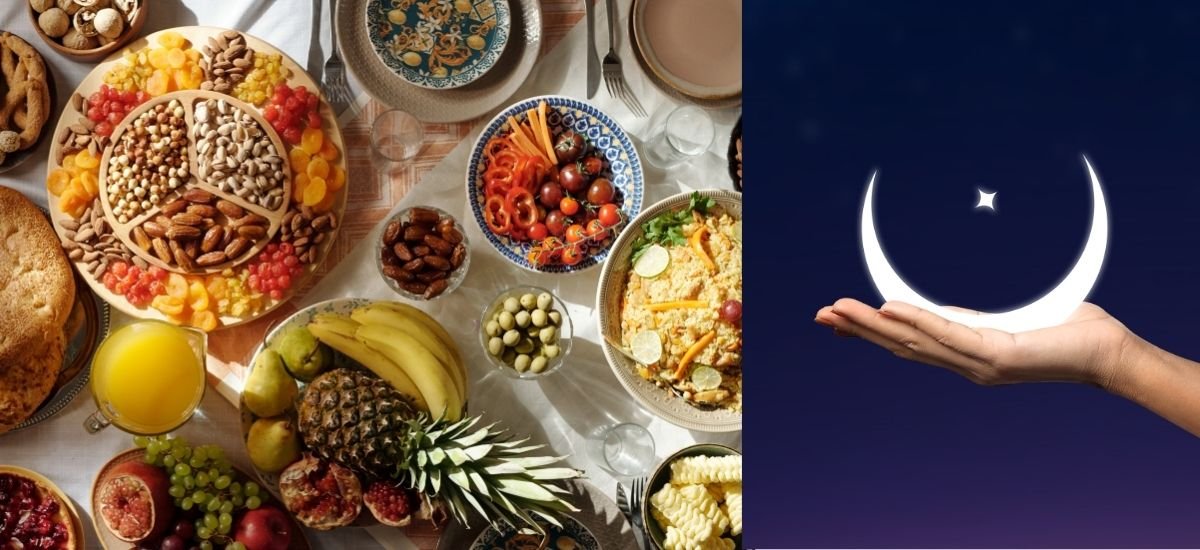
Eid al-Fitr, the festival breaking the fast, falls on the first day of Shawwal, the month following Ramadan. In 2026 it falls on or around March 30, depending on moon sighting. The night before is charged: families stay up late, children are bathed and dressed in new clothes laid out for the morning, and the sound of takbeer, the recitation of Allahu Akbar, fills neighbourhoods from Cairo to Cape Town.
The morning prayer is the anchor. In Egypt, millions pour into mosques and onto streets and open ground for the Eid salah. The Umayyad Mosque in Damascus draws the largest crowds but Cairo’s Al-Azhar and thousands of neighbourhood mosques fill equally. In West Africa, the Eid prayer takes on spectacular scale. In Kano, the historic Eid grounds outside the Emir’s palace host tens of thousands of worshippers. The Emir emerges on horseback in full ceremonial dress, accompanied by a procession of nobles and musicians. The durbar parade that follows, horses adorned and riders in historical costume, is one of the most visually striking public ceremonies on the continent and draws visitors from across the region.
In Senegal, Eid is called Korite. The day begins before dawn with the final fast-breaking meal, the suhoor, and then the morning prayer. Families dress in their finest, the women in elaborate boubous in vivid fabric, and spend the day visiting relatives in order of seniority, beginning with the eldest. Gifts of money are given to children. The meal is thieboudienne or mafe, depending on region. In Dakar, the streets empty in the morning and fill by afternoon as the visiting circuits begin.
In East Africa, Eid on the Swahili coast carries the scent of the Indian Ocean in it. In Zanzibar, the Stone Town comes alive. Pilau rice, biryani, and mandazi are prepared in quantities that strain every kitchen. The old Arab and Swahili quarter fills with families in their finest kanzus and buibuis. In Mombasa, the Aga Khan community and the broader Sunni community celebrate separately but the streets belong to everyone. In Somalia and among the Somali diaspora in Nairobi’s Eastleigh neighbourhood, Eid is marked with prayers, new clothing, and the slaughter of goats whose meat is distributed to neighbours and the poor.
In South Africa, Cape Town’s Bo-Kaap neighbourhood, the historic home of the Cape Malay Muslim community whose ancestors arrived as slaves and political exiles from South and Southeast Asia in the 17th and 18th centuries, marks Eid with a solemnity and colour that reflects its unique layered history. The call to prayer echoes off the brightly painted houses. The mosques, some of the oldest in sub-Saharan Africa, fill before dawn. After prayer, the tables groan: koesisters, bobotie, samoosas, and bredie prepared over days in advance.
Across all these celebrations, certain elements are constant. The new clothes, ideally purchased with earnings set aside through Ramadan, are non-negotiable. The giving of Eid gifts, especially to children. The visits to elders that reassert family and community bonds. The slaughter of animals and the distribution of meat to those who cannot afford it. The communal prayer that brings together, in one physical space, the wealthy businessman and the street vendor, the scholar and the illiterate, the young and the very old.
Bigger Picture: Islam has been part of Africa for 1,400 years and is more deeply African than the outside world typically recognises. Its intellectual legacy is in the manuscripts of Timbuktu and the law courts of Kano. Its economic footprint runs from Islamic banking windows in Nairobi to Gulf sovereign wealth deployed in Cairo. Its social infrastructure, the brotherhoods, the zakat institutions, the mosque networks, substitutes for state capacity across vast stretches of the continent. It is growing: by 2050, Africa will have more Muslims than any other region on earth. The story of Eid al-Fitr in Africa is the story of a faith that did not arrive as a foreign imposition but as a trading partner, a refuge-giver, and eventually the spiritual home of hundreds of millions of people who have made it entirely their own.
Source: Pew Research Center / Ahmed Baba Institute Timbuktu / Islamic Development Bank / Minerals Council South Africa