
Eight East African heads of state meet in Arusha this Saturday for the 25th Ordinary EAC Summit, where they will launch a single regional customs bond replacing multiple national transit guarantees and adopt a five-year development strategy while sitting across a table from a $89.3 million unpaid contributions crisis that only two of them have fully resolved.
- The 25th Ordinary Summit of EAC Heads of State is scheduled for March 7, 2026 at the Arusha International Conference Centre (AICC), under the theme “Deepening Integration for Improved Livelihoods of EAC Citizens”
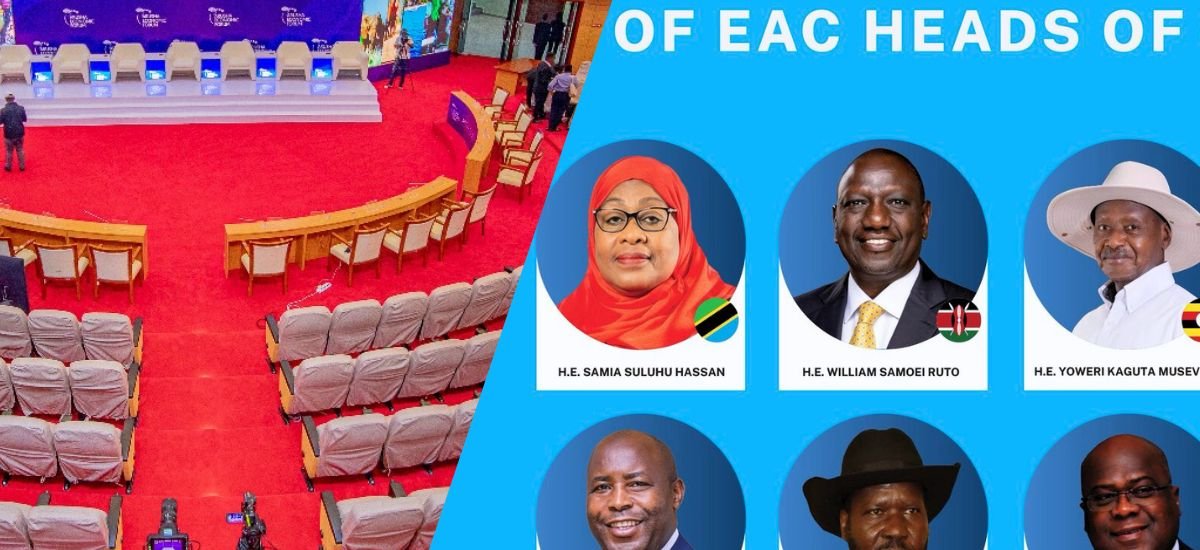
- Attending heads of state: Samia Suluhu Hassan (Tanzania), William Ruto (Kenya, also EAC Summit Chairperson), Yoweri Museveni (Uganda), Paul Kagame (Rwanda), Evariste Ndayishimiye (Burundi), Salva Kiir Mayardit (South Sudan), Felix Tshisekedi (DRC) and Hassan Sheikh Mohamud (Somalia)
- The EAC Customs Bond, the summit’s headline launch, replaces the current requirement for traders to secure separate national bonds at each transit border with a single guarantee recognised across all eight member states
- The bond links customs administrations, insurers and financial institutions under a unified framework, designed to cut border delays, reduce compliance costs and protect government revenue along transit corridors
- Leaders will formally adopt the 7th EAC Development Strategy (2026/27 to 2030/31), a five-year blueprint aligned with EAC Vision 2050, AU Agenda 2063 and the Sustainable Development Goals
- The summit will appoint a new EAC Secretary General, designate judges to the East African Court of Justice and appoint commissioners to the regional Competition Authority
- As of January 31, 2026, member states owe the EAC a total of $89.37 million in unpaid contributions: DRC leads with $27 million, followed by Burundi ($22.7 million), South Sudan ($21.8 million), Somalia ($10.5 million), Rwanda ($5.2 million) and Uganda ($1.1 million)
- Kenya and Tanzania are the only two member states to have paid their full $7 million contributions for the 2025/26 financial year
- The summit is preceded by the 59th Special Meeting of the EAC Council of Ministers running March 2 to 5 at EAC headquarters in Arusha, reviewing all agenda items before they reach heads of state
The summit arrives at an unusually charged moment for East African integration. This is the first full heads-of-state gathering in over a year, a gap that has allowed the funding shortfall to accumulate to its current level while routine institutional business stalled. The backdrop of the Hormuz crisis and rising Brent crude prices introduces additional pressure on every import-dependent economy in the bloc, with Kenya, Uganda and Tanzania all exposed to fuel cost shocks that feed directly into food and transport inflation. Against that context, the EAC Customs Bond carries more weight than it would in quieter times. Every day that cargo sits at a border waiting for national bond clearances represents a cost that regional businesses cannot absorb when margins are already compressed by commodity volatility. EAC Secretary General Veronica Nduva, speaking ahead of the meeting, described the customs bond and development strategy as practical signals of the bloc’s commitment to removing barriers rather than issuing statements.
The Bigger Picture: The $89.3 million arrears figure is the real story underneath the summit agenda. A regional bloc cannot credibly launch a five-year development strategy while six of its eight members have not paid their current-year bills. The DRC alone owes $27 million, nearly four times its annual assessed contribution, and it joined the EAC only in 2022. Somalia, admitted as a full member in March 2024, already carries $10.5 million in arrears. These are not administrative oversights; they reflect the structural reality that several EAC members are simultaneously trying to fund regional commitments, service external debt, and manage domestic fiscal crises. The Customs Bond is the kind of practical, revenue-protecting reform that can survive political turbulence because it benefits traders and governments alike on day one. The 7th Development Strategy is a more complex bet. Its success depends entirely on whether the financing question gets resolved before the document becomes another well-written blueprint sitting on a shelf. The answer to that question will come not from Saturday’s speeches but from contribution payment records six months from now.
Source: Capital FM / The Citizen