

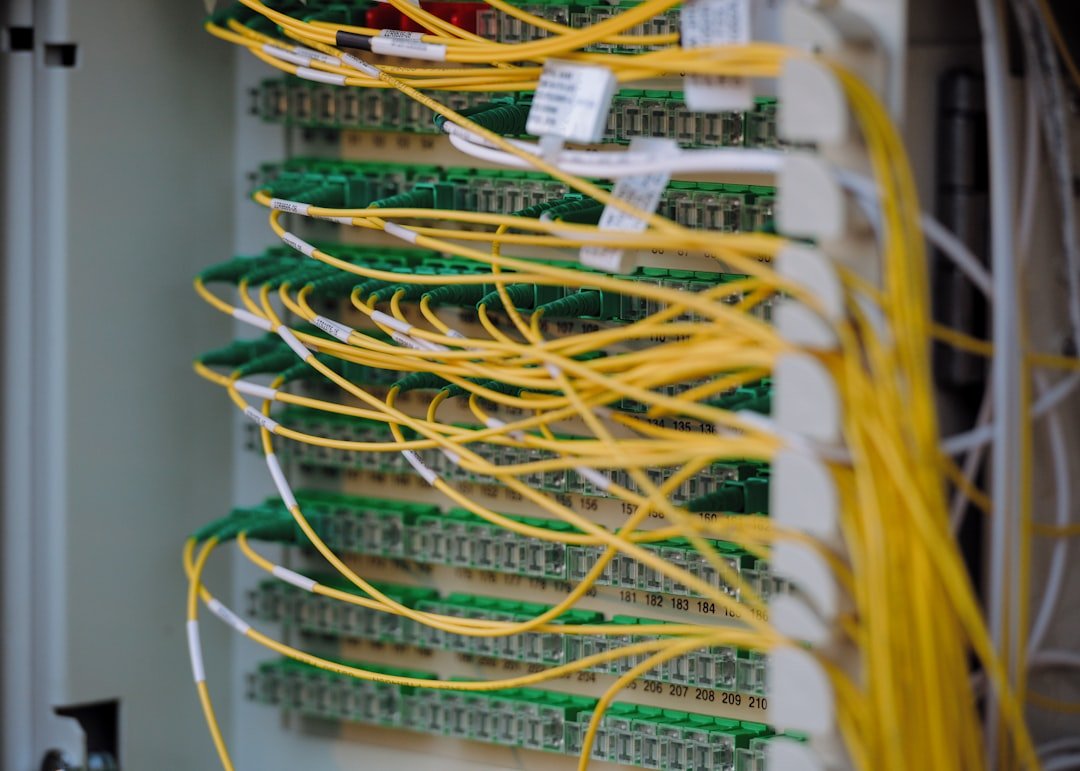
Kenya is calling on global tech investors to build AI-capable data centres in the country, with Special Envoy for Technology Philip Thigo warning at the Mobile World Congress in Barcelona that Africa accounts for less than 1% of global AI computing capacity and risks being locked out of the next phase of the digital economy. Kenya has only 2 AI-ready data centres against South Africa’s 5, and without heavy infrastructure investment the continent will import AI rather than build it.
- Thigo addressed investors and technology firms at MWC Barcelona on Monday, urging capital into AI infrastructure and warning that African economies will struggle to deploy AI on local challenges without substantial investment in computing power, specialised hardware, and large-scale data storage
- Africa holds less than 1% of global AI computing capacity, investment, and frontier model innovation, according to Thigo, who described the “real AI divide” as a gap in access to compute and data rather than access to apps. Globally, more than 10,000 data centres operate across 174 countries, with the United States hosting nearly 40% and home to the leading AI firms including OpenAI, Anthropic, and chipmaker Nvidia
- Kenya has 19 data centres in total but only 2 are AI-capable, with 15 of the 19 located in Nairobi and most classified as light-duty facilities unsuited to training or running large language models. South Africa leads Africa with 60 data centres total and 5 AI-capable, followed by Nigeria with 22 total and 1 AI-capable, according to the Data Centre Map
- Construction costs for data centres run above $10 million per megawatt and can exceed $20 million per megawatt for AI-optimised facilities, making the investment threshold high and the need for international capital acute. Kenya has positioned itself as a regional technology hub but analysts say sustained investment in data centres, fibre networks, and a reliable power grid are critical to attracting AI developers and global cloud providers
- Shortage of heavy-duty data centres and fibre-optic connectivity forces African companies to rely on overseas cloud regions, raising costs, slowing local innovation, and creating a structural dependency in which the continent generates data but processes it elsewhere. Thigo argued that domestic computing capacity would enable developers to build AI tools tailored to local languages, agriculture, healthcare, and education
- Thigo said the technology gap is widening rather than narrowing: “The paradox is that while we are seeing the fastest technological advances in history, inequality is widening.” He cited Huawei as among the technology vendors already eyeing African data centre markets, signalling that interest exists but has not yet translated into the AI-grade infrastructure Kenya needs
- “For African countries to be able to utilise AI at levels where they are solving context-specific local problems, we need a lot of investment, especially in data centres and heavy infrastructure,” Thigo said. “It starts with connectivity”
The data centre gap is not merely a technology policy problem. It is a structural economic constraint that compounds over time. Every large language model trained outside Africa is a model that learns from non-African data, optimised for non-African contexts, and sold back to African businesses at the margin price set by foreign providers. Kenya’s position as a regional fintech and startup hub makes it the most credible candidate to host the continent’s first serious AI-grade infrastructure cluster, but the window is not permanent. South Africa’s five-facility lead reflects years of consistent infrastructure investment and reliable power supply. Kenya’s competitive advantages are its undersea cable connectivity, its developer ecosystem, and its regulatory positioning as a technology-friendly jurisdiction. Whether those advantages convert into data centre investment at the scale Thigo is calling for depends on whether the government can offer the power reliability, land access, and fiscal incentives that global cloud providers require before committing nine-figure capital expenditure.
Kenya’s digital security challenge runs alongside its infrastructure gap. The country lost $230 million to cybercrime in a single quarter of 2025, a figure that underscores why building secure, locally-controlled data infrastructure is as much a sovereignty question as a commercial one. Separately, Vodafone and Amazon’s satellite deal to extend 4G and 5G connectivity across Africa signals that the broader infrastructure picture is moving, even as the AI-specific data centre gap remains acute.
The Bigger Picture: Thigo’s call at MWC Barcelona is the clearest public statement yet that Kenya views data centre infrastructure as a sovereignty question, not merely a commercial one. A continent that hosts none of the compute underpinning the AI systems it uses has no leverage over how those systems are built, what data they are trained on, or what they cost. Africa’s developers are building applications on infrastructure owned by US and European hyperscalers, paying dollar-denominated cloud fees, and hitting latency ceilings that make certain real-time applications unviable. The investment ask is large: AI-optimised data centres cost upward of $20 million per megawatt to build, require uninterrupted power, and take years to develop. But the alternative is a continent that participates in the AI economy only as a consumer, with no ability to shape the models, own the infrastructure, or capture the economic value of AI-driven productivity gains. Kenya has the connectivity, the talent base, and the political will. What it needs is the capital, and Thigo’s MWC appearance signals that Nairobi is now actively competing for it.
Source: Business Daily Africa