
The Confederation of African Football has done something that has no modern parallel in elite international football: it stripped the winning team of a continental title 57 days after the final, handed it to the losing side, and recorded the score as 3-0. Senegal won the 2025 Africa Cup of Nations 1-0 after extra time. CAF has decided they did not. This is a crisis, not a controversy.
What actually happened on the night
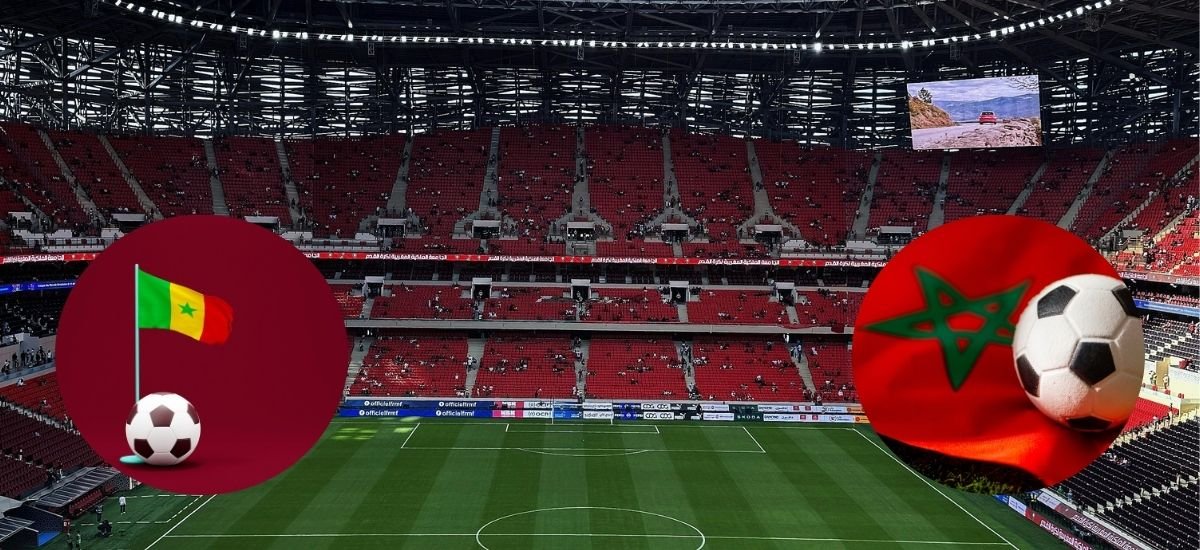
The 2025 AFCON final was played on January 18 in Rabat, Morocco. Senegal and Morocco, the host nation, met at the Prince Moulay Abdellah Stadium. Deep in the eighth and final minute of stoppage time, Congolese referee Jean-Jacques Ndala awarded Morocco a penalty following a VAR review, ruling that El Hadji Malick Diouf had fouled Brahim Diaz in the box. Moments earlier, Senegal had seen a goal by Ibrahim Sarr ruled out for a foul, a decision they also disputed.
The Senegalese players, led by coach Pape Thiaw, left the field. They refused to stand behind the penalty spot while it was taken. The walkout lasted approximately 14 to 17 minutes depending on the account. Sadio Mane, Senegal’s captain, remained on the touchline. It was Mane who eventually convinced his teammates to return. When play resumed, Brahim Diaz took the penalty and attempted a Panenka, a deliberately casual chip intended to fool the goalkeeper. Edouard Mendy read it, stood still, and caught the ball. The game headed to extra time. In the 94th minute, Pape Gueye struck a goal. Senegal won 1-0. The trophy was presented. The Lions of Teranga were African champions.
Fifty-seven days later, they were not.
Why CAF says the title belongs to Morocco
The Royal Moroccan Football Federation appealed the result immediately after the final. CAF’s disciplinary board dismissed the initial appeal. Morocco pursued it to CAF’s appeals board, which ruled on March 17 in Morocco’s favour.
CAF cited Articles 82 and 84 of AFCON tournament regulations. Article 82 states that if a team "refuses to play or leaves the ground before the regular end of the match without the authorization of the referee, it shall be considered loser and shall be eliminated for good from the current competition." Article 84 awards the opponent a 3-0 win. CAF’s appeals board determined that Senegal’s walkout fell within the scope of those articles, regardless of the fact that the referee permitted play to resume and allowed the result to stand on the night.
The Senegalese Football Federation (FSF) has called the ruling "unfair, unprecedented, and unacceptable." The Senegalese government’s secretary of state described it as "manifestly erroneous," "grossly illegal," and the product of "suspected corruption at CAF." FSF secretary-general Abdoulaye Seydou Sow told state broadcaster RTS1: "This is a travesty. It has no legal foundation. The judge did not come to rule on the case. He came to carry out orders."
Why Senegal’s legal argument is strong
The core of Senegal’s case rests on a direct conflict between CAF’s tournament regulations and IFAB’s Laws of the Game, which govern football worldwide. Law 5.2 of the International Football Association Board, the body that sets the rules for all football globally, states: "The decisions of the referee regarding facts connected with play, including whether or not a goal is scored and the result of the match, are final. The decisions of the referee, and all other match officials, must always be respected."
On the night, Referee Ndala made an active field-of-play decision. He did not declare the match abandoned. He waited for Senegal to return. He allowed the penalty to be taken. He allowed extra time to be played. He allowed the result to stand. He signed off on the match. A governing body’s appeals board cannot, under IFAB law, override a referee’s active field-of-play decision and rewrite the match result.
There is a directly relevant precedent. In 2019, Wydad Casablanca, a Moroccan club, walked off in the second leg of the African Champions League final against Esperance of Tunisia, protesting a VAR malfunction. The referee declared Esperance winners. CAF’s executive committee then controversially ordered a replay. Esperance took CAF to the Court of Arbitration for Sport in Lausanne. CAS declared Esperance champions and rebuked CAF for attempting to override the referee’s decision. The same principle now applies in reverse: the referee’s decision on January 18 was final.
Senegal has announced it will appeal to CAS. That process typically takes 12 months. Until CAS rules, the official AFCON record reads: Morocco 3-0 Senegal.
Was the tournament fair? What other teams said
The racial and identity dimension of this dispute requires honest treatment. Morocco is an African nation and a member of CAF. Its players are African. But Morocco also identifies culturally as Arab and Amazigh, and it sits geographically and culturally in North Africa, distinct from the Sub-Saharan African identity of nations like Senegal, Ghana, Nigeria, and Egypt. In the context of AFCON, which was founded specifically to celebrate African football and whose history has been overwhelmingly shaped by Sub-Saharan nations, the North Africa versus Sub-Saharan Africa dynamic is real, politically charged, and not new.
What is notable about the 2025 tournament is the number of Sub-Saharan African teams that raised formal complaints about refereeing. Senegal’s formal complaint was the most prominent, but it was not isolated. Egypt’s coach went public with calls for FIFA intervention over what he described as bias toward the host. Multiple teams complained about scheduling disadvantages and security treatment upon arrival in Rabat. Morocco’s coach Walid Regragui himself acknowledged the controversy, describing the events of the final as a "Hitchcock script," though he attributed blame entirely to Senegal.
Before the final, the FSF formally called on CAF to ensure "fair play, equal treatment, and security" after raising concerns about how the Senegal delegation was treated upon arrival in Rabat. Ball boys employed by the host attempted to seize a towel belonging to goalkeeper Edouard Mendy during the final, an act for which Morocco were fined $200,000. Senegal fans in the crowd were arrested and, in a ruling that drew international condemnation, 18 to 19 of them were sentenced to prison terms of up to one year and fined by Moroccan courts. Senegal’s Prime Minister Ousmane Sonko publicly denounced the sentences.
To be analytically precise: no evidence has been presented that the refereeing bias in this tournament was racially motivated in the sense of individual referees acting on racial animus. The more credible and damaging allegation is structural: that the host nation advantage in refereeing, always present to some degree in major tournaments, was systematically amplified in Morocco’s case and that CAF’s governance structure, including the makeup of its appeals board, is insufficiently independent from the interests of its most powerful and internationally prominent member federation.
Morocco is a 2030 FIFA World Cup co-host alongside Spain and Portugal. It has invested billions in football infrastructure and international positioning. Its federation is powerful, well-resourced, and politically connected within CAF. That is context. Whether it amounts to corruption, as the Senegalese government alleges, is what CAS will have to determine.
The financial stakes
The financial dimensions are significant and underappreciated. AFCON title holders receive enhanced prize money, commercial positioning, and tournament seeding advantages for subsequent competitions. More materially, both Senegal and Morocco are competing at the FIFA World Cup 2026, which begins in June. The World Cup carries prize money starting at $10 million per team for group-stage participation and rising sharply for knockout progression. A title brings sponsorship leverage, national football federation commercial revenue, and player market value uplift.
Under CAF’s ruling, Morocco travel to the World Cup as African champions. That branding has commercial value. It affects sponsor negotiations, broadcaster positioning, and national federation revenue in Morocco. It also deprives Senegal of that same positioning.
Beyond the immediate tournament, the broader damage is to AFCON’s commercial attractiveness. AFCON is broadcast globally, generates significant television rights revenue, and competes for airtime and advertising spend against UEFA competitions and Copa America. A governing body that retroactively strips a champion 57 days after the final makes the tournament’s outcomes legally and commercially uncertain. Broadcasters, sponsors, and commercial partners need certainty of result to plan campaigns, justify spend, and activate rights. A year-long CAS dispute, with the championship in a legal holding pattern, weakens AFCON’s commercial proposition materially.
What this means for CAF’s credibility
CAF has a documented history of governance failures. The 2019 Champions League walkout by Wydad, its botched handling of that VAR controversy, its subsequent humiliation at CAS, and now this ruling combine into a pattern. The body that governs African football has a structural problem: it is simultaneously the regulator, the commercial operator, and the organisation most dependent on the prestige and power of its leading member federations. Those roles conflict. The appeals board that ruled against Senegal did so in application of a regulation that directly contradicts IFAB law, and it did so two months after the referee exercised his lawful authority and signed off on the result.
The FSF’s secretary-general said publicly that the panel appeared to have "come to carry out orders." That is an allegation of institutional capture, not merely procedural error. The Senegalese government’s call for an "international independent inquiry into suspected corruption at CAF" is unprecedented in its directness. No African government has previously characterised a CAF ruling in those terms in such explicit language.
What happens next and what international bodies can do
Senegal will appeal to CAS. The case is strong on the IFAB grounds alone. CAS has already established precedent that CAF cannot override a referee’s active field-of-play decision, which is precisely what the appeals board has done here. A CAS victory would reinstate Senegal as champions, humiliate CAF’s governance credibility for a second time in seven years, and force structural reform of how CAF handles appeals.
FIFA has an oversight role over CAF as a continental confederation. FIFA president Gianni Infantino condemned Senegal’s walkout on the night, but his condemnation was of the act, not of the governance response. FIFA has the authority to require CAF to reform its disciplinary and appeals processes. It has not exercised that authority. Whether it does so now, as pressure mounts from multiple African governments and football federations, is a question of political will.
African heads of government are increasingly engaged. Senegal’s Prime Minister Sonko has been explicit. If the pattern of complaint from Sub-Saharan African federations continues into the next AFCON cycle, pressure may mount for a fundamental restructuring of CAF’s governance, including the introduction of independent judicial panels that operate outside the confederation’s political control, as FIFA itself requires of its own disciplinary bodies.
Should the world move on
No. Not yet, and not without accountability. Moving on before CAS rules would mean accepting that a governing body can award a continental championship to the team that lost on the night by retroactively applying a regulation that contradicts the Laws of the Game, two months after the fact, in a process that the affected federation’s own legal representatives publicly described as predetermined. That is not a controversy to be absorbed and moved past. It is a test of whether African football’s governance operates under the rule of law or under the rule of influence.
Sadio Mane, whose leadership on the night brought Senegal back onto the pitch, framed it best in the immediate aftermath: "I think the referee sometimes can make mistakes. What matters is respecting the game." He was right about respecting the game. CAF’s appeals board, by that standard, has failed the test he described.
Bigger Picture: Senegal won the 2025 AFCON. They crossed a line, but they returned and completed the match under the referee’s authority. The referee allowed every subsequent action, including the penalty, the extra time, and the winning goal, and signed off on the result. A continental governing body has now decided that a regulation printed in a tournament handbook overrides both the Laws of the Game and the referee’s active decision on the field. If that principle stands, AFCON becomes a competition whose results are determined not at the final whistle but in a committee room weeks later. For Africa’s football, for its players, for the hundreds of millions who watch, and for the sponsors and broadcasters who fund the tournament, that is a definition of the game that nobody, on any continent, should accept.
Source: Al Jazeera / Reuters via US News / Sky Sports / Goal.com