
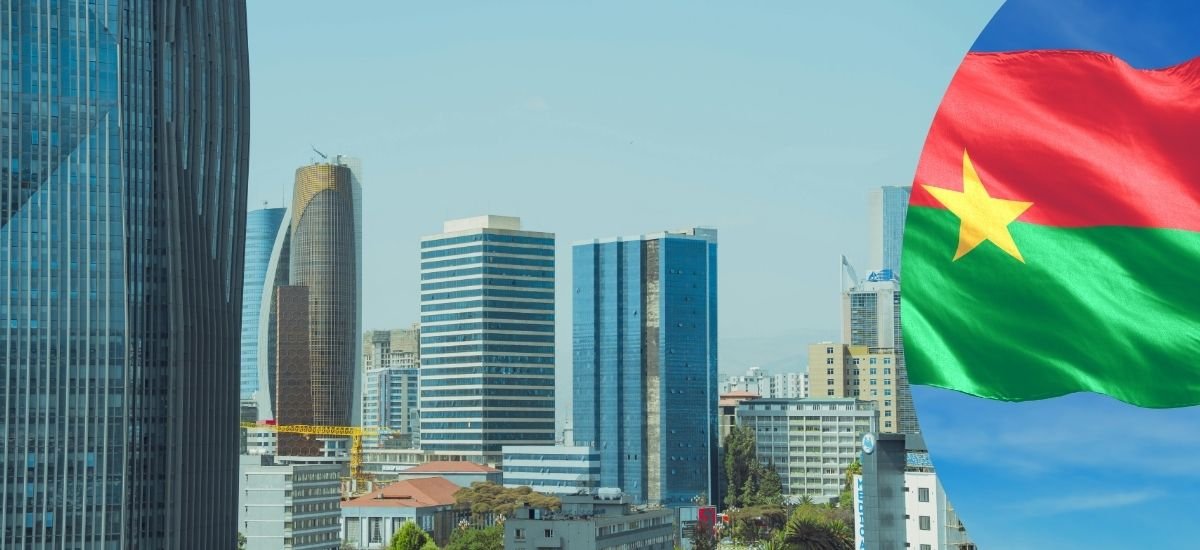
Burkina Faso has adopted a $64 billion five-year development plan covering 2026 to 2030, more than tripling the budget of its previous national framework and targeting GDP growth of up to 7.2% annually by 2030. The National Development Plan, known as the PND, signals a major bet on economic transformation even as the country continues to manage a grinding security crisis across large parts of its territory.
- The PND carries a total budget of 36,190.7 billion CFA francs, roughly $64 billion, against an average annual spend of CFA 7,238.1 billion. Its predecessor, the PNDES II, was valued at CFA 19,030.7 billion for its entire duration, making the new plan more than three times larger.
- Investment spending, including capital transfers, accounts for 34.5% of the total budget. Additional financing needs, the portion not covered by current revenues and committed external support, are projected at 30.3% of the plan’s cost, meaning significant fundraising lies ahead.
- The plan is structured around four pillars: security and social cohesion; state reform and governance; human capital development; and infrastructure expansion with economic transformation. Each pillar reflects a condition the government considers essential before sustained private investment can flow.
- The government cites progress on territorial control as a foundation for the plan. The share of national territory under government control rose from 69% in 2023 to 73.56% by late 2025, though large areas of the north and east remain contested by jihadist groups.
- The PND targets local processing of raw materials, deeper mining integration into the domestic economy, and program-based budgeting to improve implementation discipline. Domestic resource mobilisation and community involvement in project delivery are explicitly built into the framework.
The PND arrives at a moment of unusual economic resilience for Burkina Faso. The country produced a record 94 tonnes of gold in 2025, flipping the current account from deficit to surplus and underpinning a $124.3 million IMF Resilience and Sustainability Facility approved in February 2026. The IMF projects medium-term GDP growth of 4.5% to 5.0%, conditional on security improvements. The government’s own targets in the PND are more aggressive: 6.1% average annual growth as the base case, rising to 7.2% under a more ambitious scenario. The gap between IMF and government projections is a telling indicator of how much the security situation remains the binding constraint. At $21 billion in current GDP terms, a $64 billion five-year plan represents a spending envelope roughly three times the size of the economy in a single year, an aspiration rather than a guarantee.
The Bigger Picture: Burkina Faso’s PND is structurally similar to development plans across the Sahel in that its delivery depends on a security variable that no budget line can resolve. The country’s gold windfall has given Captain Ibrahim Traoré’s government fiscal room it did not have two years ago: revenues from gold mining reached over CFA 776 billion in 2025, the fiscal deficit held below 4% of GDP, and the IMF programme remained on track. But 30.3% of the plan’s financing is still unmet, and attracting that capital requires partners who are currently thin on the ground. Western development banks have reduced exposure following the 2022 coup; Russia and Gulf states have partially filled the gap. The real test of the PND will come in the first two years: if security stabilises and gold revenues hold, the investment pillars become credible. If they do not, the plan joins a long list of aspirational African development frameworks that stalled before implementation.
Source: Ecofin Agency / Africa News Agency