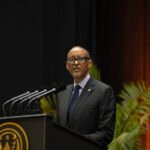


The World Bank’s Managing Director Paschal Donohoe warned in Accra on March 17 that 1.2 billion young people are expected to enter labour markets in developing countries over the next decade, and that most are not adequately prepared for available opportunities. Speaking on the theme "Building Skills, Creating Jobs, and Empowering Africa’s Future," Donohoe called the situation a global skills crisis and urged urgent reform of education and training systems across Africa.
The diagnosis is familiar. Every month, approximately one million young Africans enter the labour market, but 86 percent of jobs on the continent are in the informal sector. The World Bank projects a net increase of roughly 740 million working-age people across Africa by 2050, adding around 12 million per year against only 3 million new formal wage jobs being created annually. The gap between workforce entrants and productive formal employment is not a short-term problem. It is a structural mismatch that compounds with every year the underlying education and training architecture goes unreformed.
Donohoe identified three specific failure points: children in low- and middle-income countries who lack foundational literacy and numeracy skills; adults who have not attained basic education; and training systems whose curricula are misaligned with actual employer demand in sectors shaped by technology, automation, and the green energy transition. He singled out digital services, agribusiness and green energy as sectors where opportunity is concentrated and where skills investment would yield the highest job creation returns.
The World Bank is not only diagnosing. In February 2026, it announced the $972 million SET4Jobs programme for Eastern and Southern Africa, targeting 18 million young people with improved education and skills over eight years, with a specific focus on aligning training to value chains in agribusiness, energy, healthcare, tourism and manufacturing. In Eastern and Southern Africa, approximately 8 million young people enter the labour market annually, while fewer than one million secure waged jobs. An estimated 6.5 million are neither in school nor in any form of employment. The SET4Jobs structure uses a results-based financing model, tying payments to verified employment outcomes six to twelve months after graduation rather than inputs like enrolment numbers.
The evidence for results-based approaches is building. In Rwanda, the Priority Skills for Growth Programme has trained nearly 24,000 youth, with 82 percent employed or self-employed nine months after graduation. The East Africa Skills for Transformation and Regional Integration Project, working across 16 regional colleges, has lifted graduate employment rates from 47 percent to 79 percent. In Ethiopia, short-term training programmes paid providers based on employment outcomes have demonstrated measurable gains in job placement.
The structural challenge is not just skills supply. It is market alignment. Employers cannot find workers with the competencies they need while trained graduates cannot find jobs that match their qualifications. Donohoe urged stronger formal collaboration between educational institutions and industry to close this loop, with employers co-designing curricula and providing structured apprenticeships. The World Bank’s agribusiness financing programme, AgriConnect, is targeting $9 billion annually by 2030, alongside the Mission 300 electricity access programme. Neither investment translates into jobs without a corresponding workforce that can build, operate and maintain the infrastructure being financed.
This connects directly to a skills gap Africaspoint has documented in a related context: sub-Saharan Africa faces a 57 percent talent shortage in construction and project management professionals by 2035, the highest growth rate of any region globally, at exactly the moment when the continent is deploying over $360 billion in infrastructure investment. The World Bank’s skills message in Accra and its capital deployment across energy and agribusiness are two sides of the same equation. Capital without people is stranded. People without skills are underemployed.
Bigger Picture: Africa’s youth bulge is the most cited fact in development economics, and for good reason: 42 percent of the world’s youth will be African by 2030. Whether that demographic becomes an economic dividend or a governance crisis depends almost entirely on what happens between school completion and productive employment. The World Bank’s Accra speech and its $972 million SET4Jobs commitment are a signal that the institution is moving from diagnosis to deployment. The test is not whether the frameworks are correct, they are, but whether the programmes are implemented at the speed and scale the arithmetic requires. At 12 million new entrants per year against 3 million formal jobs, Africa is running a deficit of roughly 9 million productive employment slots every twelve months. Closing that gap requires not incremental reform but structural transformation of how training is designed, financed, and delivered.
Source: Ghana Business News / Ghana News Agency / World Bank