
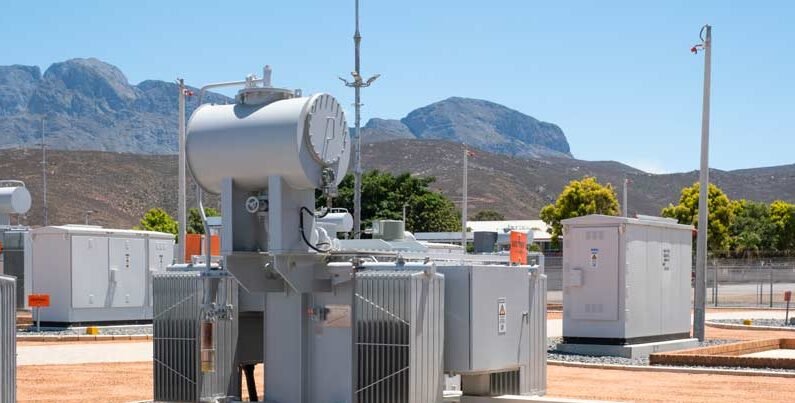
South Africa’s HEX Battery Energy Storage System in Worcester is now delivering 100 MWh of stored power to a regional grid that serves 16 megawatts of morning industrial demand, making it Africa’s first utility-scale battery of its kind. The $57.67 million project, co-financed by the Clean Technology Fund through the African Development Bank, has ended load shedding for the farms and processing plants of the Western Cape town and is already reshaping how other African governments plan their energy grids.
- HEX BESS is operated by Eskom in partnership with South Korea’s Hyosung Heavy Industries, deploying more than 360 lithium-ion batteries with a capacity of 20 MW and 100 MWh, capable of delivering up to five hours of uninterrupted discharge.
- The system captures excess wind generation at night and dispatches it at dawn, precisely when Worcester’s dairy farms, wine producers, and processing plants begin peak operations. Local dairy farmer Pieter Loubser said the end of load shedding removed the single biggest operational risk to his cattle milking schedule.
- The Clean Technology Fund contributed $57.67 million in concessional financing channelled through the AfDB, with Eskom and Hyosung delivering the technical build. The facility received its completion certificate in June 2023 and began commercial operations in October 2023.
- Two additional facilities at Graafwater and Paleisheuwel in the Western Cape are part of the same programme, extending the storage network across the region.
- African Development Bank Principal Energy Specialist Anthony Karembu said the project is already reshaping energy policy across the continent, with countries now incorporating battery storage into their national master plans because HEX proved the model works at scale.
- Eskom has established a new division, Eskom Green, dedicated to pairing renewable energy with battery storage to manage intermittency across its generation portfolio.
Worcester’s success sits within a broader pivot by South Africa’s energy sector. The country’s R1 trillion infrastructure investment commitment includes a major push on renewable generation, and the HEX project demonstrates that storage is the critical missing link between intermittent wind and solar output and reliable grid supply. Eskom Programme Manager Lwando Limba noted that specialists from around the world have visited the site to study its sequencing, procurement, and safety protocols, turning Worcester into an informal academy for African battery deployment.
The Bigger Picture: Africa’s energy transition has long stalled at the storage problem. Wind and solar capacity has grown steadily, but without the ability to bank generation for peak demand, grid operators defaulted to fossil backup or rationing. HEX changes that calculation. The $57.67 million concessional investment unlocked a replicable model at commercial scale, and with 10 to 15 African countries now incorporating BESS into national energy master plans, the Worcester facility may prove more valuable as a proof of concept than as a power plant. For investors and development finance institutions, the signal is clear: the technology works, the economics are viable with the right co-financing structure, and the continent’s industrial base is ready for it.