
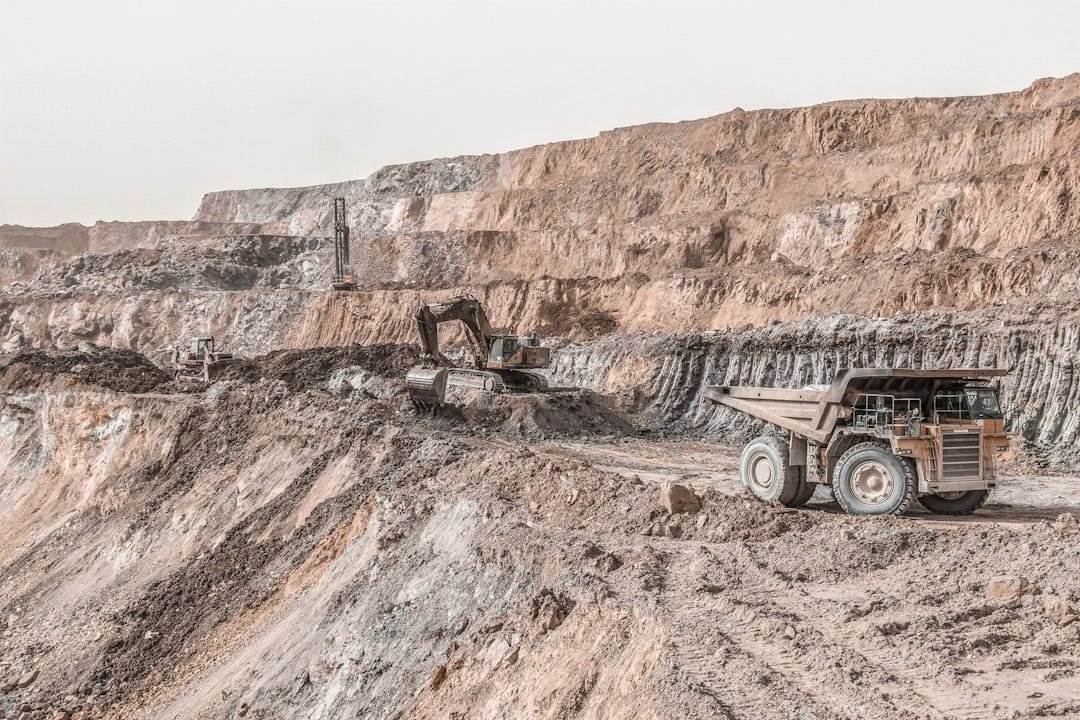
South Africa, Namibia, Botswana and Morocco have held the top four positions in The Africa Report’s ranking of the continent’s 25 most attractive mining destinations for the second year running, with Ghana and Zambia emerging as the strongest challengers in a field reshaped by soaring gold and copper prices and intensifying competition for critical minerals.
The ranking scores countries across five criteria: the volume of reserves across 13 key minerals including cobalt, copper, lithium, platinum, manganese, uranium and gold; the number of active critical minerals projects; business environment and country risk; legal framework and governance; and the quality of energy and transport infrastructure. Geological reserves carry 50 percent of the total score, but the operational environment accounts for 40 percent, a weighting that explains why stable, well-governed countries consistently outperform geologically richer but institutionally weaker rivals. South Africa holds the world’s largest reserves of both platinum and manganese, two minerals central to green hydrogen technology and battery production respectively, and its diversified reserve base across all 13 tracked minerals gives it an unassailable lead. Namibia’s strength lies in uranium, copper, graphite and lithium, while Botswana’s ranking reflects its legal stability and the diamond and copper sectors that underpin its investment-grade creditworthiness. Morocco scores on copper, cobalt and a regulatory environment that has consistently attracted European industrial capital.
The movement below the top four reveals how rapidly the competitive landscape is shifting. Ghana and Zambia are closing the gap, driven by active copper and gold project pipelines and incremental governance improvements. Several Francophone countries recorded sharp upward moves, reflecting both new project announcements and rising commodity revenues. At the bottom of the 25-country table, governance deficits are decisive: Zimbabwe placed 18th despite holding some of the world’s largest lithium reserves, and Niger ranked poorly amid its post-coup political uncertainty. Angola, Malawi and Uganda occupy the lowest tier as acknowledged frontier markets where reserve data remains sparse and project pipelines are thin, though the report notes these rankings could shift materially with increased exploration investment.
The methodology draws on data from the Fraser Institute, Coface, the United States Geological Survey, and the Global Economy database, standardised into a 0 to 100 score per criterion with zero assigned where data is absent.
The Bigger Picture The consistency at the top of this ranking carries a pointed message: geology is necessary but not sufficient. Africa holds more than half of global production of cobalt, platinum and manganese, yet the countries capturing the bulk of investment are those that have spent decades building functional legal systems, reliable infrastructure and predictable fiscal regimes. As the energy transition drives a structural increase in demand for the minerals Africa uniquely possesses, the gap between what the continent holds underground and what it captures in investment and revenue will be determined almost entirely by governance choices made above ground.
Source: The Africa Report