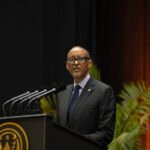

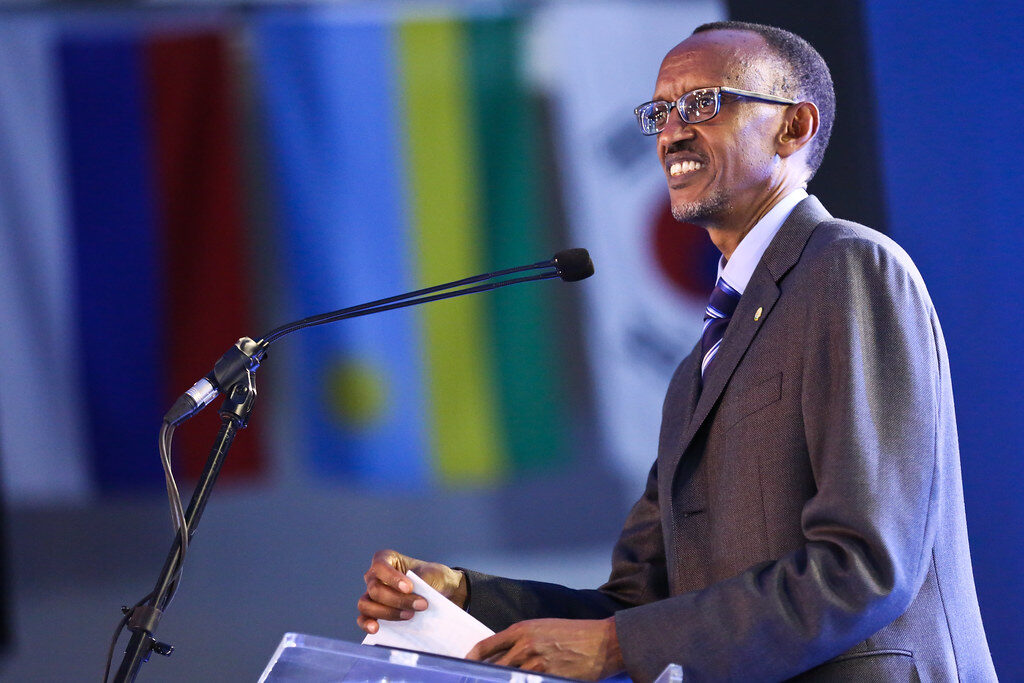
IN SHORT: Rwanda’s Finance Minister Yusuf Murangwa is presenting the national budget for the 2026/27 fiscal year to Parliament on June 11, following Cabinet approval on Monday. The proposed budget stands at Rwf7,796.3 billion ($990 million equivalent), a 12% increase from the revised Rwf6.9 trillion budget for 2025/26, aligned with the Second National Strategy for Transformation. The largest allocation by sector is education at Rwf888.7 billion. Economic transformation takes the largest share by development pillar at Rwf4,999 billion. Domestic resources will finance 68% of the budget, reflecting continued efforts to reduce dependence on external support.
Rwanda is presenting its largest-ever national budget to Parliament today, with Finance Minister Murangwa tabling Rwf7.8 trillion in planned spending for 2026/27 as the government accelerates investment in education, agriculture, energy, healthcare and infrastructure, backed by a domestic revenue mobilisation strategy that will finance 68% of total expenditure without external grants or borrowing. The budget presentation coincides with East African Community budget day, with finance ministers across the EAC presenting their respective national budgets simultaneously on June 11 as a coordinated regional fiscal event.
- The 12% budget increase from Rwf6.9 trillion to Rwf7.8 trillion translates into an additional Rwf844.2 billion in spending capacity. The Office of the Prime Minister said the increase aims to support agricultural production, drive industrial growth, create jobs and sustain macroeconomic stability. The increase is financed primarily by domestic revenue growth, with tax revenue projected at Rwf4,429 billion, representing the largest single financing component.
- Education receives the largest social sector allocation at Rwf888.7 billion, to support school infrastructure, teacher recruitment, school feeding, technical and vocational education expansion and completion of a veterinary medicine school and teaching hospital at the University of Rwanda’s Nyagatare campus. The education prioritisation reflects Rwanda’s Vision 2050 emphasis on human capital as the primary development driver in an economy with limited natural resource endowments.
- Economic transformation receives Rwf4,999 billion, the largest allocation by development pillar, covering industrial parks, tourism, mining, private sector development and employment creation. Agriculture receives Rwf352.5 billion for fertiliser and seed distribution, irrigation, post-harvest facilities, grain reserves and livestock productivity. Infrastructure and transport receive Rwf305.3 billion for road upgrades, the Kigali-Muhanga and Base-Butaro routes and construction of the expressway to the New Kigali International Airport in Bugesera District.
- Energy receives Rwf350.1 billion to support the Nyabarongo II Hydropower Plant, expand electricity access and promote clean cooking. This allocation is consistent with Rwanda’s target to reach universal electricity access and its position as a fast-growing renewable energy market. Health receives Rwf489 billion for hospital upgrades and investment in maternal and child healthcare.
- Foreign grants are projected at Rwf548.3 billion (7% of total), a significantly smaller share than in previous budget cycles, reflecting Rwanda’s deliberate strategy of reducing grant dependence that Finance Minister Murangwa has consistently articulated. External loans are projected at Rwf1,974 billion, primarily for long-term development projects. The 68% domestic financing share is among the highest in Rwanda’s budget history and reflects the maturation of the domestic tax base.
- Murangwa flagged the Middle East conflict and its impact on energy and fertiliser prices as the primary external risk to budget execution in 2026/27. The Hormuz conflict has pushed up global fuel prices and disrupted fertiliser supply chains from Middle Eastern producers, creating cost pressures for an agricultural economy that imports most of its fertiliser and all of its petroleum. The budget provisions for fertiliser subsidies and irrigation investment are partly a resilience measure against this risk.
Rwanda’s Rwf7.8 trillion budget is presented against the backdrop of the IMF’s $250 million Extended Credit Facility approved on June 9, which provides both financing support and policy credibility for the government’s fiscal framework. The IMF programme’s existence gives international investors and development finance institutions confidence that Rwanda’s budget planning is anchored to a credible macroeconomic framework, reducing the risk premium they attach to lending to or investing in the country. The combination of ambitious domestic spending, a disciplined financing structure and an IMF programme backing it creates the policy architecture that Rwanda’s development trajectory requires.
The Bigger Picture: Rwanda’s Rwf7.8 trillion budget is a statement about where a country of 14 million people can go when it consistently prioritises education, infrastructure and economic transformation over the 30-year horizon. Rwanda in 1994 had essentially no functioning economy. Rwanda in 2026 has a 9.4% GDP growth rate, a new IMF programme, an expanding airport infrastructure and a budget that is 68% self-financed. The 12% increase in public spending, funded primarily by domestic tax revenue rather than external grants, is the clearest possible indicator of an economy that has crossed the threshold from aid-dependent to self-sustaining fiscal capacity. The risks, from the Hormuz conflict to global market volatility, are real. But Rwanda’s budget trajectory is one of the most consistently impressive development finance stories in Africa and deserves recognition as such.
Source: AllAfrica / The New Times, June 10-11 2026