

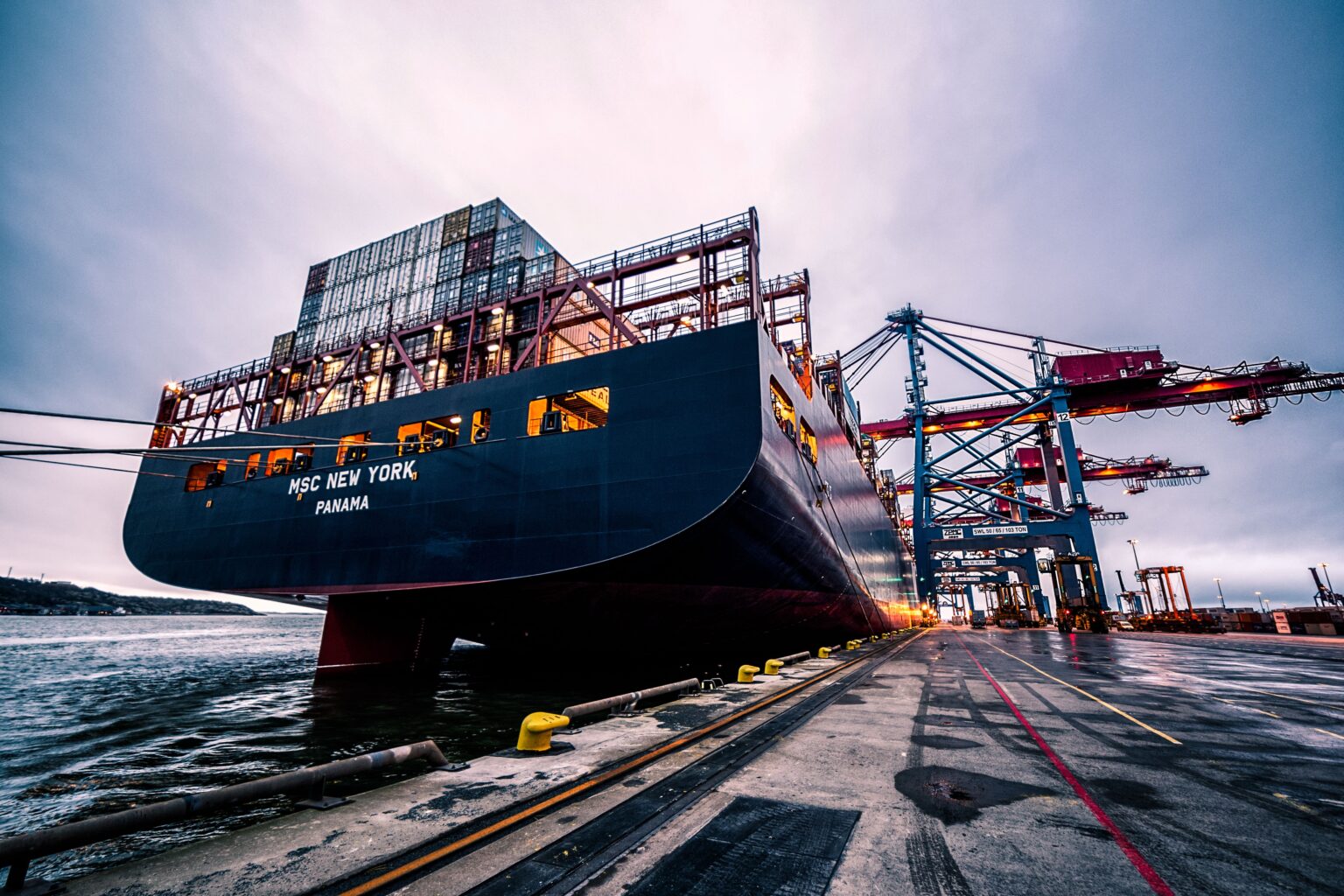
IN SHORT: China holds stakes in or operates approximately one-third of African ports, has invested roughly $50 billion in African port infrastructure since 2013, accounts for 22% of all African trade and has embedded itself across the full maritime supply chain through shipping, terminal software, AI navigation systems, maritime training programmes and naval cooperation, according to a comprehensive analysis by the Africa Center for Strategic Studies. Chinese state shipping firm COSCO and China Merchants Group operate terminals from Djibouti to Lagos. More than 30 African countries now use China’s BeiDou satellite navigation system for primary maritime navigation. PLAN naval vessels have conducted 48 task force rotations through African waters since 2008.
China’s engagement with African maritime infrastructure has evolved from sporadic port construction into a systematic embedding across the full maritime stack, from port operations software and AI navigation to training programmes and naval cooperation, that has created structural dependencies that multiple African governments are beginning to recognise as risks to their strategic autonomy, according to the Africa Center for Strategic Studies’ most detailed assessment of China’s African maritime engagement published this week. The analysis, by Paul Nantulya of ACSS, documents a transformation that has accelerated dramatically since 2013’s Belt and Road Initiative and represents one of the most consequential geopolitical developments in Africa’s recent history.
- The scale is concrete: Chinese firms operate, finance, partner with or hold stakes in roughly one-third of African ports. China has invested approximately $50 billion in African port infrastructure since the BRI launched in 2013. China now accounts for roughly 22% of all African trade and is the largest trading partner for 52 of 54 African states. $350 billion in Chinese trade flows through African maritime gateways annually, giving Beijing an economic stake in the security of those corridors that directly motivates its military and institutional engagement.
- The engagement extends well beyond physical port assets into the digital and institutional layers. More than 30 African countries now use China’s BeiDou satellite navigation system for primary maritime navigation, replacing or supplementing the American GPS system. Chinese firms have installed automation and AI systems at a growing number of African ports, including sensor perception, smart gate technology and autonomous systems that require ongoing maintenance and technical support contracts. These systems create financial and operational dependency that extends well beyond the initial investment.
- The training and governance dimension is less visible but equally significant. China runs the Symposium on Gulf of Guinea Maritime Security, the China-Indian Ocean Regional Forum, the China-Africa Training Course on Ocean Governance and the Shanghai Maritime University Africa Cadet programme for West African maritime professionals. These initiatives align African maritime governance frameworks more closely with Chinese standards and create professional networks that shape how African maritime regulators think about law, technology and institutional design.
- The People’s Liberation Army Navy has conducted 48 task force rotations through African waters since 2008, initially framed as anti-piracy operations in the Gulf of Aden. These deployments have evolved into joint exercises with African militaries, with increasingly complex operational training: the 2024 Amani na Umoja exercise with Tanzania and Mozambique, the 2025 Eagles of Civilization exercise with Egypt, and the 2026 Will for Peace exercises with South Africa, Russia and Iran under BRICS auspices. The PLAN fleet rotations are drawn from the commands responsible for Taiwan and South China Sea contingencies, meaning African deployments serve China’s operational preparedness for conflict scenarios in other theatres.
- Illegal, unreported and unregulated fishing represents the most economically damaging dimension of China’s maritime presence for ordinary Africans. An estimated 17,000 Chinese industrial trawlers operate in West African waters with annual catches worth $3.8 billion. West Africa accounts for the largest concentration of Chinese IUU fishing globally, with state subsidies and advanced technologies giving Chinese trawlers structural advantages over local fishers. The depletion of fish stocks undermines food security, livelihoods and the marine ecosystem base that legitimate African fisheries depend on.
The ACSS analysis explicitly avoids framing China’s African maritime engagement as uniformly negative. Chinese port infrastructure has improved efficiency, reduced transport costs and expanded market access for landlocked African states. The rail corridors connecting Djibouti to Addis Ababa, the Mombasa-Nairobi Standard Gauge Railway and the Angola railway have physical infrastructure value regardless of the financing structure. The concern the analysis raises is not the investment itself but the governance vacuum in which it has proceeded: agreements signed without public disclosure, oversight mechanisms that are weak or absent and institutional dependencies that limit African governments’ future policy autonomy.
The Bigger Picture: The ACSS analysis arrives at a moment when the strategic stakes of Africa’s maritime infrastructure choices are higher than at any point since independence. The Hormuz conflict has made maritime supply chain security a daily economic and security reality. The US-China competition for influence is playing out in African ports, training programmes and naval exercises. Africa holds the maritime corridors, the critical minerals and the demographic weight that will define 21st-century geopolitics. The analysis does not recommend severing Chinese maritime engagement, which has delivered real infrastructure. It recommends that African governments manage those relationships strategically, enforce existing national laws, diversify partnerships and develop the domestic technical capacity that reduces dependency over time. That is the harder and slower path. The alternative, accepting infrastructure on terms that limit future sovereignty, is already producing the constraints the analysis documents.
Source: AllAfrica / Africa Center for Strategic Studies, June 2026