

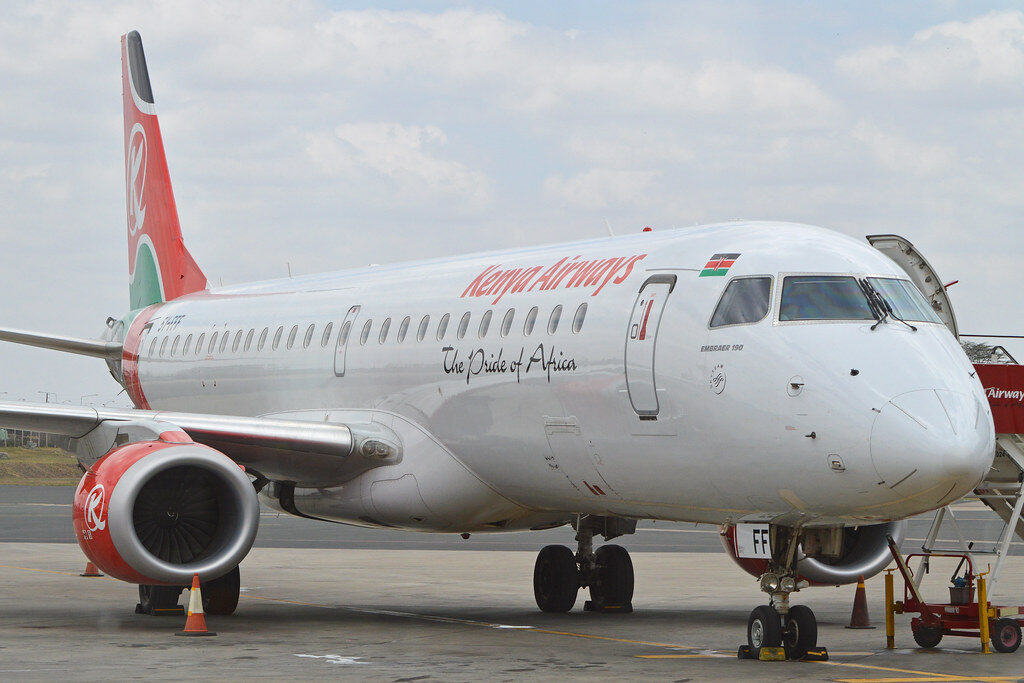
IN SHORT: The Kenyan government is seeking to mobilise between $1.2 billion and $2 billion through an international tender for a strategic investor in Kenya Airways, according to Finance Minister John Mbadi. The plan includes converting approximately $489 million of debt into equity to strengthen the airline’s balance sheet. Kenya Airways made history in 2024 by reporting its first full-year profit in 12 years, with net earnings of Sh5.4 billion. That recovery reversed sharply in 2025, with the airline posting a net loss of approximately Sh17 billion after being hit simultaneously by Middle East geopolitical disruptions to operations and maintenance issues grounding aircraft. Acting CEO George Kamal has been rebuilding capacity and has been adding European frequencies from July 2026.
Kenya Airways is pursuing the most significant ownership restructuring in its history, with the Kenyan government tendering for a strategic investor willing to commit $1.2 billion to $2 billion to the national carrier as it attempts to convert a brief 2024 profit into a durable turnaround after a Sh17 billion loss in 2025 wiped out the gains from the airline’s most celebrated financial recovery. The investor search, confirmed by Finance Minister Mbadi, is backed by a $489 million debt-to-equity conversion that would improve the balance sheet before any strategic partner takes a stake, making the airline more investable while also diluting the Kenyan government’s current majority ownership.
- Kenya Airways’ financial trajectory over the past two years illustrates the extreme volatility of the African aviation market. In 2024, the airline recorded a net profit of Sh5.4 billion, its first full-year profit in 12 years, driven by recovering passenger traffic and improved revenue management. In 2025, a combination of global parts shortages that grounded three Boeing 787-8 Dreamliners, Middle Eastern hub disruption from the Hormuz conflict and operational cost inflation reversed that performance entirely, producing a net loss of approximately Sh17 billion and a 19% revenue decline to Sh74.5 billion in the first half alone.
- The $489 million debt-to-equity conversion is a necessary precondition for the strategic investor process. Kenya Airways carries a debt load that has constrained its financial flexibility and deterred institutional investors from engaging seriously with ownership proposals. Converting that debt to equity reduces the balance sheet liability while diluting existing shareholders, including the Kenyan government and KLM, whose willingness to accept that dilution reflects both parties’ recognition that the airline needs structural reform rather than continued debt support.
- Acting CEO George Kamal, appointed in December 2025 following CEO Allan Kilavuka’s resignation after six years, is implementing an operational recovery that is showing results independent of the investor process. Kenya Airways will go daily on the Nairobi-Amsterdam and Nairobi-Paris routes from July 1, an increase from six weekly flights. It will add two more weekly flights to London-Gatwick from July 4, bringing total London frequencies to five per week. On July 19 it will fly four times weekly to Guangzhou via Bangkok, up from three. Passenger numbers have risen approximately one-third and cargo volumes have surged up to 250% on some long-haul routes, with load factors reaching 99% on certain services.
- The Hormuz conflict, which disrupted Middle Eastern aviation hubs including Dubai, Doha and Abu Dhabi, has created an indirect commercial benefit for African carriers with strong hub capability. Passengers who previously transited through Gulf hubs to reach East Africa have in some cases rerouted through Nairobi, boosting Kenya Airways’ load factors. The airline, which is building a secondary hub at Kotoka International Airport in Accra, is positioning to capture transit traffic that previously flowed exclusively through Middle Eastern hubs.
- The strategic investor target profile is a global aviation group with operational expertise, network access and capital commitment. KLM, which holds approximately 7.8% of Kenya Airways, has been the most consistently engaged international partner but has indicated it will not increase its stake. Gulf carriers, Asian airlines and private equity-backed aviation platforms have been cited by analysts as potential bidders. The Kenyan government has been explicit that it is not seeking to fully privatise the airline but to find a strategic partner who brings operational capability alongside capital.
Kenya Airways’ search for a $2 billion strategic investor occurs against the backdrop of Ethiopia making the boldest argument for why African national carriers matter strategically. Ethiopian Airlines, which the US Ambassador recently described as a global competitor, has demonstrated that a state-owned African airline run commercially can become a continent-spanning logistics and passenger network that no private carrier is likely to replicate. Kenya Airways, with its Nairobi hub’s geographic advantages, its existing long-haul network and its recovering operational performance, has the foundation to follow a comparable trajectory if the capitalisation and governance challenges can be resolved. The investor search is the mechanism through which that potential either gets realised or does not.
The Bigger Picture: Kenya Airways’ long-term problem is not operational. The airline can fly planes, train pilots, manage routes and achieve the load factors that competitive carriers target. Its problem is structural: a debt burden accumulated through years of losses, a balance sheet that constrains capital investment and an ownership structure that creates competing interests between the government, KLM and other shareholders. The $1.2 to $2 billion investor search and the $489 million debt-to-equity conversion are the structural fixes that the operational recovery needs to work at scale. If a credible strategic investor is found at the right valuation and with the right operational commitment, Kenya Airways could emerge from this process as a genuinely competitive pan-African carrier. If the process drags, the operational recovery window created by the Hormuz conflict disruption to Gulf competitors may close before the capital structure is fixed.
Source: Middle East Observer, April 8 2026 / Travelmole, April 2026 / AeroTime, January 2026