
IN SHORT: Kenyan President William Ruto completed a two-day state visit to South Africa on June 4, signing six bilateral agreements covering trade facilitation, skills development and maritime cooperation at the Union Buildings in Pretoria alongside President Cyril Ramaphosa. South African companies have invested $2 billion in 96 projects in Kenya, while Kenyan companies have invested $283 million in 11 South African projects. Bilateral trade grew from KSh 76 billion in 2024 to KSh 84 billion ($648 million) in 2025. Ramaphosa confirmed that Kenya remains South Africa’s largest trading partner in East Africa.
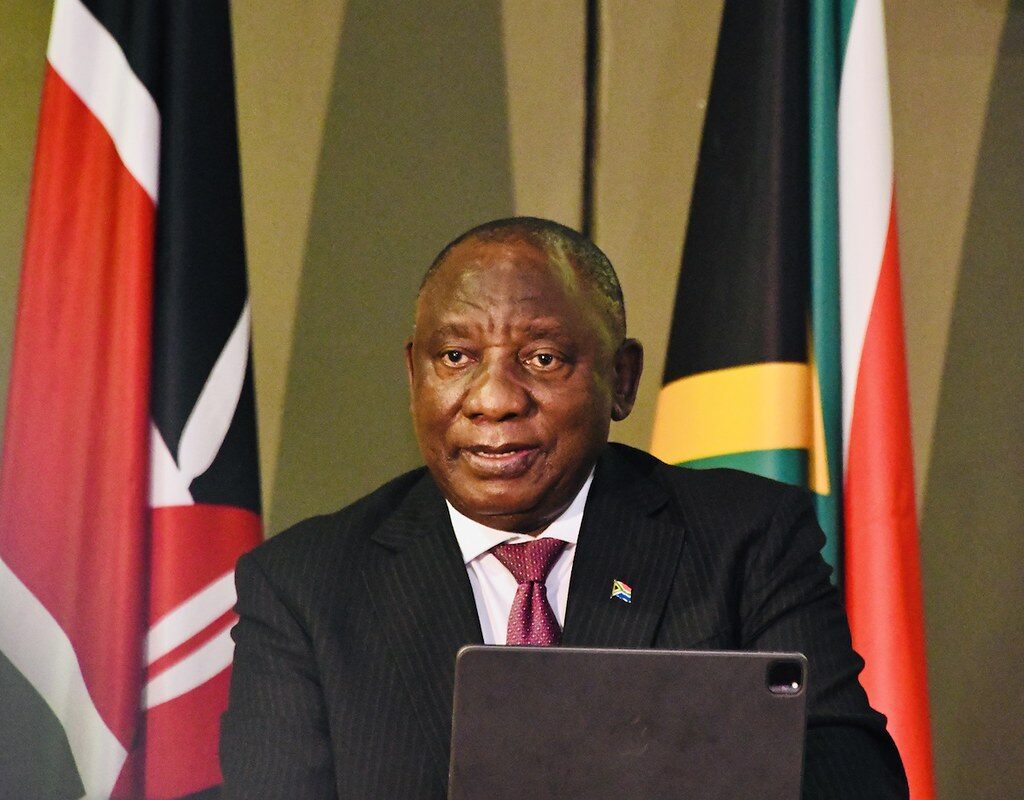
South Africa and Kenya have deepened the most commercially significant bilateral relationship in Africa’s continental integration agenda, signing six agreements that advance trade facilitation, technical and vocational education, and maritime cooperation at Pretoria’s Union Buildings, as Presidents Ruto and Ramaphosa explicitly rejected suggestions of rivalry and positioned the two countries as complementary engines of AfCFTA-driven continental growth. Ruto’s state visit, his first to South Africa as president, culminated in a joint press briefing where Ramaphosa said the two countries do not see themselves as rivals, have a special strategic relationship, and often align on key continental and global issues.
- South African companies have invested in 96 projects in Kenya valued at more than $2 billion, spanning banking, insurance, retail, manufacturing, telecommunications, infrastructure and real estate. More than 60 South African companies currently operate in Kenya. Kenyan companies have invested in 11 South African projects worth $283 million. Both sides have committed to encouraging further cross-investment in each other’s markets.
- Bilateral trade grew from KSh 76 billion in 2024 to KSh 84 billion ($648 million) in 2025. Since 2022, total trade has grown at an average of 3.5% per year. Ramaphosa said South Africa continues to import products, services, technology and skills from Kenya while investment flows between the two countries have strengthened.
- The Development Bank of Southern Africa was one of the funders of the 350-kilometre pipeline replacing the Mombasa to Nairobi petroleum and crude oil products line, Ramaphosa disclosed, highlighting that development finance relationships between the two countries extend beyond commercial investment into infrastructure financing. The DBSA is keen to do more infrastructure financing in Kenya, he said.
- In January 2024, the first shipment of exports from South Africa to Kenya under the AfCFTA preferential tariff agreement was dispatched. Ruto and Ramaphosa agreed that the AfCFTA must serve as a catalyst for inclusive growth, industrialisation and job creation, and committed to developing regional value chains and expanding manufacturing opportunities for young people and women across both economies.
- The six agreements signed cover trade facilitation to reduce border friction between the two markets, technical and vocational education and training cooperation to align skills development frameworks, and maritime cooperation to advance shared interests in Indian Ocean governance and port connectivity. The agreements build on a 2022 state visit framework and reflect the maturing commercial relationship between two economies that collectively represent a significant share of sub-Saharan Africa’s GDP.
The Kenya-South Africa bilateral relationship is unique in African commerce for its depth and its geographic span. South Africa, the continent’s most sophisticated capital market, has used Kenya as its primary East African platform for financial services, retail and infrastructure investment over three decades. Kenyan banks and telecoms have simultaneously expanded into Southern African markets. The two countries are not simply trading partners: they are the eastern and southern anchors of a continental integration architecture that AfCFTA is designed to make legally and commercially operational. The six deals signed at Pretoria are a bilateral expression of that architecture in practice.
The Bigger Picture: The South Africa-Kenya relationship is a model for what AfCFTA integration looks like when it is actually working. $2 billion in South African investment in Kenya, $283 million in Kenyan investment in South Africa, KSh 84 billion in bilateral trade and a development finance relationship that has funded Kenyan infrastructure from South African capital. That is not a notional economic partnership. It is a functioning commercial corridor with growing two-way flows and a shared political commitment to expand it further. The AfCFTA framework is meant to replicate this model across 54 countries. The Kenya-South Africa corridor shows that it can be done.
Source: SA News, June 4 2026 / The Standard, June 4 2026