

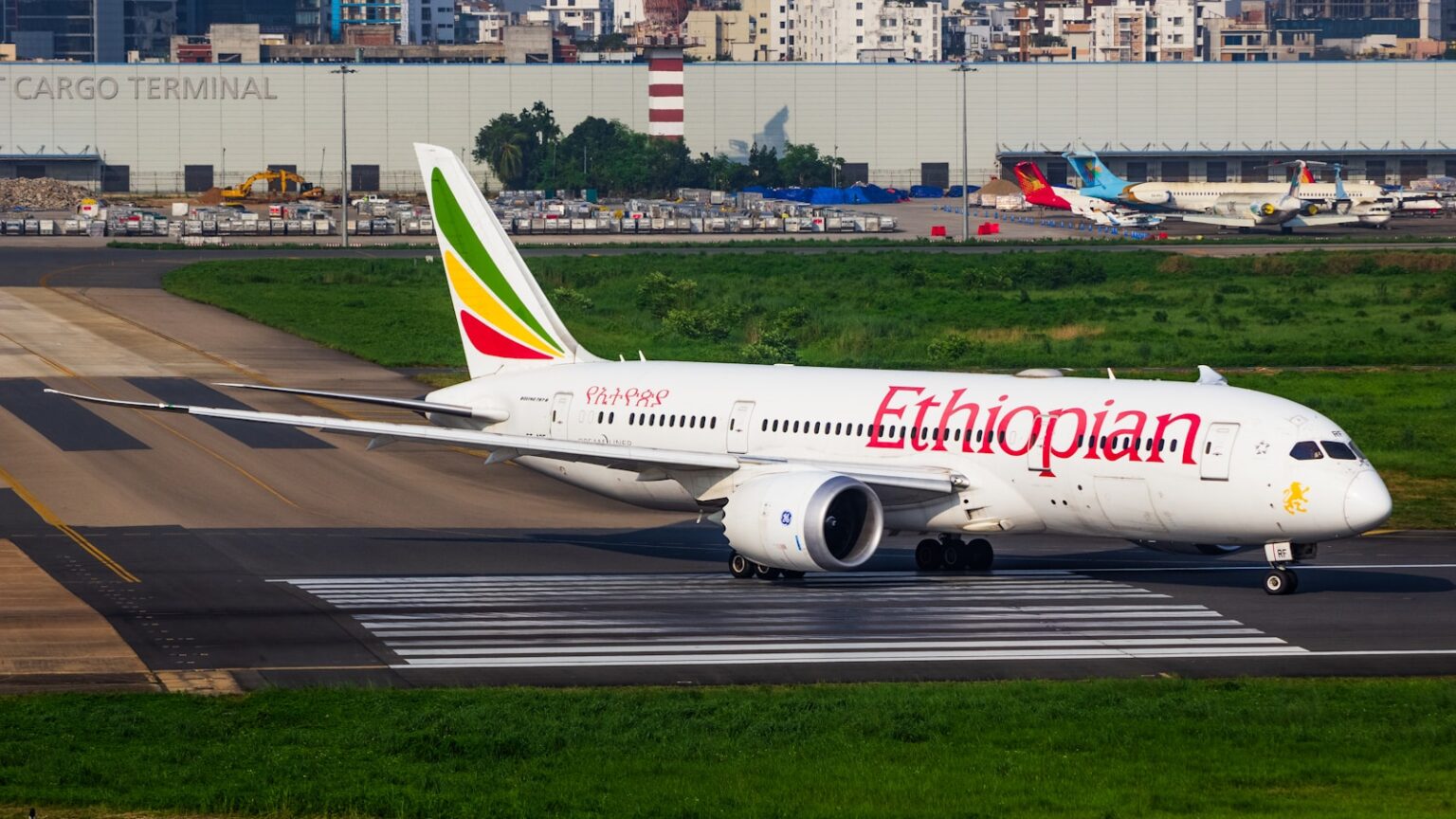
IN SHORT: US Ambassador to Ethiopia Ervin Massinga declared on May 26 that Ethiopian Airlines is no longer simply a regional carrier but a competitor on the world stage, citing the airline’s 80-year expansion from a TWA-mentored regional service to a continental hub carrying more than 145 destinations across five continents. Massinga highlighted the airline’s deep and solid partnership with the United States through Boeing aircraft procurement, GE engine agreements and COVID-era cargo cooperation. He signalled that the US intends to remain part of Ethiopian Airlines’ growth story through investment and American company involvement in new airport development at Addis Ababa.
The United States has provided its highest-level public endorsement of Ethiopian Airlines’ transformation from African regional carrier to global aviation competitor, with Ambassador Ervin Massinga describing the airline as a world-stage competitor in an exclusive interview with Ethiopian News Agency, while signalling concrete American commercial interest in the airline’s next phase of growth through new airport investment and deepened aviation partnerships. The statement, delivered on May 26, carries diplomatic and commercial weight: US ambassadors do not typically provide public endorsements of state-owned enterprises unless the relationship serves specific strategic interests that Washington wants to signal publicly.
- Ethiopian Airlines was founded in December 1945 through a partnership with Trans World Airlines that provided the airline’s initial pilots, technical staff and management frameworks. Eighty years later, it is Africa’s largest carrier by several measures: revenue, route network, fleet size and passenger numbers. It serves more than 145 destinations with daily and multiple-frequency flights, and has invested substantially in its Addis Ababa hub to position it as the primary transfer point for traffic between Africa, Asia, the Middle East and the Americas.
- Ambassador Massinga specifically highlighted the airline’s partnerships with Boeing and GE as evidence of the depth of the US-Ethiopian Airlines relationship. Ethiopian is one of Boeing’s largest African customers and has been part of the 787 Dreamliner launch customer group. The GEnx engine agreement for 11 new Boeing 787s, signed in 2025, is the most recent expression of that relationship.
- The COVID-19 pandemic episode that Massinga cited as evidence of the relationship’s resilience is specific and notable. Ethiopian Airlines played a critical logistical role in transporting vaccines and medications to African markets during the pandemic at a time when commercial air freight capacity was severely constrained. The cooperation with the US government on vaccine distribution gave the airline visible strategic value to Washington beyond its commercial aviation activities.
- Airport investment is the concrete signal. Massinga said the US intends to remain part of Ethiopian Airlines’ growth story through potential investment and involvement by American companies and financiers in new airport development. Addis Ababa Bole International Airport has been operating near capacity, and Ethiopia has been exploring plans for a new, larger international airport. US involvement in that project, whether through financing, construction or concession management, would be a significant commercial outcome from the diplomatic relationship.
- Ethiopian Airlines’ CEO Mesfin Tasew confirmed in separate statements that the airline has achieved a strong continental expansion with more than 60 African destinations, and its Group subsidiary structure now includes Ethiopian Cargo, MRO services, Ethiopian Aviation Academy and a hotel management business. The airline has been a model for African state-owned enterprise transformation: commercially run, internationally competitive and profitable despite government ownership.
The US Ambassador’s endorsement arrives at a moment when Ethiopian Airlines faces both its greatest opportunity and its most complex operating environment. The Hormuz conflict has disrupted Middle Eastern hub connectivity and increased African airline traffic to the benefit of carriers with strong sub-Saharan African networks. Ethiopian, with its Addis Ababa hub positioned between the Middle East and the rest of Africa, captures significant re-routed traffic. Simultaneously, the airline is navigating political risk from Ethiopia’s own security situation in Amhara, Oromia and Tigray, which has affected domestic route operations.
The Bigger Picture: A US Ambassador calling Ethiopian Airlines a global competitor is not a casual observation. It is a signal of American strategic interest in Africa’s aviation infrastructure at a moment when China has been expanding its commercial aviation relationships across the continent and when Ethiopian Airlines’ growth trajectory makes it increasingly important as an infrastructure asset for the entire continent. Ethiopian is not just an airline: it is the physical connectivity layer that makes Africa’s economic integration possible, moving goods, people, vaccines and cargo across 54 countries more efficiently than any alternative. The US wants to be part of building that infrastructure rather than watching China fund the next airport and supply the next fleet.
Source: Ethiopian News Agency, May 26 2026 / AllAfrica, May 27 2026