
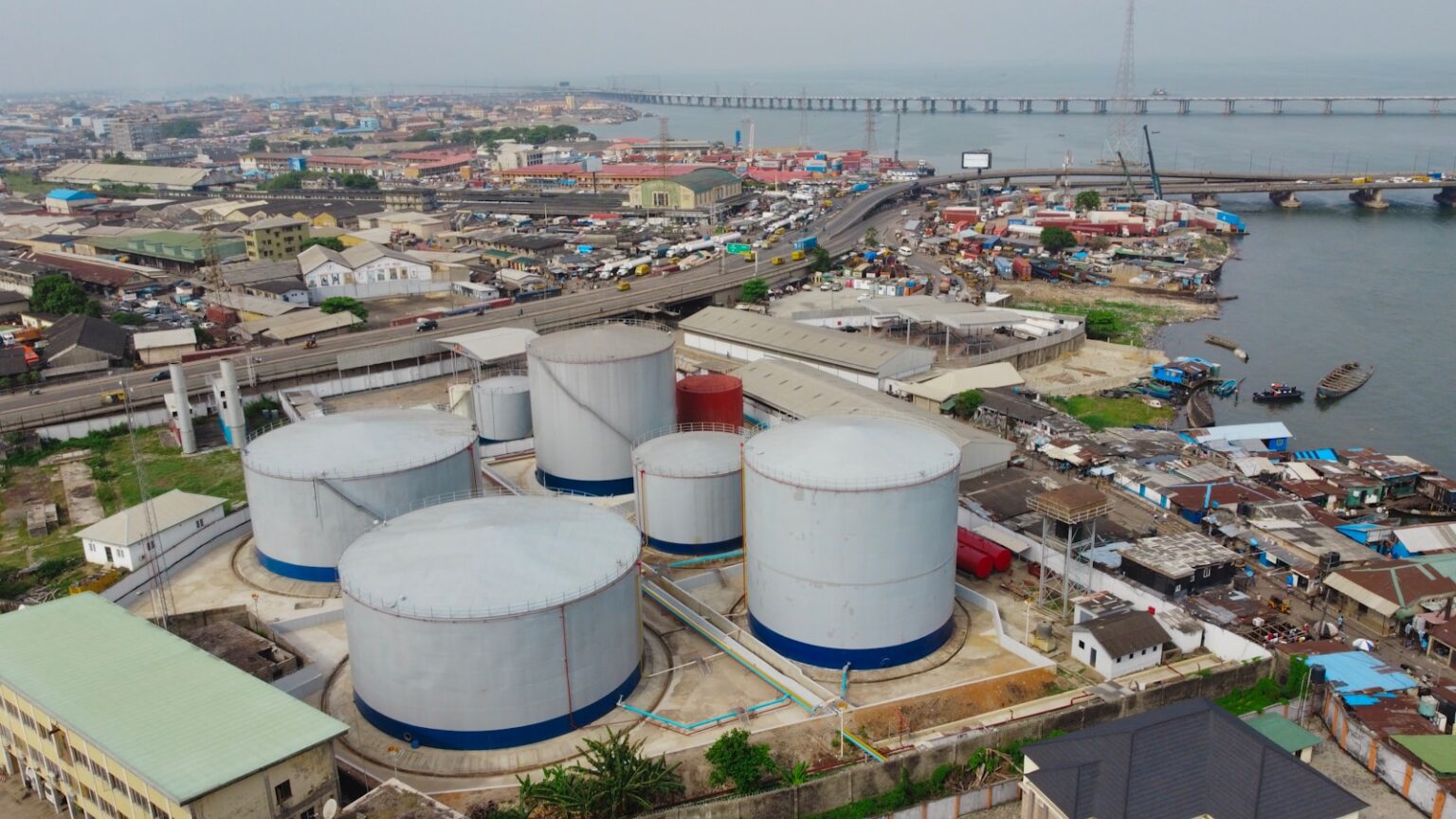
IN SHORT: The Dangote Petroleum Refinery ran at 99.1% capacity utilisation in April 2026, processing 648,500 barrels per day and producing 53.6 million litres of petrol daily, against domestic consumption of 51.1 million litres. Nigeria has officially crossed into net petrol exporter territory for the first time in its history, ending decades of importing refined fuel despite being Africa’s largest crude oil producer. Retail petrol prices averaged N1,271 per litre in Lagos as Brent crude sat at $120 per barrel.
Nigeria has become a net exporter of refined petrol for the first time in its history after the Dangote Petroleum Refinery achieved 99.1% capacity utilisation in April 2026, processing more fuel than the country consumes and exporting the surplus to regional and international markets at crude prices above $120 per barrel. Data from Nigeria’s Midstream and Downstream Petroleum Regulatory Authority confirmed that average daily petrol production of 53.6 million litres exceeded average daily consumption of 51.1 million litres in April, the first month the surplus has been sustained.
- The refinery processed 648,500 barrels per day against its 650,000 bpd nameplate capacity, achieving 99.1% utilisation. Product output averaged 53.6 million litres of petrol, 23.6 million litres of diesel and 22.9 million litres of aviation fuel per day. Some volumes were exported.
- Nigeria’s four state-owned NNPC refineries, with combined capacity of 445,000 barrels per day, remain completely shut. The Dangote facility is carrying the entire burden of domestic refining and doing so at near-full capacity while supplying export markets simultaneously.
- Fuel stock cover was uneven: petrol at 18 days, diesel at 39 days and aviation fuel at 70 days. The petrol cover gap reflects the tension between domestic supply adequacy and export revenue optimisation.
- Retail petrol prices averaged N1,271 per litre in coastal Lagos and N1,371 per litre in northern Maiduguri. With Brent crude at $120.55 per barrel following the Hormuz disruption, and the refinery supplying domestic needs, the fuel subsidy regime eliminated under President Tinubu’s reforms in 2023 has not returned despite the price pressure on consumers.
- NNPC delivered approximately 6.8 million barrels of crude to the refinery in April, through eight cargoes. The refinery requires approximately 19 cargoes monthly to operate at full capacity, meaning crude supply remains the primary constraint on sustained maximum throughput. NNPC increased allocations from five to ten cargoes per month in March 2026.
- The refinery’s September IPO is set to price this operational achievement into the public market. With confirmed 99% utilisation data now in the hands of prospective investors, the $50 billion valuation target has a stronger operational foundation than at any previous point in the IPO preparation process. Africaspoint covered the IPO timeline confirmation: Dangote sets September for $50bn IPO.
Nigeria’s transition to net petrol exporter reverses one of the most striking paradoxes in global energy: a country holding the world’s ninth-largest proven oil reserves that was importing more than $10 billion annually in refined fuel. The structural explanation is straightforward. Refining capacity collapsed through decades of maintenance neglect, corruption and underinvestment in the state-owned refinery system. The Dangote facility, privately financed at a cost of $20 billion, has resolved that structural failure through a single investment at commercial rather than public scale. The lesson for other African oil producers, including Angola, Congo and Gabon, is that private capital can do what state investment frequently cannot.
The Bigger Picture: Net petrol exporter status in April 2026 means Nigeria earns foreign exchange from fuel rather than spending it. At $120 per barrel Brent and a 53.6 million litre daily production surplus, the revenue and foreign exchange dynamics are transformative. Nigeria’s current account and naira stability both improve materially when $10 billion in annual fuel import expenditure reverses into export revenue. The ceiling now is crude supply: NNPC needs to deliver closer to 19 cargoes monthly to sustain the refinery at full output. With the IPO approaching and investors pricing in the expansion to 1.4 million bpd by 2028, the crude allocation question is the single most important operational variable in African energy in 2026.
Source: CNBC Africa, May 13 2026 / NMDPRA data via Reuters, May 2026