
IN SHORT: Uganda’s President Yoweri Museveni signed the Protection of Sovereignty Act into law on May 17, requiring anyone acting on behalf of foreign interests in political or advocacy activities to register with the Ministry of Internal Affairs or face up to 10 years in prison. The World Bank warned that its $4.57 billion Uganda portfolio is at risk. The central bank governor described an earlier draft as a potential economic disaster. Parliament scaled back the most sweeping provisions before passing the bill on May 6, but critics say the core threat to investment and civil society remains.
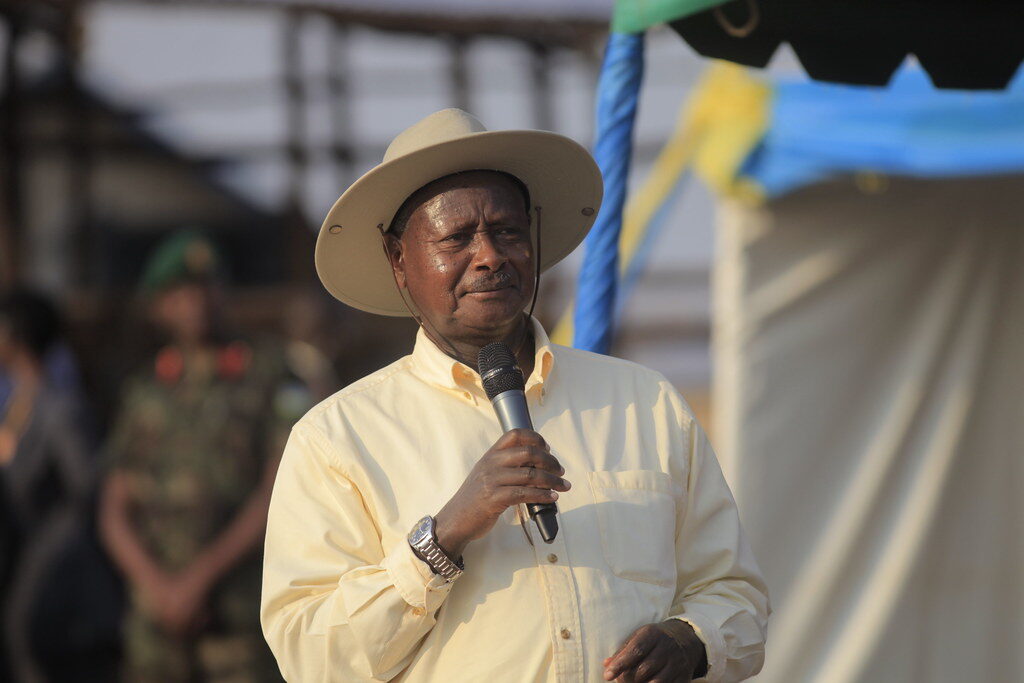
Uganda now has a law on the books that criminalises unregistered foreign influence, and the World Bank, the central bank and the country’s own banking sector have all warned it could choke investment, disrupt remittances and expose routine development work to criminal prosecution. Museveni signed the Protection of Sovereignty Act on May 17, confirming into law a bill that moved through parliament in just three weeks after its introduction on April 15 by Minister of State for Internal Affairs Gen. David Muhoozi.
- The law requires individuals and organisations acting as agents of foreign entities in political or advocacy activities to register with the Department responsible for peace and security within the Ministry of Internal Affairs and obtain ministerial clearance before operating. Failure to register carries penalties of up to 10 years in prison or substantial fines.
- The World Bank wrote to parliament on April 23 warning that its $4.57 billion Uganda portfolio could be affected. The Bank said the law’s broad language could expose routine development activities, including policy dialogue meetings, to criminal liability. It called for narrow refinements to preserve Uganda’s sovereignty objectives without disrupting development finance.
- Bank of Uganda Governor Michael Atingi-Ego warned MPs on April 28 that an earlier draft would diminish financial flows into the country and risk running down foreign exchange reserves. He described the potential consequences as amounting to economic disaster.
- The Uganda Bankers’ Association separately warned that classifying ordinary international financial activity as foreign interference could undermine investment and stall economic growth, with banks potentially required to verify ministerial registration status before processing transactions involving foreign-linked clients.
- Parliament scaled back the most contentious provision before passing the bill on May 6. The original draft required any Ugandan receiving money from abroad to register as a foreign agent and disclose all incoming funds. The final law narrows the registration obligation to individuals receiving foreign funding specifically for political purposes that advance foreign interests, exempting general remittances. Uganda’s diaspora sends approximately $1.5 billion home annually, its second-largest source of foreign exchange after gold.
- The World Bank suspended new lending to Uganda in 2023 following the passage of a harsh anti-homosexuality law, resuming support two years later after Kampala agreed to certain compromises. Observers note the same pressure dynamic is now in play.
The Protection of Sovereignty Act sits within a broader continental pattern. Several African governments, including Tanzania, Ethiopia and Rwanda, maintain regulatory frameworks that restrict foreign-funded civil society activity. Uganda’s law is among the most explicit in linking foreign funding to criminal liability for political advocacy. The framing follows Russia’s foreign agents law closely, which has been widely criticised for enabling broad suppression of opposition activity under the cover of sovereignty protection. Museveni, who has governed Uganda since 1986, has consistently accused domestic rivals of receiving foreign funding to pursue agendas he characterises as contrary to national interest, including LGBTQ rights advocacy that prompted the 2023 World Bank standoff.
The Bigger Picture: The scaled-back final text reduces but does not eliminate the investment risk. Banks operating in Uganda still face interpretive uncertainty about which client transactions require ministerial pre-clearance. Development organisations still face ambiguity about whether policy dialogue events cross into criminalised territory. The World Bank’s response will be the defining signal: if it moves toward another lending pause, Uganda loses access to one of its largest sources of concessional capital at a moment when the country’s infrastructure and social spending needs are significant. Museveni has navigated this tension before and emerged with funding intact. Whether that holds a second time depends on how aggressively the law is enforced.
Source: State House Uganda, May 17 2026 / CNBC Africa, May 6 2026 / BusinessDay, May 18 2026