IN SHORT: Pick n Pay raised R4.7 billion ($282 million) on May 19 by selling a further 12.5% stake in its discount grocery subsidiary Boxer through an accelerated institutional bookbuild at R82 per share. The retailer retains a 53.1% controlling stake in Boxer. Proceeds go directly toward funding the multi-year turnaround of its struggling core supermarket business.
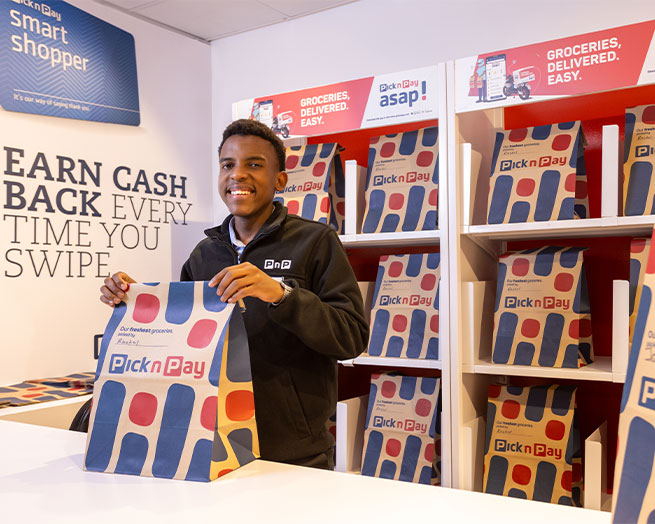
South Africa’s Pick n Pay has raised $282 million by selling down its stake in Boxer Retail, the high-growth discount grocery chain that has become the struggling retailer’s most valuable asset and the primary engine funding its recovery. The 57.3 million shares were placed at R82 each, a 3.2% premium to the 30-day volume-weighted average price, through an accelerated bookbuild to institutional investors. Strong demand drove oversubscription and allowed the deal to price at the top of guidance.
- Pick n Pay now holds 53.1% of Boxer, down from approximately 65.6% before the placement. The group confirmed it is committed to retaining a controlling stake in Boxer and will not dilute below 50%.
- Boxer was listed on the Johannesburg Stock Exchange in November 2024 at R54 per share. The shares closed at R88.64 on Monday, more than 60% above the IPO price. At R82, Tuesday’s placement represented a discount to market but institutional demand was strong.
- Boxer’s business performance stands in sharp contrast to the core Pick n Pay supermarket division. In the 26 weeks to August 2025, Boxer delivered a 15.1% increase in trading profit to R931 million on turnover of R22.5 billion. The core Pick n Pay segment recorded a trading loss of R621 million over the same period.
- The Boxer sale is part of a broader R12.5 billion recapitalisation programme that began with a R4 billion rights offer in August 2024 and continued with Boxer’s R8.5 billion IPO. Tuesday’s placement is the third significant capital event in 18 months.
- CEO Sean Summers, who returned to lead Pick n Pay in 2023, is deploying the proceeds toward supply chain investment, store estate restructuring and ongoing Section 189 labour consultations aimed at reducing store operating costs. Unions have objected to the labour component.
The Pick n Pay situation is one of the most closely watched retail turnarounds in South Africa. The core thesis is straightforward: sell down the prize asset to fund the recovery of the struggling parent, retaining enough of Boxer to benefit from its growth trajectory while the supermarket business is rebuilt. Analysts are divided on whether the strategy is working fast enough. The core business returned to like-for-like sales growth and cut its headline loss by 45.3% in the most recent half-year, which management presents as evidence of progress. Critics note that Boxer’s discount retail model, built for township and lower-income communities, is benefiting from structural tailwinds including cost-of-living pressure and consumer downtrading that the core Pick n Pay format lacks.
The Bigger Picture: Pick n Pay’s Boxer strategy is a microcosm of South Africa’s retail landscape in 2026. Discount retail is winning. The structural shift toward value-led grocery shopping, accelerated by fuel price shocks from the Hormuz conflict and persistent inflation, benefits Boxer’s format directly. Shoprite and Checkers have dominated this space for years and are not standing still. Pick n Pay’s window to close the gap requires Boxer to keep growing while the core business stabilises. The R4.7 billion raised buys time. Whether it buys enough depends on execution speed in a market where competitors are not waiting.
Source: CNBC Africa, May 19 2026 / Business Day, May 19 2026