
IN SHORT: Safaricom posted group net income of KSh99.7 billion ($770 million) for FY2026, up 67%, and declared a record KSh80.13 billion dividend of KSh2.00 per share, the largest corporate dividend in Kenya’s history and the first increase since FY2022. Revenue crossed KSh400 billion for the first time at KSh414 billion. M-Pesa contributed 45% of Kenya service revenue with 41 million active customers. The Ethiopia operation, previously the group’s largest financial drag, halved its losses year on year, grew service revenue 58% and expanded its customer base 54% to 13.6 million. EBITDA breakeven in Ethiopia is targeted for FY2027.
Safaricom has become the most profitable company in East and Central Africa, posted the best results in its 25-year history, declared the largest corporate dividend Kenya has ever seen, and turned its Ethiopia operation from a loss-generating investment into an accelerating growth story, all in a single financial year.
The FY2026 results, for the year ended March 31 and reported on May 7, confirm a company that has simultaneously executed on its core Kenyan business at a level that generates extraordinary shareholder returns and stabilised a multi-billion shilling investment in Africa’s second-largest market that has been consuming capital since 2022.
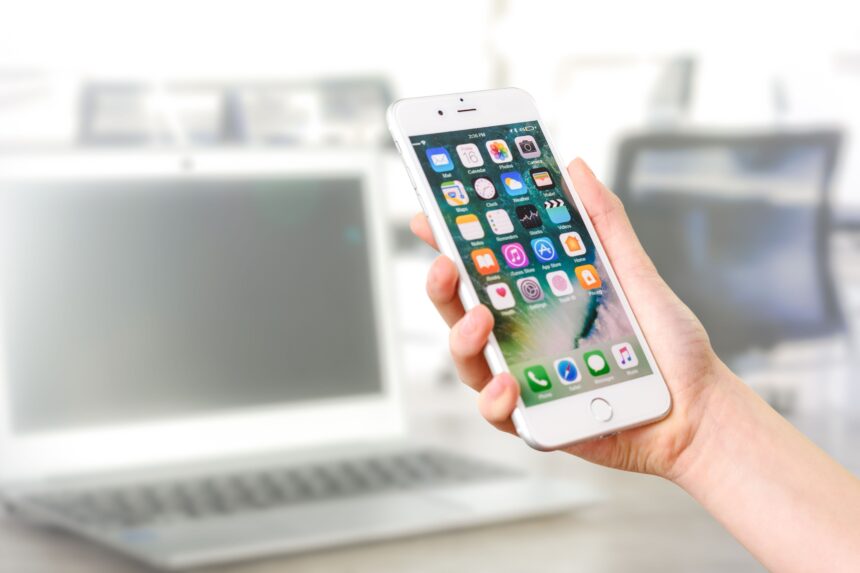
- The Kenya numbers are exceptional by any African telco standard. Service revenue grew 10% to KSh400.8 billion. EBITDA margins expanded to 56.8%, up from 54.7% two years ago. Net income from the Kenyan business alone reached KSh119.1 billion, up 24.7%. M-Pesa, the world’s most widely used mobile money platform, generated KSh182.7 billion in revenue, growing 13.4% year on year, with 41 million active customers. M-Pesa’s contribution of 45% of Kenya service revenue confirms that Safaricom has already completed the transition from a telecoms company that offers mobile money to a financial services platform that also operates a telecoms network.
- The FY2026 dividend of KSh2.00 per share, comprising an interim KSh0.85 and a final KSh1.15 (subject to shareholder approval at the AGM on July 31), totals KSh80.13 billion. Among Kenyan corporates, the next largest FY2025 dividend payouts were KCB at KSh22.5 billion and Equity Group at KSh21.7 billion, both less than 27% of Safaricom’s FY2026 figure. Since listing, Safaricom has paid KSh692.25 billion in total dividends, including KSh280 billion in the last five years alone. The FY2026 figure breaks every previous record and signals management’s confidence that Kenya’s cash generation can sustain higher returns while Ethiopia absorbs less capital.
- The Ethiopia story is the most strategically significant element of the results. Safaricom launched in Ethiopia in 2022 in a consortium with Vodacom and a development finance group that included CDC Group (now British International Investment) and the IFC. The investment has been the subject of intense scrutiny given the capital deployed against a business that was loss-making and operating in the wake of the Tigray civil conflict. The FY2026 results mark the inflection point: losses halved year on year, service revenue grew 58%, the customer base grew 54% to 13.6 million, and the operation secured a new 25-year unified licence from Ethiopia’s Communications Authority, removing the regulatory overhang that had added uncertainty to long-term capital allocation. EBITDA breakeven is targeted for FY2027.
- The FY2027 guidance provides the investment framework for what comes next. Management guided Kenya EBIT of KSh195-199 billion, up from KSh182.3 billion. Ethiopia losses are expected to narrow to KSh12-15 billion, from KSh27 billion in FY2026. Group capex is guided at KSh64-70 billion, down from higher levels as the Ethiopia network buildout matures. The strategic direction, described as building a “converged fintech ecosystem” and deepening AI capabilities, points toward Safaricom increasingly competing with digital banks, not just other telecoms operators.
- The Safaricom results arrive at a moment when Kenya’s private sector PMI improved to 49.4 in April from 47.7 in March, still below the 50 expansion threshold as the Hormuz fuel shock compresses consumer spending. The April CPI data showed inflation ticking up to 5.6%, the first reading above 5% since the CBK’s easing cycle began, confirming that the fuel shock is working through to consumer prices. Safaricom’s insulation from the worst of this pressure reflects M-Pesa’s role as essential infrastructure: Kenyans reduce discretionary spending before they reduce mobile money transactions.
CEO Peter Ndegwa: “We have shown strong execution in the first year of our five-year strategy, signaling a great setup for delivering our vision. These results reflect a business that continues to demonstrate resilience and momentum.”
The Bigger Picture: Safaricom’s FY2026 results are the clearest evidence available that M-Pesa has succeeded in transforming a telecoms company into a financial services institution. The 45% revenue contribution from M-Pesa, the 41 million active customers, and the dividend that dwarfs every other Kenyan corporate payout combine to make a specific claim: Safaricom is not a utility. It is a platform business with a financial services core, a telecoms distribution layer and an Ethiopian growth option that is approaching the inflection point where it begins contributing positively to group results. For investors in Kenyan equities, the NSE’s most valuable stock has just delivered its best year on record. The question for FY2027 is whether Ethiopia’s trajectory continues and whether Kenya can sustain margins above 55% in a higher-inflation, slower-growth environment.
Source: Kenyan Wallstreet / Abojani / Telecom Review Africa, May 7-12, 2026