

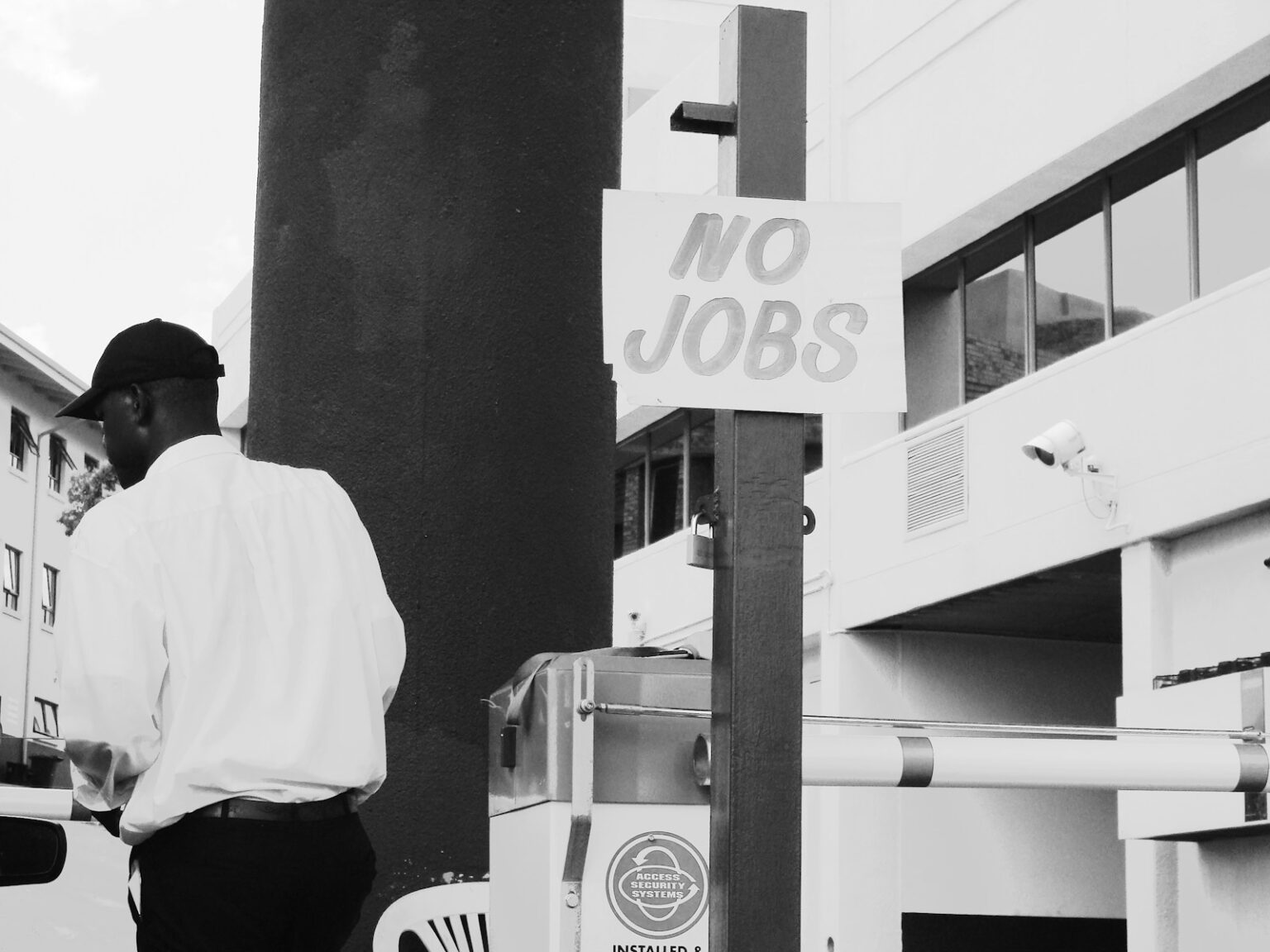
IN SHORT: South Africa’s official unemployment rate rose to 32.7% in Q1 2026, up from 31.4% in Q4 2025, as the economy shed 345,000 jobs in the first three months of the year, Statistics South Africa reported on May 12. The number of unemployed people increased by 301,000 to 8.1 million. Youth unemployment reached 60.9% for those aged 15-24. The official jobless rate has been above 30% for more than five years and is among the highest in the world.
South Africa’s unemployment crisis deepened in Q1 2026 as the economy shed 345,000 jobs in a single quarter, with community and social services, construction and transport leading the losses, and youth unemployment approaching 61% at a moment when the Hormuz oil shock is expected to push the Q2 numbers worse still.
Stats SA’s Quarterly Labour Force Survey, released on May 12, showed the labour market deteriorating across almost every measure simultaneously: official unemployment up, labour force participation down, and every broader underutilisation measure worsening.
- The headline 32.7% unemployment rate reflects 8.1 million officially unemployed South Africans searching for work against a labour force of 24.9 million. The official rate counts only those actively looking for work. The expanded unemployment rate, which includes discouraged workers who have given up searching, rose to 43.7%. The composite labour underutilisation measure, which adds time-related underemployment to both groups, reached 46.3%. Nearly half of South Africa’s economically active population is either unemployed, underemployed or has stopped looking for work.
- Job losses were concentrated in three sectors. Community and social services shed 206,000 jobs, the largest single sector decline and one that directly reduces public service delivery to the poorest South Africans. Construction shed 110,000 jobs, a significant deterioration for an industry that was supposed to benefit from the Eskom capex programme and private sector infrastructure investment. Transport shed 30,000 jobs. The Hormuz oil shock’s impact on transport costs, which makes logistics businesses less profitable and more likely to shed labour, is the most direct external driver of the transport decline.
- Youth unemployment at 60.9% for the 15-24 age group is a structural emergency rather than a cyclical event. South Africa has been above 50% youth unemployment for most of the past decade. The NEET rate (young people not in employment, education or training) reached 37.6% for the 15-24 cohort, meaning 3.9 million of the 10.3 million young South Africans in that age range are entirely disengaged from both the labour market and the education system. That disengagement compounds over time: skills that are not built at 20 are harder to build at 30.
- The three sectors that added jobs were manufacturing, mining and agriculture, the traditional bedrock of South Africa’s real economy. Manufacturing added jobs despite the Hormuz-driven input cost pressures, likely reflecting the rand’s relative stability providing some cost advantage for export-oriented manufacturers. Mining added jobs as gold prices near $4,500 per ounce and platinum recovery continue to support production expansion. Agriculture added jobs in what may reflect seasonal harvesting activity.
- The macroeconomic context makes the Q2 outlook worse. The Hormuz conflict has driven South African diesel to R32 per litre, the highest in history, and petrol to R27. The fuel levy relief that has cushioned consumers expires on July 1 unless extended. Inflation is expected to rise through Q2, the CBK paused its rate-cutting cycle in April, and consumer spending is being compressed by higher food and transport costs. All three effects are unemployment-generating.
- Stats SA deputy director Kwena Marevhula: “The number of employed persons decreased by 345,000 to 16.8 million compared to the fourth quarter of 2025 while the number of unemployed persons increased by 301,000 to 8.1 million. These changes in employment and unemployment resulted in the official unemployment rate increasing by 1.3 percentage points to 32.7%.”
The Government of National Unity has struggled to translate its political stability, Moody’s endorsement and load shedding resolution into job creation. Employment has now fallen in four of the last six quarters. The reforms that the GNU has implemented, energy, logistics, investment climate, are expected to generate jobs over a three to five year horizon. The unemployment data says that horizon is not yet visible in the labour market.
The Bigger Picture: South Africa’s 32.7% unemployment rate is not a new crisis. It is the continuation of a crisis that has been building for three decades, rooted in an education system that does not prepare young people for the labour market, a skills mismatch between what employers need and what the unemployed supply, and a regulatory and cost environment that makes formal sector job creation expensive relative to informal sector alternatives. The Hormuz shock has added an acute external pressure to a chronic structural problem. The GNU’s reforms address the structural problem on a long time horizon. The Hormuz shock is compressing that time horizon in the wrong direction. South Africa needs growth above 3% to reduce unemployment. It is growing at 1%.
Source: CNBC Africa / AllAfrica / BusinessTech / Stats SA, May 12, 2026