

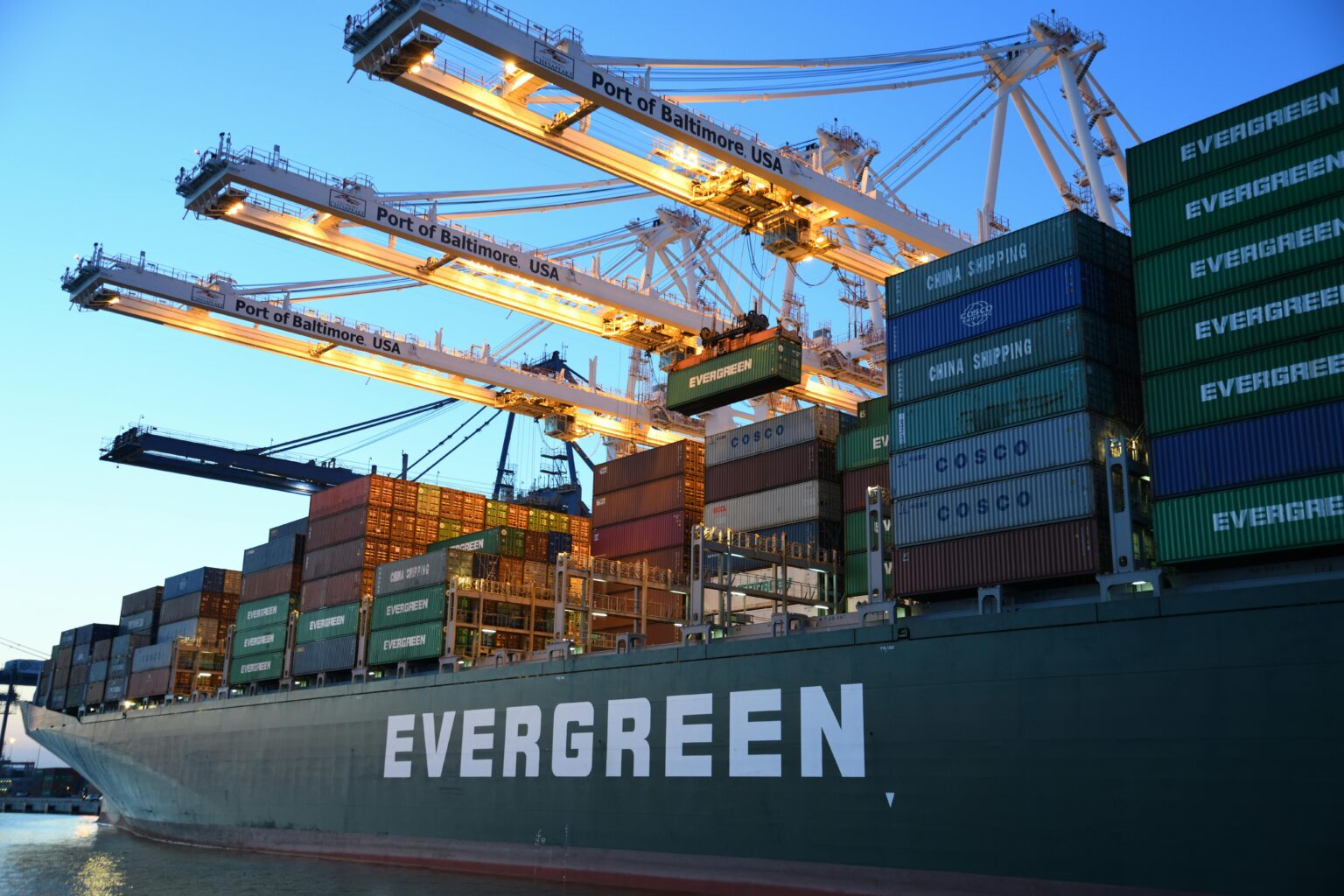
IN SHORT: Morocco will launch Nador West Med, its third deepwater port and second Mediterranean mega-facility, in Q4 2026, with total investment of $5.6 billion, initial container capacity of 5 million TEU expandable to 12 million, Morocco’s first LNG terminal, and 700 hectares of industrial and logistics zones. CMA CGM has committed to 3 million containers per year. A second deepwater port, Dakhla Atlantique on the Atlantic coast, will follow in 2028.
Morocco is about to add a second deepwater port to its Mediterranean coast that will surpass the container capacity of Spain’s largest ports at launch, completing a port-industrial infrastructure strategy that has already made Tanger Med one of the world’s top-performing container terminals and is now being replicated at an even larger scale at Nador.
King Mohammed VI chaired a meeting at the Royal Palace in January 2026 at which he directed all stakeholders to ensure the project launches under optimal conditions, confirming that Nador West Med will begin phased container operations in Q4 2026.
- Nador West Med is Morocco’s third deepwater port after Tanger Med and Jorf Lasfar. Its maritime infrastructure is complete: 5.4 kilometres of breakwaters, 4 kilometres of quays and four power stations are all in place. The port is located on Morocco’s northeastern Mediterranean coast, positioned directly on the East-West shipping routes that connect Asia to Europe through the Strait of Gibraltar. Its geographic position makes it a natural transshipment hub for cargo moving between the Mediterranean basin, West Africa and the Atlantic corridor.
- Initial design capacity is 5 million TEU of containers and 35 million tonnes of liquid and dry bulk cargo, with a long-term expansion plan to 12 million TEU. At launch it will handle more container traffic than Algeciras, Spain’s largest container port, and already has CMA CGM committed to 3 million containers per year. Marsa Maroc, Morocco’s national port operator, is partnering with CMA Terminals for the West Terminal while MSC Group’s Terminal Investment Limited has taken the second container terminal concession.
- The port includes Morocco’s first LNG terminal, with annual throughput capacity of 5 billion cubic metres, and a hydrocarbons terminal. The LNG infrastructure directly addresses Morocco’s energy transition ambitions: the terminal gives the country the capacity to import LNG, reducing dependence on piped gas from Algeria while positioning Nador as an energy hub for the northwestern African region. Both Nador West Med and Dakhla Atlantique will also include dedicated quays for green hydrogen exports as Morocco’s renewable energy production scales.
- The 700-hectare industrial and logistics zone at Nador has already attracted MAD 20 billion (approximately $2 billion) in private investment commitments before the port has even opened. The development playbook replicates Tanger Med’s success: by 2024, industrial zones near Tanger Med hosted 1,400 companies employing 130,000 workers across automotive, aeronautics, textiles, agriculture and renewables. Nador’s zone has the potential to scale to 5,000 hectares, exceeding Tanger Med’s current footprint.
- European financing of over €300 million backs the infrastructure, reflecting the EU’s strategic interest in Morocco as a southern Mediterranean partner. Spain, whose ports at Algeciras and Valencia have been directly disrupted by Tanger Med’s rise, is watching Nador West Med with acute attention: Morocco’s throughput at Tanger Med already exceeds Algeciras by more than double. Nador adds a second competing facility on the same strategic corridor.
- Dakhla Atlantique, the companion project on Morocco’s Atlantic coast, is confirmed for commissioning in 2028. Located in the Western Sahara region, the port is designed to serve Atlantic trade routes and will also feature green hydrogen export infrastructure, supporting Morocco’s ambition to become a major supplier of clean energy to European markets by the early 2030s.
Minister Baraka: “We estimate that this port should not be reserved only for the zones of Driouch and Nador. All regions must benefit from it.”
The Bigger Picture: Morocco’s port strategy is one of the most sophisticated industrial policy plays on the African continent. Tanger Med was not an accident. It was a decade-long project to build a world-class transshipment hub that redirected Mediterranean shipping through African infrastructure rather than European. It worked. Nador West Med is the second act: more capacity, LNG, green hydrogen, industrial zones, and a position on the East-West route that makes it structurally advantaged for the next generation of Mediterranean trade. When both ports are operating, Morocco will control the single most important logistics corridor between Africa and Europe. That is a geopolitical and economic asset that compounds for decades.
Source: Middle East Online / PortNews / Morocco World News, January 2026