
IN SHORT: About 1,800 NUM members at Impala Platinum’s No.1 Shaft in Rustenburg have downed tools in a lawful indefinite strike after the National Union of Mineworkers exceeded the 40% membership threshold required for formal workplace recognition in February but was blocked from receiving that recognition by contractor Triple M Mining and, NUM alleges, Impala Platinum itself. The dispute centres on a closed-shop agreement AMCU holds at the shaft, which NUM says is being used to suppress its constitutional right to organise.
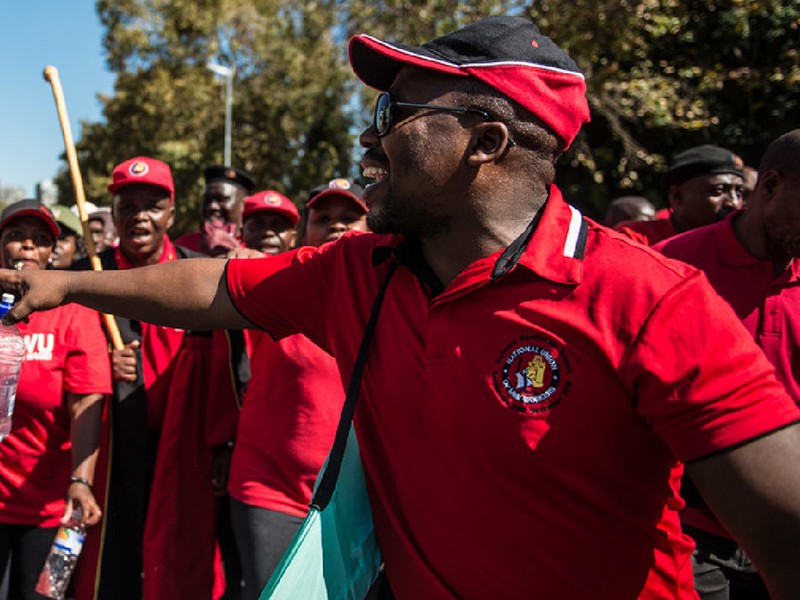
A labour battle rooted in union recognition, closed-shop agreements and allegations of employer collusion has erupted at Impala Platinum’s Rustenburg operations, with 1,800 NUM members on indefinite strike at No.1 Shaft after months of stalled verification and what the union describes as a "brotherhood syndrome" protecting AMCU’s majority position.
The strike, which began on Friday April 25, is lawful and involves workers employed by Triple M Mining, a contract mining services provider operating No.1 Shaft on Implats’ behalf.
- The dispute’s origin is a union verification process that began in May 2025. By February 2026, the CCMA-conducted verification confirmed that approximately 40% of employees at No.1 Shaft had indicated NUM membership. South African labour law requires an employer to grant organisational rights including access, stop-order facilities and leave for union activities once a union represents 30% of employees. Recognition rights and the right to bargain follow at majority.
- NUM Rustenburg deputy regional secretary William Shiko said the union exceeded the 40% threshold in February but Triple M refused to grant formal recognition, and that Implats’ own conduct suggests active support for maintaining AMCU’s dominant position. Shiko used pointed language: "NUM is deeply disturbed by an emerging brotherhood syndrome involving the main employer, Impala Platinum. It appears contractors are being actively discouraged from recognising NUM, a collusion that fundamentally undermines the constitutional right to freedom of association."
- Implats spokesperson Johan Theron pushed back on the framing. He confirmed the strike is at No.1 Shaft only, one of the smaller and older shafts in the Rustenburg portfolio, which is outsourced to Triple M Mining. He said the shaft employs about 2,000 workers and produces less than 5% of Impala’s total output. He also noted that the CCMA verification showed more than 50% AMCU membership at the shaft, and that AMCU, as the majority union, had lawfully concluded a closed-shop agreement with Triple M. Under a closed-shop arrangement, all employees must belong to the majority union as a condition of employment.
- The legal tension is acute. A closed-shop agreement is a lawful instrument under South African labour law. But if NUM’s verification figure of 40% is accurate, the question is whether workers who joined NUM did so while already bound by a closed-shop agreement, and whether the closed-shop itself was concluded in circumstances that suppressed NUM’s ability to organise. These are contested factual and legal questions that CCMA and, if necessary, the Labour Court will ultimately resolve.
- Implats confirmed the shaft is due to close in the coming years, which adds context to Triple M’s reluctance to engage a full recognition process and to AMCU’s interest in protecting its position. For NUM, the principle matters regardless of shaft lifespan: if the union can be suppressed through contractor structures and closed-shop agreements at one shaft, the same template can be applied elsewhere.
- The strike has limited immediate production impact given the shaft’s less than 5% output contribution. The reputational and legal implications for Implats, which is one of the world’s largest platinum group metals producers, are potentially more significant, particularly as ESG-focused investors pay growing attention to freedom of association and labour rights compliance.
NUM has called on Implats directly to intervene and ensure Triple M grants the union its constitutional rights, framing the issue as one that goes beyond the contractor relationship to the primary employer’s responsibility for working conditions across its supply chain.
The Bigger Picture: South Africa’s mining sector labour disputes are rarely just about one shaft or one union. The Nkomati offtake deal announced the same week as this strike is a reminder that the sector’s investment story and its labour story run in parallel. International investors looking at South Africa’s critical minerals potential as a supply chain partner for the energy transition are simultaneously watching whether the country’s labour framework produces stable, rights-respecting workplaces. A dispute centred on allegations of employer collusion to suppress union recognition sits uncomfortably against that backdrop. Implats will want this resolved quickly and legally.
Source: BusinessDay — April 29, 2026