
IN SHORT: The US International Development Finance Corporation has committed $50 million in equity to the Phalaborwa Rare Earths Project in South Africa’s Limpopo Province, backing Rainbow Rare Earths’ plan to extract high-value rare earth elements from 35 million tonnes of phosphogypsum waste at a former chemical plant. The investment proceeds despite the Trump administration’s freeze on all other US financial assistance to South Africa, prioritising strategic mineral supply chain security over diplomatic tension.
The Trump administration has backed a $50 million equity investment in a rare earths project in South Africa despite cutting all other US financial assistance to the country, placing mineral supply chain security explicitly ahead of the diplomatic rift that has made Washington-Pretoria relations the most strained in decades.
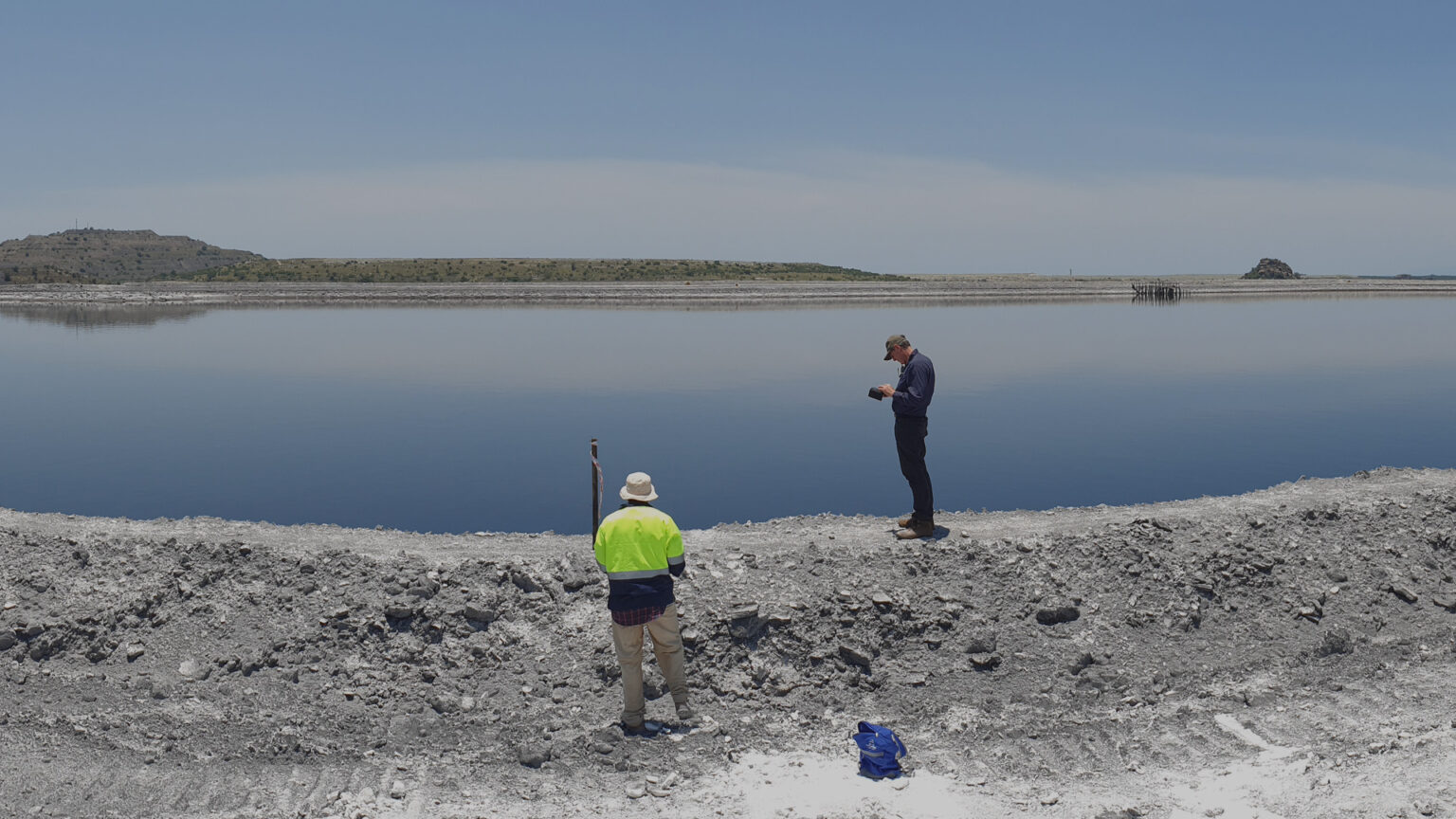
The DFC’s investment flows through partner TechMet into Rainbow Rare Earths’ Phalaborwa project in Limpopo Province, where two enormous dunes of phosphogypsum waste from a former chemical plant contain commercially extractable concentrations of neodymium, praseodymium, dysprosium, terbium and other rare earths critical for defence systems, electric vehicles and robotics.
- The process is above-ground and environmentally distinctive: Rainbow extracts rare earths directly from the phosphogypsum waste rather than conventional mining, eliminating the most energy-intensive steps in rare earth production. The company claims it will use up to 90% renewable energy and produce at a cost comparable to Chinese producers, which currently process roughly 70% of global rare earths and dominate the high-value oxide refining stage.
- Total project capex is approximately $317 million. The $50 million DFC commitment is conditional on construction start, anticipated in early 2027. A definitive feasibility study is due in 2026. First production is targeted for 2028. The project is designed for a 16-year operating life, with 19 million tonnes of phosphogypsum processed across that period.
- The DFC commitment was originally made in 2023 under the Biden administration. The current Trump administration has carried it forward, with the DFC framing its involvement as part of a push to unlock Africa’s mineral potential "while advancing US strategic interests." Rainbow CEO George Bennett confirmed the primary target market is the US, with interest concentrated in defence applications.
- South Africa’s government has no stake in the project, and the diplomatic context is notable. Trump signed an executive order in February 2025 halting all US financial assistance to South Africa. The Phalaborwa investment is a deliberate carve-out: strategic mineral access trumps political grievance.
- The US is systematically expanding its critical minerals footprint across Africa: a $1.8 million feasibility study at the Monte Muambe rare earths project in Mozambique was signed in February 2026, and financial support for the Lobito Corridor railway linking mineral-rich DRC and Zambia to the Atlantic coast is continuing under the Trump administration despite its broader foreign aid cuts.
- Benchmark Mineral Intelligence research manager Neha Mukherjee assessed the project as a relatively low-cost asset with unknown potential given its experimental extraction process, but noted that new projects of any kind are essential because existing capacity outside China is insufficient to meet projected demand.
TechMet chairman Brian Menell called Phalaborwa "one of the world’s most environmentally friendly and low-cost rare earth projects," while Rainbow chairman Adonis Pouroulis said the DFC backing validates the project’s economic and ESG credentials.
The Bigger Picture: The US-South Africa minerals story is not really about Phalaborwa. It is about the global realignment of critical mineral supply chains. China has spent 30 years building the dominant position in rare earth processing. The US spent the same period ignoring it. Now Washington is scrambling, using its DFC as a geopolitical instrument across Africa, from Limpopo to Mozambique to the Lobito Corridor. The paradox of backing a South African project while freezing South African aid is not confusion — it is clarity. Minerals are strategic. Aid is political. The Trump administration has separated the two, and that separation will define US-Africa investment policy for the rest of the decade.
Source: PBS NewsHour / Africanews