
IN SHORT: Afreximbank has underwritten $2.5 billion of a $4 billion five-year syndicated term loan for the Dangote Petroleum Refinery, Africa’s largest refining complex. The facility consolidates construction debt, optimises the refinery’s capital structure, and positions it for its next phase of growth. The refinery currently covers 44% of Nigeria’s gasoline demand and exports to five African countries.
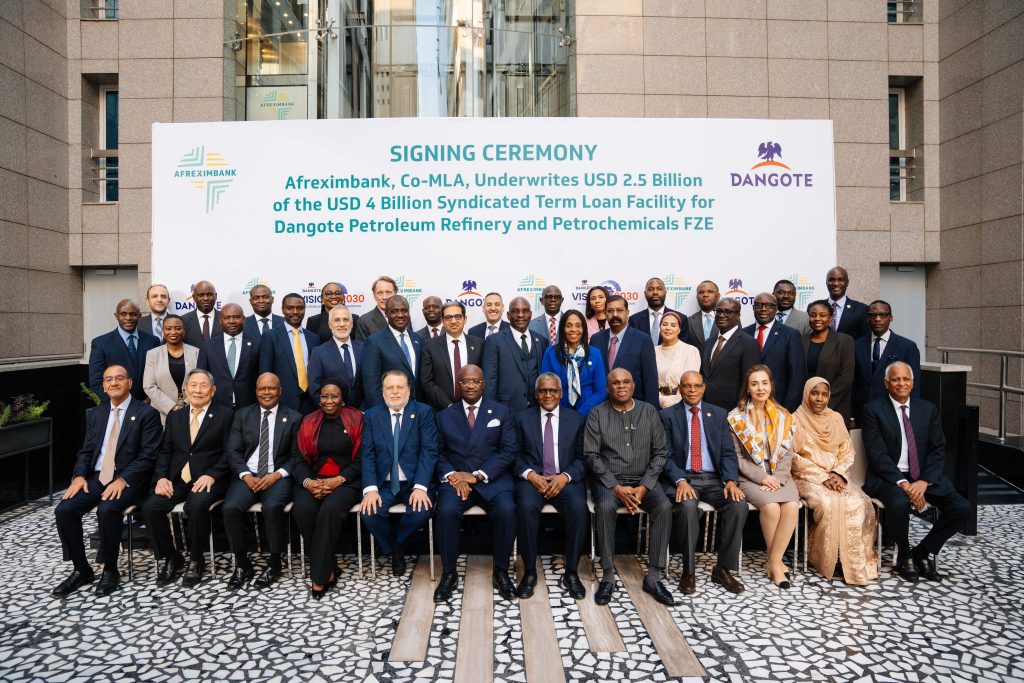
Afreximbank has committed $2.5 billion, the largest single share, of a $4 billion syndicated term loan for the Dangote Petroleum Refinery and Petrochemicals, in one of the largest industrial financing deals in Africa’s history, as the 650,000-barrel-per-day Lekki complex consolidates its construction debt and positions itself to deepen its role as the continent’s strategic fuel supplier. Access Bank co-arranged the five-year facility, which attracted strong participation from both African and international financial institutions.
- The $4 billion facility is a debt consolidation and capital structure optimisation. No new cash is injected into operations. It brings together multiple financing lines used during construction and the refinery’s 2024 start-up into a single five-year instrument.
- Afreximbank’s $2.5 billion participation is its largest-ever single commitment to an industrial project. The bank has invested approximately $15 billion in the Dangote Group since 2015 and previously provided a $1 billion working capital facility when the refinery began operations in February 2024.
- The refinery has been operating at full 650,000 bpd capacity since February 2026. It currently covers 44% of Nigeria’s gasoline demand and exports refined products to five African countries, directly reducing Africa’s dependence on European and Asian import markets.
- A planned listing on the Nigerian Exchange, offering around 10% of capital, is under regulatory review. The structure would allow naira subscriptions with dollar-denominated dividends backed by an estimated $6.4 billion in annual export revenues.
- NNPC crude allocation remains a constraint: the refinery receives approximately five crude cargoes per month against the 13 to 15 required for full operations, forcing continued purchases on international markets at prevailing prices. NNPC raised this to seven cargoes for May 2026, still well short of operational needs.
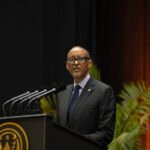
- Afreximbank President George Elombi described the deal as proof that “African ambition, African capital and African execution” can deliver at scale, and committed the bank to continuing support for indigenous industrial projects.
The Dangote Refinery’s financial restructuring matters beyond Nigeria. Afreximbank has simultaneously launched a $3 billion revolving financing programme to support intra-African refined product trade, with the Dangote Refinery as the anchor supplier. Every tonne of fuel that moves from Lekki to an African buyer rather than arriving from Rotterdam or Singapore is a step toward the energy self-sufficiency the continent has been chasing for decades.
The Bigger Picture: Nigeria has been a crude oil exporter and a refined product importer simultaneously for fifty years. The Dangote Refinery was explicitly built to end that paradox. The $4 billion loan consolidation is the financial architecture that gives the refinery the balance sheet stability to fulfil that role without being destabilised by construction-era debt. The real constraint now is upstream, not financial: if NNPC cannot supply the 13 to 15 monthly crude cargoes the refinery needs, it is forced into international crude markets at spot prices, compressing its margin and undermining the naira-for-crude initiative that was designed to reduce FX pressure. The refinery’s destiny and Nigeria’s crude production trajectory are inseparable. Sorting out the upstream supply chain is now the most important single task for the project’s long-term economics.
Source: Vanguard / Afreximbank