
IN SHORT: Nigeria has attracted $2.6 billion in mining FDI in two and a half years under President Tinubu. At the Powering Africa Summit in Washington DC, Minister Dele Alake called for regional energy and industrial corridors across Africa. The $15.6 billion Lagos-Abidjan Highway breaks ground in 2026.
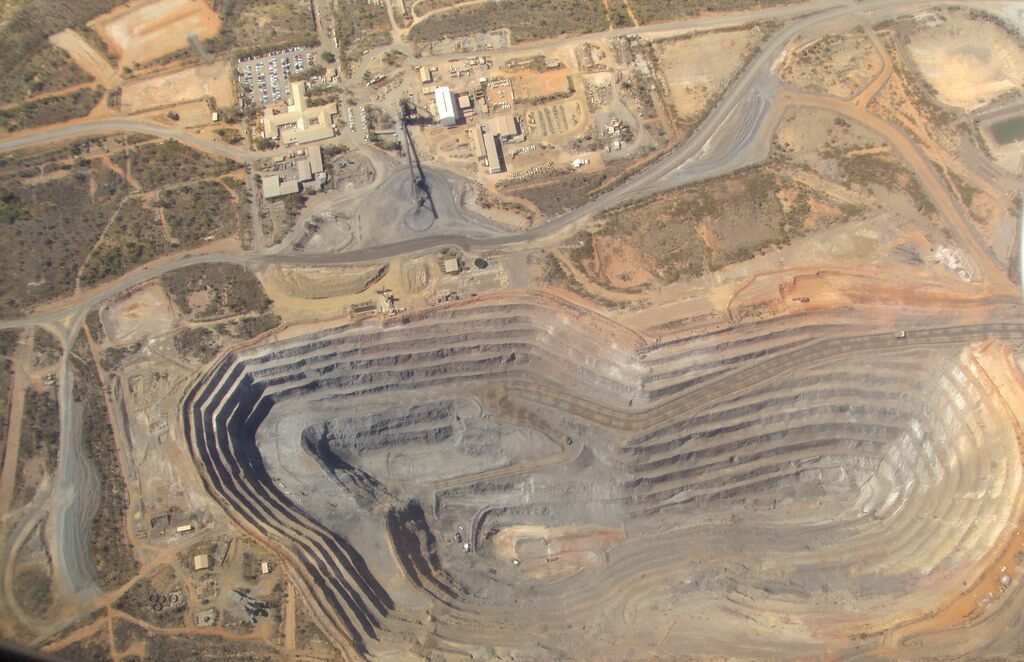
Nigeria’s Minister of Solid Minerals Development Dele Alake has announced that the country attracted over $2.6 billion in foreign direct investment into its mining sector over the past two and a half years, speaking at the Powering Africa Summit in Washington DC on March 22. At the same forum, Alake called on the United States and African governments to prioritise regional energy and industrial corridors as the infrastructure backbone for the continent’s critical minerals boom.
Alake told a panel themed Critical Minerals in Africa: Meeting Global Demand that governance reforms under President Tinubu’s administration have repositioned Nigeria as a credible mining destination. The changes include digitised licensing, strengthened regulatory frameworks, improved ease of doing business, and secure tenure guarantees for mineral title holders. On security, he cited the establishment of Mining Marshals, which has led to the arrest of over 350 suspected illegal miners, including foreign nationals, with more than 150 currently undergoing prosecution.
Investor incentives remain in place: tax waivers on imported mining equipment and full repatriation of profits after payment of royalties and taxes. Nigeria’s $700 billion in estimated untapped solid mineral resources spans gold, lithium, tin, iron ore, coal, and dozens of other commodities, and the sector has been identified by the current administration as a critical pillar of economic diversification beyond oil.
The more strategically significant part of Alake’s address was his push for regional industrial corridors. He called for routes modelled on the Lobito Corridor in Central Africa, specifically highlighting the Lagos-Abidjan Corridor spanning Nigeria, Benin, Togo, Ghana, and Côte d’Ivoire, and the Walvis Bay Corridor linking Southern and Central Africa to global markets. The $15.6 billion Lagos-Abidjan Highway, slated for construction in 2026, will connect five West African nations and is projected to generate 70,000 jobs.
Sarah Whitten of the US Export-Import Bank, also speaking at the panel, emphasised the importance of political stability and policy continuity in unlocking private sector financing for critical minerals projects.
Bigger Picture: The $2.6 billion FDI figure is significant in its own right, but the more important signal from Alake’s Washington address is the corridor argument. Africa’s critical minerals problem is not primarily one of deposit availability. The continent holds an extraordinary share of the cobalt, lithium, manganese, graphite, and rare earths the global energy transition requires. The problem is infrastructure: how to move ore from mine to processing facility to port to market at competitive cost. Regional energy and industrial corridors, if built with the right power infrastructure and logistics networks, are the answer to that problem. Nigeria is positioning itself as an anchor of the Lagos-Abidjan belt. If the $15.6 billion highway comes through and power infrastructure follows, the critical minerals case for investing in Nigeria’s mining sector becomes substantially stronger.