
IN SHORT: President Mahama is tabling a landmark UN resolution on March 25 formally declaring the transatlantic slave trade the gravest crime against humanity. All 54 AU states back it. Brazil, CARICOM, Asian and Gulf states are on board. European resistance is the last obstacle. If it passes, it would be the first comprehensive UN statement on slavery in 80 years.
President John Dramani Mahama tables a landmark resolution at the UN General Assembly on March 25, 2026, formally declaring the transatlantic slave trade the gravest crime against humanity and opening the first comprehensive multilateral process on reparatory justice in the UN’s 80-year history. Three days before the vote, Brazil became the most significant non-African nation to join the coalition, and Ghana’s Foreign Minister confirmed that Asian and Gulf states have also pledged support. The resolution now has 54 African states, CARICOM, Brazil, and a growing Global South bloc behind it. European resistance is the last obstacle.
The resolution is titled Declaration of the Trafficking of Enslaved Africans and Racialised Chattel Enslavement of Africans as the Gravest Crime Against Humanity. The date is not incidental: March 25 is the International Day of Remembrance of the Victims of Slavery and the Transatlantic Slave Trade. A wreath-laying ceremony at the African Burial Ground in New York on March 24 precedes the tabling. A high-level event on reparatory justice at UN Conference Room 3 follows the same day.
Brazil’s endorsement is the most consequential development since the African Union’s unanimous backing at the 39th AU Summit in February. President Luiz Inácio Lula da Silva announced his country’s support on the sidelines of the CELAC-Africa Summit in Bogotá. When Brazil endorses this resolution it is not speaking as a sympathetic outsider. It is speaking as a country whose entire demographic composition, approximately 56 percent of 215 million people being of African descent, was shaped by the trade.
The supporting coalition now covers four distinct blocs. All 54 AU member states voted in favour at the last AU Summit in Addis Ababa without a single abstention. CARICOM, the 20-nation Caribbean Community, backs it fully. Brazil’s endorsement opens a foothold in CELAC, the 33-nation Community of Latin American and Caribbean States. Several countries in Asia and the Gulf have also pledged support.
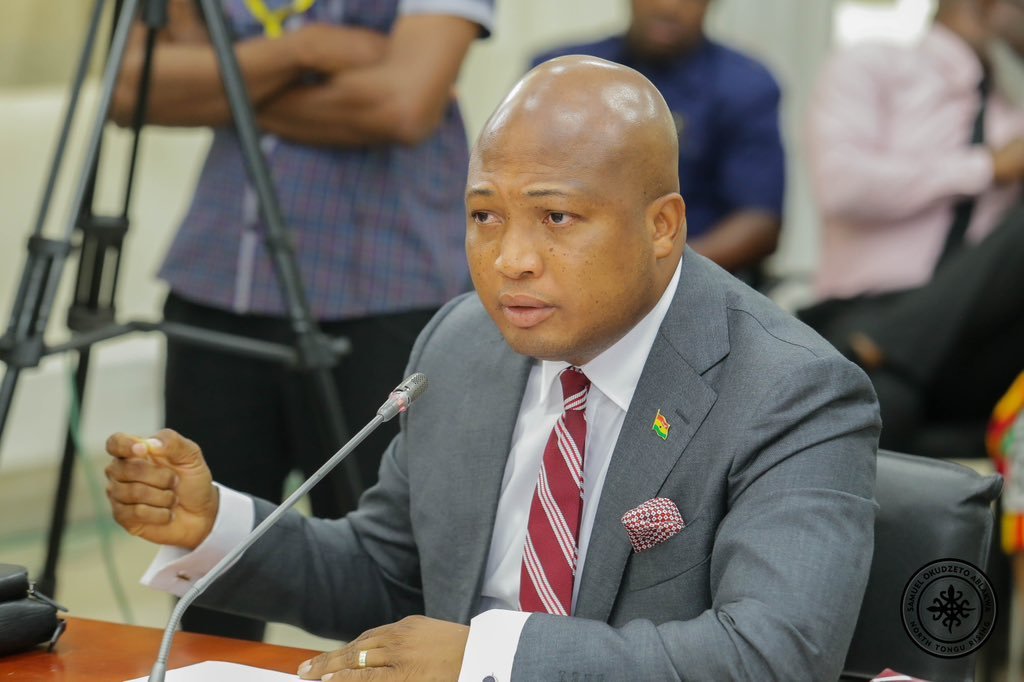
European resistance is documented and expected. Several EU states have explicitly refused to discuss reparations, arguing that present-day governments cannot be held accountable for historical crimes. Ablakwa has framed the response directly: Ghana is not seeking to reopen old wounds but to heal those wounds with truth. The ministry situates the real stakes in the structural: naming the trade is not only symbolic but the beginning of a reckoning with the structural inequalities that underpin debt asymmetries, development gaps, climate vulnerability and global financial governance.
Bigger Picture: The coalition behind Ghana’s resolution has moved faster and wider than most observers expected. The UN General Assembly operates on a one-state-one-vote basis. Africa alone has 54 votes. Add CARICOM, Latin America, and sympathetic Asian and Gulf states and the resolution likely passes even if every European and Western state votes against it. It is not a declaration that triggers immediate reparations. It is a recorded position of the international community that permanently changes the terms of every subsequent negotiation about historical accountability, debt relief, climate finance, and development architecture. The era of the reparations debate existing only in speeches is ending.
Source: GBC Ghana / MyJoyOnline / Reuters via Sowetan