

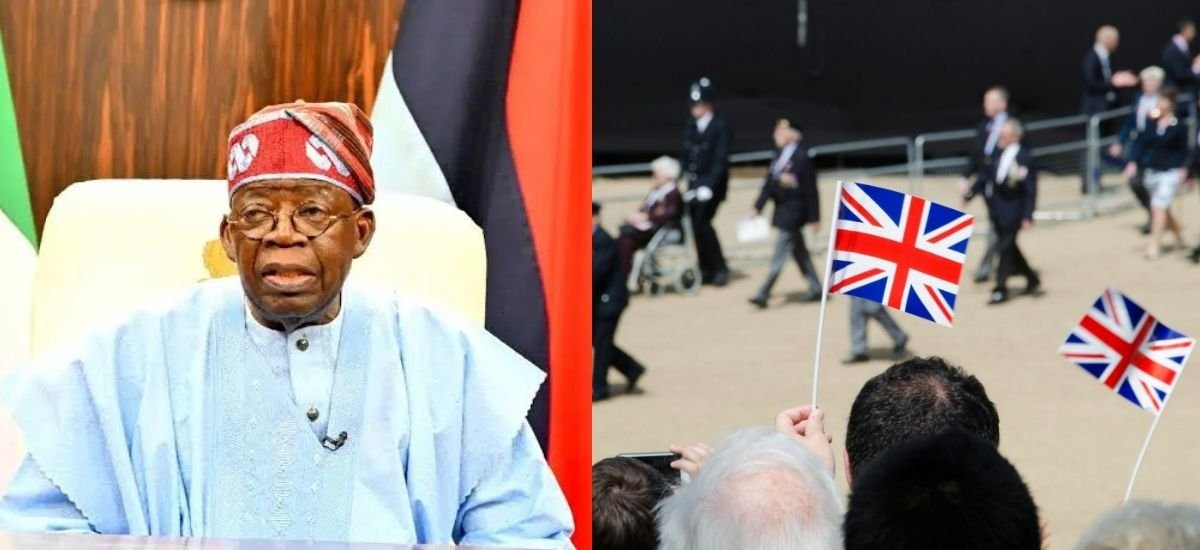
Nigeria and the United Kingdom signed three agreements on March 19, the second day of President Bola Tinubu’s state visit to London, covering migration management, joint action against organised immigration crime, and an expanded business visa scheme for UK companies operating in Nigeria. The deals were signed by Nigeria’s Minister of Interior Olubunmi Tunji-Ojo and UK Home Secretary Shabana Mahmood.
The three instruments are a Memorandum of Understanding on Migration Partnership, a Statement of Intent on Cooperation on Organised Immigration Crime and Border Security covering a three-year joint strategy, and a Statement of Intent on Expansion of Business Visas for UK companies. Tunji-Ojo signed the first two on March 18 and concluded the third on March 19 alongside UK Trade Envoy Florence Eshalomi.
- The migration MoU establishes a framework for safe, orderly and regulated movement between both countries, affirming respect for national laws, international obligations and human rights.
- The immigration crime agreement is a three-year operational strategy to dismantle criminal networks exploiting irregular migration routes and share intelligence on organised visa abuse.
- The business visa expansion simplifies travel for credible UK companies with established or active investment in Nigeria.
- Annual deportation returns from the UK to Nigeria have nearly doubled to 1,150 under the current arrangements. The UK government said the new deal removes a key administrative barrier: UK letters, an alternative identification document for individuals without valid passports, will now be recognised by Nigeria for the first time, eliminating the wait for emergency travel documents.
- Total UK-Nigeria trade in goods and services reached $10.2 billion (£8.1 billion) in the most recent data. Nigeria is the UK’s 36th largest trading partner.
The two governments have framed these MoUs differently. Mahmood said Nigeria would “always be number one” as the first country to conclude this scale of bilateral migration agreement. The UK’s official press release, published by the Home Office, centres the deal as a mechanism to accelerate removals of visa overstayers, foreign criminals and failed asylum seekers from British soil. Tunji-Ojo framed the same agreements as a prerequisite for Nigeria’s trillion-dollar economy ambition, arguing that cutting barriers to legal migration and business mobility is inseparable from trade liberalisation.
The MoUs were signed against the backdrop of a state visit that has already produced the most substantial Nigeria-UK bilateral package in 37 years. As Africaspoint reported on March 18, day one of the visit generated a $944 million port financing deal for Lagos Port Complex and Tin Can Island, LemFi’s $127 million London commitment, Wellington College Lagos, a University of Birmingham-UNILAG AI research partnership, and Twinings Ovaltine’s $30 million Lagos factory. The migration agreements extend that framework into the sovereignty and human mobility dimensions of the relationship.
Bigger Picture: Every major bilateral trade relationship eventually confronts migration as its most politically sensitive variable. For Nigeria, the UK is home to its largest diaspora in Europe, a community that sent an estimated $20 billion in remittances in 2024 and occupies senior positions across finance, medicine, law and technology. A business visa expansion that genuinely reduces friction for UK investors entering Nigeria and a migration framework that creates orderly return channels rather than adversarial deportation drama are both worth having. The question is whether the UK’s primary motivation, doubling removal volumes, and Nigeria’s primary motivation, easing business mobility, will produce an implementation record that both governments are willing to hold publicly to account over the three-year joint strategy period.
Source: GOV.UK / Channels TV / Daily Post Nigeria