

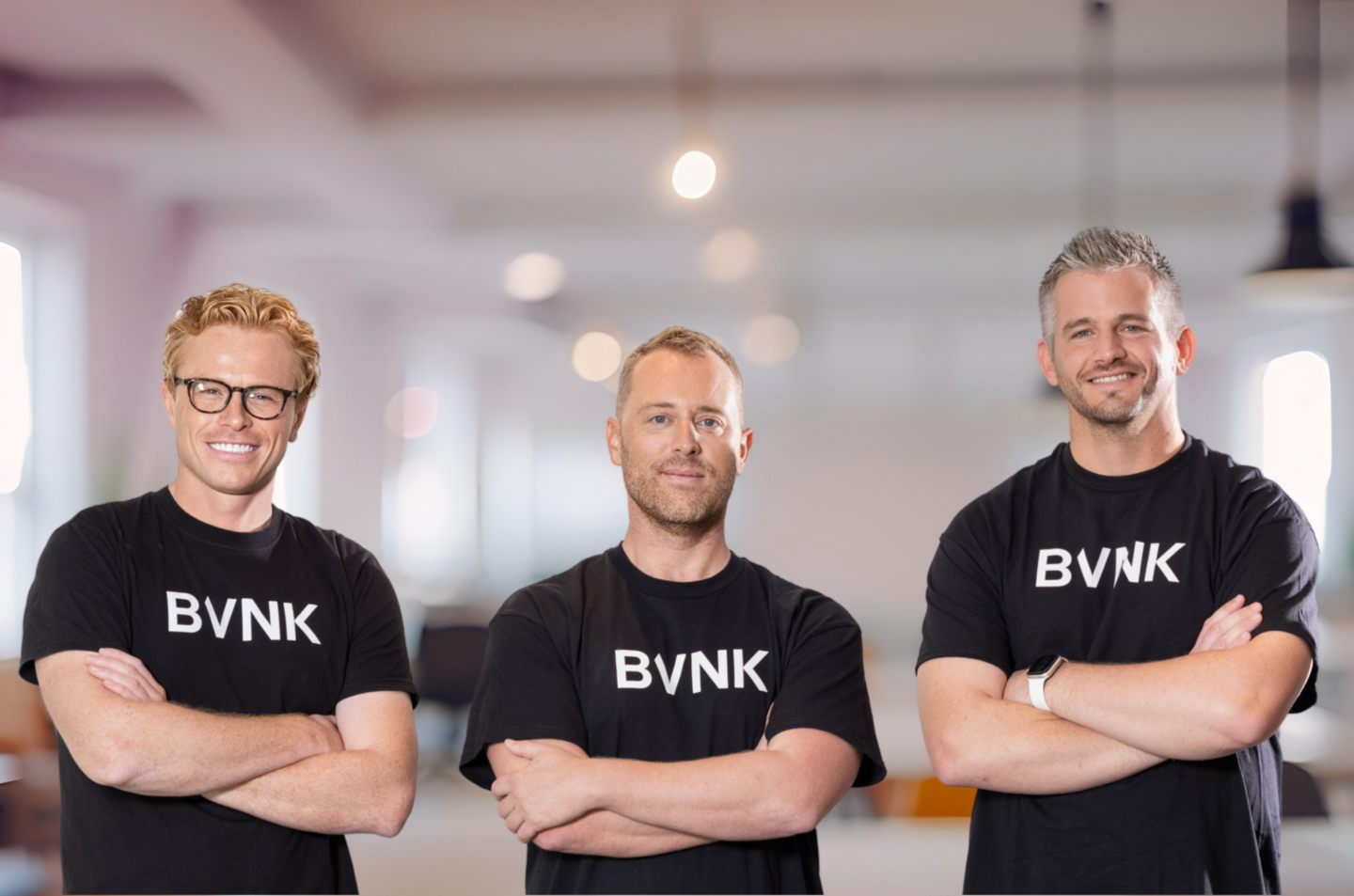
Mastercard has agreed to acquire BVNK, the London-based stablecoin infrastructure company founded by three South Africans, for up to $1.8 billion including $300 million in contingent payments, making it the largest stablecoin acquisition in history. The deal, announced March 17, makes billionaires of co-founders Jesse Hemson-Struthers, Donald Jackson, and Chris Harmse, who built BVNK from a 2021 startup into a platform processing $250 to $300 billion in annualised stablecoin payment volumes.
The acquisition eclipses Stripe’s $1.1 billion purchase of stablecoin startup Bridge in February 2025 and confirms that the payments giants have made their choice: stablecoins are not a competitor to their networks, they are infrastructure to be owned. The deal is expected to close before year end. BVNK will continue operating independently after close.
The path from Cape Town to $1.8 billion ran through London and was built on a specific insight: that businesses needed a single platform to send, receive, and hold both fiat and crypto assets across payment rails and blockchain networks simultaneously. Hemson-Struthers brought serial founder credentials — previous ventures were acquired by Naspers and Sportradar. Jackson brought enterprise-grade blockchain architecture. Harmse, a chartered financial analyst and former macro/crypto fund partner, built the forex and cross-border payments engine. Together they assembled what is now the most strategically valued stablecoin infrastructure stack outside the major exchanges.
The fundraising history reflects progressive institutional validation. BVNK raised a $40 million Series A in May 2022 at a $340 million post-money valuation, backed by Tiger Global and Haun Ventures. A $50 million Series B in December 2024 valued the company at approximately $750 million, with Coinbase Ventures and Citi Ventures among the investors. In May 2025, Mastercard’s direct rival Visa made a strategic investment through Visa Ventures. The Mastercard acquisition at $1.8 billion represents a 2.4x premium on the Series B valuation within 15 months — a measure of how quickly the strategic importance of stablecoin infrastructure has escalated.
The January 2026 partnership with Visa Direct, Visa’s $1.7 trillion real-time payments network, to power stablecoin payments was the clearest signal yet that BVNK had become infrastructure for the payments industry rather than a challenger to it. That Mastercard then acquired the same company Visa had just partnered with underlines how aggressively both networks are racing to control the on-chain settlement layer.
BVNK’s Africa connection runs deeper than its founders’ origins. The company’s own 2026 Stablecoin Utility Report, compiled with YouGov, Coinbase, and Artemis, ranked Nigeria first globally for ownership of both USDT and USDC. Africa registered the highest stablecoin ownership of any region globally at 79 percent. The infrastructure that BVNK built, and that Mastercard has now acquired, was specifically validated by African payment behaviour: cross-border remittances, dollar-store-of-value in high-inflation economies, and B2B settlement in markets with unreliable banking rails. The continent’s use case drove global product design.
Mastercard Chief Product Officer Jorn Lambert framed the acquisition as a capability play. "The combined activities of Mastercard and BVNK would deliver a digital asset and chain-agnostic approach," Mastercard said, allowing customers to access solutions without being locked into closed ecosystems. Hemson-Struthers described the deal as a chance to "scale stablecoin infrastructure across currencies, payment rails, and geographies" at a pace not possible independently.
The founders’ exact equity percentages in a private company remain undisclosed. The Daily Investor notes that a 3.3 percent shareholding equates to approximately $60 million at the acquisition price, and that the founders likely retained substantially more than that given normal dilution patterns through the funding rounds. The deal is structured with $300 million tied to performance milestones, meaning the total payout depends on operational outcomes post-close.
Bigger Picture: BVNK is the most significant African founder exit in fintech history. That three South Africans, working from London, built the company that Mastercard chose as its stablecoin infrastructure acquisition over every US and European competitor is a data point about where fintech talent is now coming from. The continent that produces the world’s highest stablecoin ownership rates also produced the founders who built the infrastructure to service them. The Mastercard acquisition is not a story about Africa in the abstract. It is a specific outcome from specific founders who understood African payment problems so precisely that they built solutions the entire world needed.
Source: Daily Investor / Fortune