
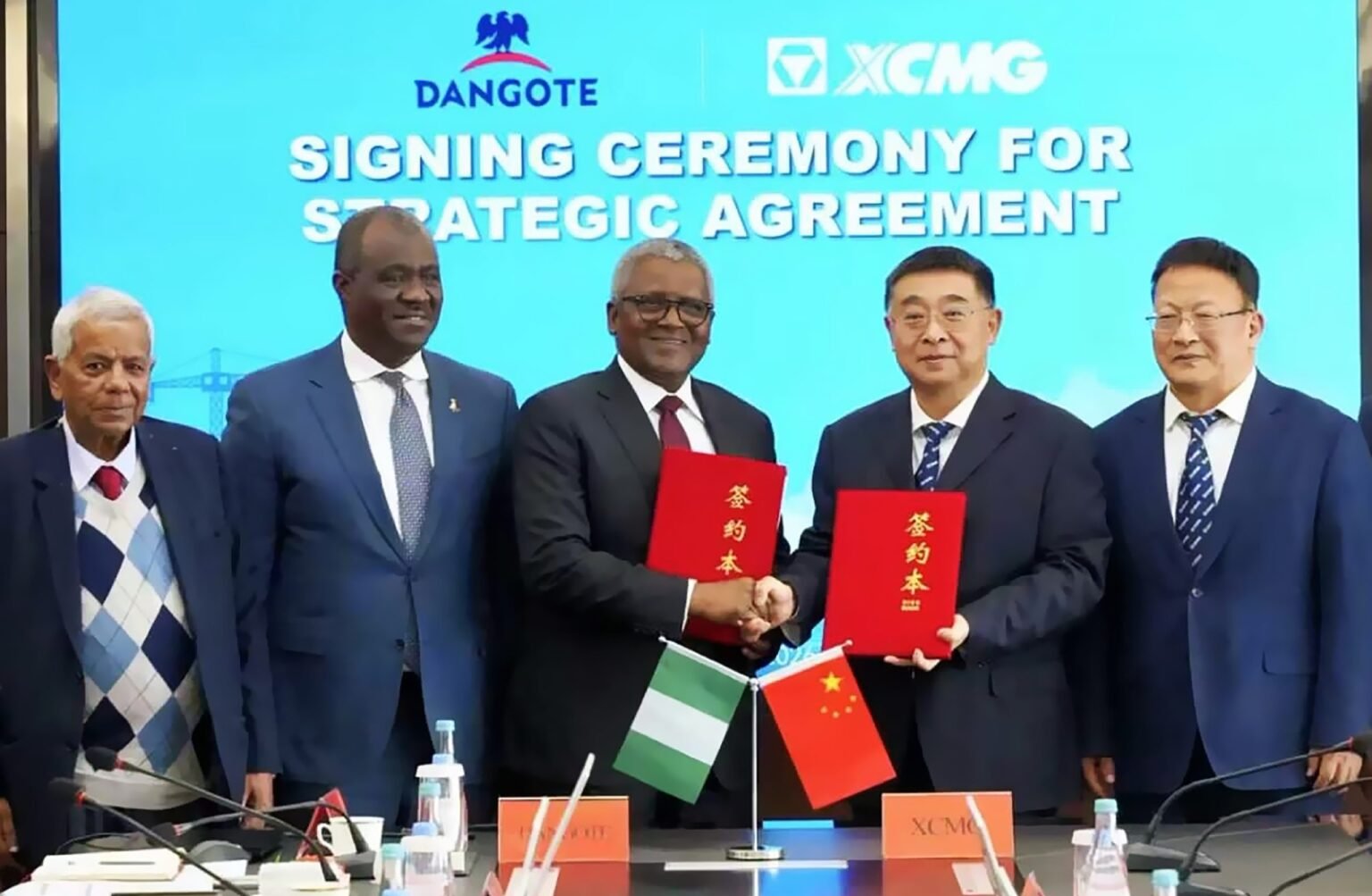
Dangote Industries Limited and China’s GCL Group have formalised a $4.2 billion, 25-year natural gas supply agreement to power a 3-million-tonne-per-year urea fertilizer complex in Gode, Ethiopia’s Somali region. The deal, signed in Lagos, locks in gas supply from the Calub field in the Ogaden Basin through a dedicated 108-kilometre pipeline and positions the facility to become East Africa’s largest modern fertilizer production hub when it opens in 2029.
The fertilizer plant itself is valued at $2.5 billion and is being developed through a joint venture between Dangote Group and Ethiopian Investment Holdings, holding 60 and 40 percent equity stakes respectively. GCL will transport gas from the Calub gas field to the production site and is targeting output of 1.33 billion litres of gas per year by 2029. Once operational, the complex will fully meet Ethiopia’s current urea import demand while also supplying neighbouring regional markets.
- Gas will travel from the Calub field in the Ogaden Basin through a dedicated 108-kilometre pipeline to the Gode production site.
- The 3-million-tonne annual urea capacity makes this the largest fertilizer project of its kind in East Africa.
- The 60:40 joint venture between Dangote Group and Ethiopian Investment Holdings gives the Ethiopian state a direct equity stake in the facility.
- GCL Group is China’s leading private energy conglomerate, with existing integrated oil and gas operations already established in Ethiopia.
- The agreement was facilitated with the active support of the Ethiopian government, which both parties acknowledged as essential to its conclusion.
- The project is structured as a closed-loop gas-to-fertilizer value chain: upstream gas extraction, midstream pipeline transport, and downstream urea production integrated within a single industrial system.
- The initiative is framed under China’s Belt and Road Initiative as a model for energy-to-agriculture industrial development in Africa.
Aliko Dangote, President and Chief Executive of Dangote Industries Limited, framed the deal as a structural response to one of Africa’s most persistent economic contradictions: the continent exports raw energy while importing the processed outputs that derive from it. GCL Group Chairman Zhu Gongshan said the partnership would establish a new model of China-Africa cooperation that integrates upstream gas production, pipeline infrastructure, and downstream fertilizer manufacturing into a single industrial ecosystem.
This is not Dangote’s first major China partnership. Earlier this year Dangote ordered more than 1,000 CNG trucks from Chinese automaker BAIC FOTON, taking his group’s total CNG fleet past 11,000 vehicles as part of a broader logistics modernisation programme. The Ethiopia fertilizer deal extends that China relationship into a new industrial vertical, with Chinese technology and capital now underpinning both the logistics and the food production pillars of Dangote’s continental expansion. At the Lekki refinery complex in Lagos, Dangote has separately announced Africa’s largest linear alkylbenzene plant, targeting a $100 billion group scale by 2030.
Africa imports approximately 90 percent of its fertilizer needs despite holding 60 percent of the world’s uncultivated arable land. Ethiopia alone spends hundreds of millions of dollars annually on urea imports to support its agricultural sector. The Gode complex, when operational, eliminates that import dependency for Ethiopia and creates an export surplus for the broader East African market.
Bigger Picture: The Dangote-GCL deal is the most consequential food security investment announced in East Africa in years, and it arrives at a moment when the global energy crisis has made the cost of input imports — fertilizer, fuel, food — structurally higher for every African economy without domestic production capacity. The $4.2 billion gas supply contract and the $2.5 billion plant investment together represent $6.7 billion in committed industrial capital pointed at Ethiopia’s Somali region, one of the most economically marginalised parts of the continent. The partnership structure is also worth noting: a Nigerian private conglomerate, a Chinese energy group, and the Ethiopian state, co-investing in a facility that will reshape agricultural input costs across multiple countries. This is not aid. It is not a government loan. It is industrial capital from Africa’s own private sector, backed by Chinese technology and Ethiopian government equity, building the kind of closed-loop value chain that development economists have argued for decades should exist on the continent. If it delivers on schedule in 2029, Dangote will have built Africa’s first gas-to-fertilizer industrial complex through private initiative. The signal that sends to the investment community is significant.
Source: Bloomberg / Channels Television / CED Magazine