

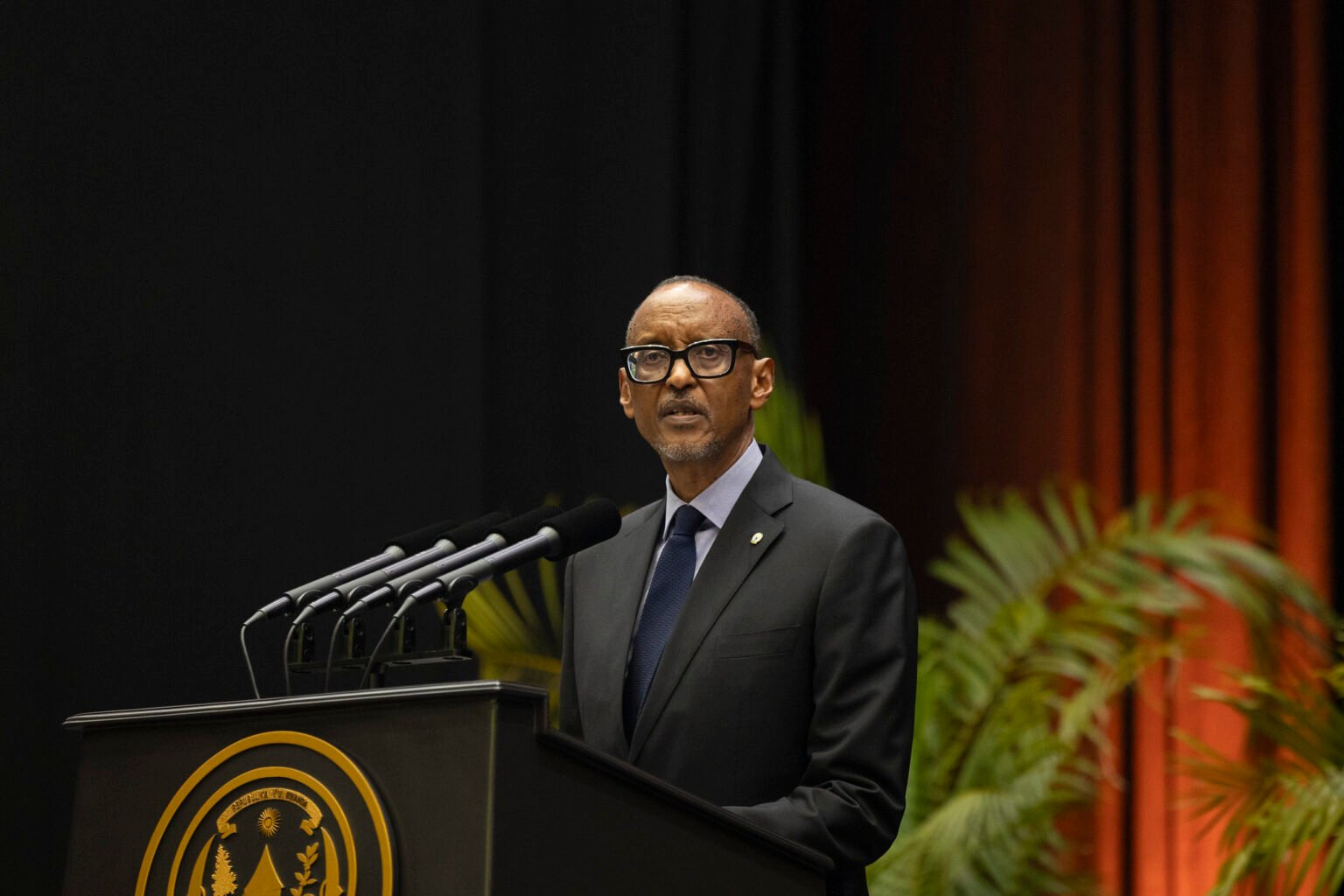
Rwanda has closed more than 15,000 places of worship since 2018, with nearly 8,000 to 10,000 shut in a single two-month inspection sweep in July and August 2024. The Rwanda Governance Board found that approximately 70 percent of the country’s prayer houses failed to meet legal requirements covering building safety, hygiene, pastoral qualifications, and financial transparency. The closures represent one of the most sweeping state interventions in religious affairs anywhere in the world, and they are reshaping a country that is 93.4 percent Christian.
The scale is striking. Rwanda is a small, landlocked nation of roughly 14 million people. Yet by 2024, Kigali alone had more than 700 churches. President Paul Kagame publicly expressed disbelief at that number, noting that the capital had more churches than boreholes or factories. The government’s position, stated repeatedly since 2018, is that the proliferation of unregulated prayer houses created real risks: structural collapses, fire hazards, noise pollution, financial exploitation of congregants, and in some documented cases, security threats.
The legal framework
The foundation of Rwanda’s church regulation is a 2018 law governing faith-based organisations. It required all churches to register with the Rwanda Governance Board, to operate in buildings meeting construction, fire safety, and hygiene codes, to have pastors holding recognised theology degrees, to maintain financial transparency with all donations deposited in registered bank accounts, and to submit annual plans demonstrating alignment with national values. Religious organisations were given a five-year grace period to comply, which expired in September 2023.
When the RGB conducted its mass inspection of more than 14,000 prayer houses in July and August 2024, it found widespread non-compliance. Buildings lacked fire exits. Many had no functioning sanitation. Congregations gathered in structures that posed direct physical risk to worshippers. Pastors operated without any formal theological training. Financial records either did not exist or were not disclosed. The RGB closed 70 percent of inspected sites. In March 2025, the law was revised with additional requirements, including an outright prohibition on open-air crusades and door-to-door evangelism.
The historical context
Rwanda’s relationship with religion and power is inseparable from its history. The 1994 genocide against the Tutsi, in which more than 800,000 people were killed in approximately 100 days, involved documented instances of church complicity. Some clergy were convicted by Rwandan courts and the International Criminal Tribunal for Rwanda for their roles in the killings. Churches that were centres of refuge became sites of mass murder. The Catholic Church, which counted roughly 40 percent of Rwanda’s population among its members, issued a formal apology in 2016 for the institution’s failure during the genocide.
After 1994, Pentecostal and independent churches multiplied rapidly across the country. Some provided genuine community healing. Others, according to Rwandan political analyst Ismael Buchanan at the National University of Rwanda, functioned as recruitment vessels for the Democratic Forces for the Liberation of Rwanda, a rebel group linked to perpetrators of the genocide. The government documented cases in which church structures were used for political mobilisation against the state. This security dimension, while not the primary justification for the 2018 law, forms part of the policy’s background.
The proliferation of churches also has a documented economic dimension that predates the closures. President Kagame publicly accused some pastors of operating what he called "dens of bandits," extracting money from poor Rwandans through prosperity theology, mandatory tithing, and coercive giving practices. He proposed taxing church income directly. These are not fringe claims. The World Evangelical Alliance, in its July 2025 submission to the United Nations Universal Periodic Review, acknowledged that exploitation of congregants existed, even as it criticised Rwanda’s regulatory approach as disproportionate.
Who was affected and how
The closures did not fall evenly. Rwanda’s historic denominations, including the Catholic Church, the Anglican Church, and the Protestant Council, were largely compliant. Anglican Archbishop Laurent Mbanda of Rwanda stated publicly that the government had given churches five years of reminders and that the time to comply had been sufficient. It was smaller, independent Pentecostal congregations that bore the overwhelming weight of the closures. These churches, often operating in informal or rural settings, lacked the institutional infrastructure to meet the new standards. Theology degrees for rural pastors were practically inaccessible. Sound-proofing systems in remote mountain communities were economically untenable.
Grace Room Ministries, led by Pastor Julienne Kabanda and known for filling Kigali’s 10,000-seat BK Arena, was closed in May 2025. The stated reason was that the ministry was engaging in activities inconsistent with its registered mission as an interdenominational ministry. Six pastors were arrested for publicly opposing the shutdown of churches. Some pastors relocated to Uganda and Tanzania. Congregants whose churches were shuttered reported travelling significantly longer distances to worship, at considerable personal cost.
The economic and social role of churches
Independent research confirms that churches in Rwanda performed functions that the state has not fully replaced. A 2024 academic review confirmed that churches and faith-based institutions fill critical gaps in Rwanda’s mental health infrastructure, providing trauma care and community support that is culturally accessible in ways formal state services often are not. More than 64,000 Rwandans participated in Mvura Nkuvure, a church-led community sociotherapy programme connecting genocide survivors and perpetrators in structured reconciliation processes. Participants described the process as restoring trust and shared dignity between former enemies.
A 2021 clinical study by psychologists Stephanie Kasen and Vincent Sezibera found that women genocide survivors who maintained childhood religious affiliations showed lower rates of serious suicide ideation than those who did not. The closure of thousands of these faith communities removed that anchor for a significant number of Rwandans still living with the long-term effects of the genocide. Beyond the psychological dimension, churches provided job training, orphan care, small loans, and community counselling. Those functions do not automatically transfer elsewhere when a building closes.
The human rights dimension
The World Evangelical Alliance submitted a formal report to the UN in July 2025 stating that Rwanda’s religious regulations do not meet international human rights standards and that the 2018 law and its 2025 amendment contravene Rwanda’s constitution, the Universal Declaration of Human Rights, the International Covenant on Civil and Political Rights, and the African Charter on Human and Peoples’ Rights. Open Doors, an international Christian monitoring organisation, recorded Rwanda’s persecution score rising from 42 points in 2021 to 58 points in 2025, placing it 64th globally on its World Watch List.
The WEA noted that the law’s requirement for 1,000 community signatures to support a rural congregation effectively treated churches as political parties. Some regulations, such as soundproofing requirements for churches in remote highland areas where noise affects no one, were described by affected pastors as impossible to justify on practical grounds. The WEA also noted that the 2025 ban on home worship gatherings created conditions where Christians meeting privately faced risk of arrest. A woman whose Pentecostal church was closed told the WEA that her congregation was compelled to hold services in secret.
The RGB, in its public communications, maintained that the closures were about protection, not suppression. The board noted that it actively encouraged closed churches to comply and reopen, and that umbrella organisations had a role to play in self-regulation. Religious freedom advocacy group 21Wilberforce, while acknowledging the legitimate public interest in safety and accountability, called the educational requirements for pastors disproportionate to the objectives being pursued.
What the policy achieves
Set against those costs, the case for Rwanda’s regulatory approach rests on several documented realities. Unregulated church buildings did collapse. Financial exploitation of congregants by unaccountable pastors was documented, not alleged. Rwanda’s post-genocide national reconstruction required institutional coherence and a degree of state authority over organisations capable of mass mobilisation. Countries with weak regulatory frameworks for religious organisations have seen those structures used for money laundering, fraud, and in some cases political violence. Rwanda experienced that reality in the most extreme form in 1994.
The government’s insistence on theological qualifications for pastors addresses a genuine problem: unqualified religious leaders operating without any accountability structure and making medical, psychological, and financial claims to vulnerable people. Rwanda’s own data shows the scale of pastoral proliferation that made this intervention feel necessary to the state. The country’s infrastructure priorities, articulated directly by Kagame, favour hospitals, schools, and factories over churches. That is a policy choice, but it is grounded in a specific development philosophy that has delivered Rwanda some of the fastest poverty reduction rates in Africa over the past two decades.
The facts in full
Rwanda is a 93.4 percent Christian country that has closed more than 15,000 of its own churches. The immediate causes were real: unsafe buildings, unqualified clergy, financial exploitation, and in some cases documented security risks. The historical causes run through the genocide, the proliferation of unaccountable churches in its aftermath, and a governing philosophy that tolerates no institution operating outside state oversight. The costs are real too: trauma networks dismantled, communities fractured, congregants driven underground, and international human rights bodies documenting violations of standards Rwanda is legally bound to uphold. The Anglican Archbishop of Rwanda says five years was enough time to comply. Rural Pentecostal pastors say the requirements were written for Kigali, not the highlands. Both statements are supported by the evidence.
Bigger Picture: Rwanda’s church closures are not an isolated event. They are a case study in the friction between state authority and civil society in post-conflict states. Governments that emerged from catastrophic institutional failure, including the failure of religious institutions, often build regulatory regimes that prioritise order and accountability over the freedoms that allowed chaos to take root. Rwanda’s GDP per capita has grown more than sixfold since 1994. Its infrastructure is among the best in East Africa. Its churches are among the most regulated in the world. Whether the cost of that order, measured in closed doors, driven-out pastors, and secret gatherings, is proportionate to the gains is a question Rwanda’s citizens and its international partners are still answering.
Source: Rwanda Governance Board / Christianity Today / The East African / World Evangelical Alliance / Open Doors