

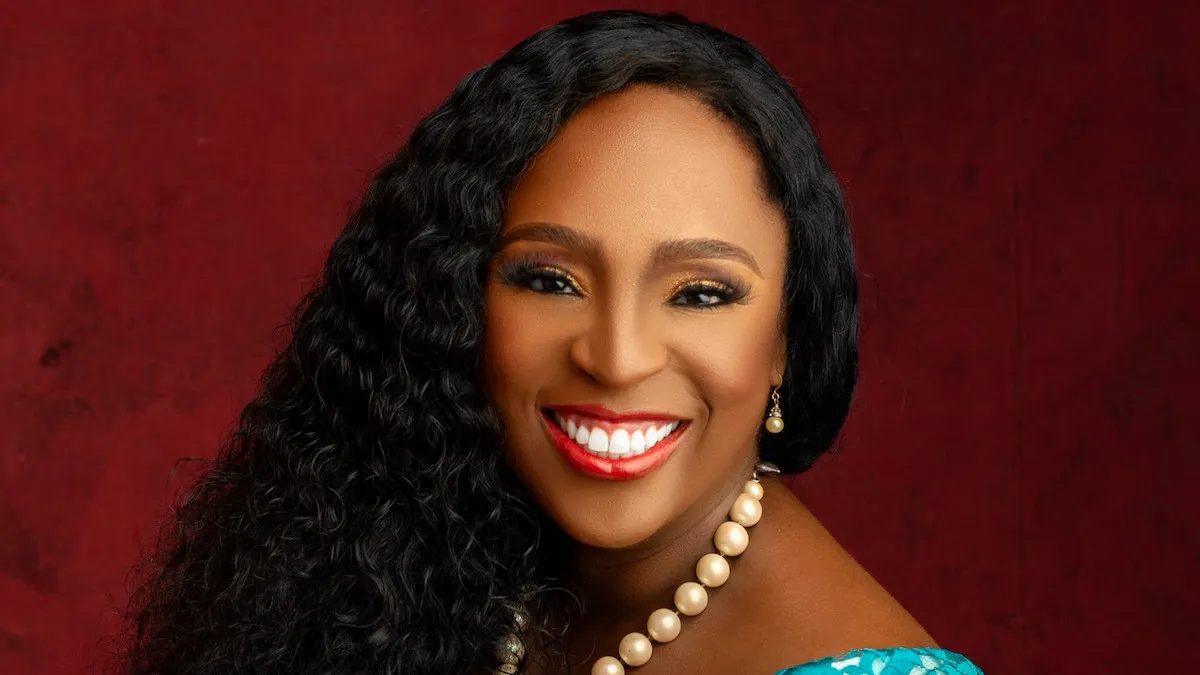
The Next Narrative Africa Fund (NNAF), a $50 million hybrid investment vehicle founded by former U.S. diplomat Akunna Cook, will unveil its first slate of six to ten film and television projects this month, selected from more than 2,000 submissions received from creators across 80 countries. The fund, structured as a $40 million commercial equity vehicle paired with a $10 million nonprofit development studio, is designed to channel institutional capital into African content while ensuring creators retain IP ownership.
- Cook spent her career as a U.S. Foreign Service economic officer focused on Africa, later returning to government under President Biden where she successfully had Africa’s creative industries classified as a national security priority and included in the national security strategy, a first for the sector.
- The $40 million commercial fund invests in projects with international distribution potential, targeting co-productions between Africa and the UK or US. A firm requirement is that at least half of production takes place on the continent. The $10 million nonprofit arm funds early-stage script development and writers’ rooms, feeding projects into the commercial fund once ready.
- NNAF received 2,000 applications during a three-week open call in 2025. The US was the third-largest source of submissions, reflecting the scale of African-American and diaspora talent telling continent-connected stories.
- The fund has assembled a 13-member advisory board spanning production, finance, tech, and talent management. Projects must meet a narrative mandate developed with Africa No Filter and the Geena Davis Institute, requiring applicants to identify impact areas including democracy, climate, health, and class, with no reinforcement of negative stereotypes about Africa or women.
- Cook cites Nollywood’s global diaspora reach via VHS in the 1990s, the Afrobeats trajectory from Lagos clubs to global charts, and Netflix data showing The Black Book reached number one in South Korea and Brazil as evidence that African content already travels well beyond its home markets when well produced and properly distributed.
In 2025, for the first time, demand for non-American, non-Western, non-English-language content exceeded 50 percent of global streaming revenue. Africa, with more than 60 percent of its population under 25 and the largest youth demographic of any continent, is structurally positioned to be the next major source of that demand. Cook’s argument to Hollywood stakeholders is that Africa’s content industry is not a charitable cause but a commercial opportunity with asymmetric upside: studios and streamers that build relationships and infrastructure now, before the market scales, will be better positioned than those who wait for proof of concept to be established by others.
Bigger Picture: The NNAF model addresses a structural problem that has kept African film and TV undersized relative to its audience base: inadequate development funding. Cook notes that Nigeria produces hundreds of projects per year but that going from idea to filming in six weeks is common, limiting script quality and therefore global market potential. The fund’s nonprofit arm directly targets that gap, acting as a development subsidy that de-risks the commercial investment. The IP ownership mandate is equally significant. African creators have historically lost rights when partnering with global studios. By providing capital before the studio negotiation, NNAF gives creators leverage they have rarely had. The fund is also watching the policy environment closely, advising Namibia on building film incentives and production infrastructure under its new president, and engaging policymakers at forums including the Africa CEO Forum. Cook draws a direct parallel to South Korea’s state-supported film ecosystem in the late 1990s, which generated the infrastructure that ultimately produced a global Hallyu wave. The question for Africa is whether institutional capital can substitute for some of what Korean government policy provided, and move fast enough to capture the window before it closes.
Source: The Hollywood Reporter