

The World Bank has committed $350 million to a new Credit Guarantee Vehicle for South Africa, a financing structure hosted by the state-owned Development Bank of Southern Africa that is designed to crowd in $10 billion in private capital over a decade and break the transmission grid bottleneck that has capped the country’s renewable energy ambitions for years. The funding, announced in a March 5 joint statement between the World Bank and South Africa’s National Treasury, comes from the International Bank for Reconstruction and Development and forms a central pillar of Finance Minister Enoch Godongwana‘s infrastructure financing strategy. The CGV is targeting an initial capitalisation of $500 million and is expected to become operational before the end of 2026, subject to licensing by the Prudential Authority.
- The CGV will deploy market-based credit guarantees rather than sovereign guarantees, a structurally significant shift. By replacing the government’s direct balance sheet exposure with a dedicated guarantee vehicle, South Africa’s National Treasury can mobilise institutional capital at scale without adding to sovereign contingent liabilities. Target investors include private funds, commercial lenders and institutional investors who currently find South African infrastructure projects too risky without a guarantee layer.
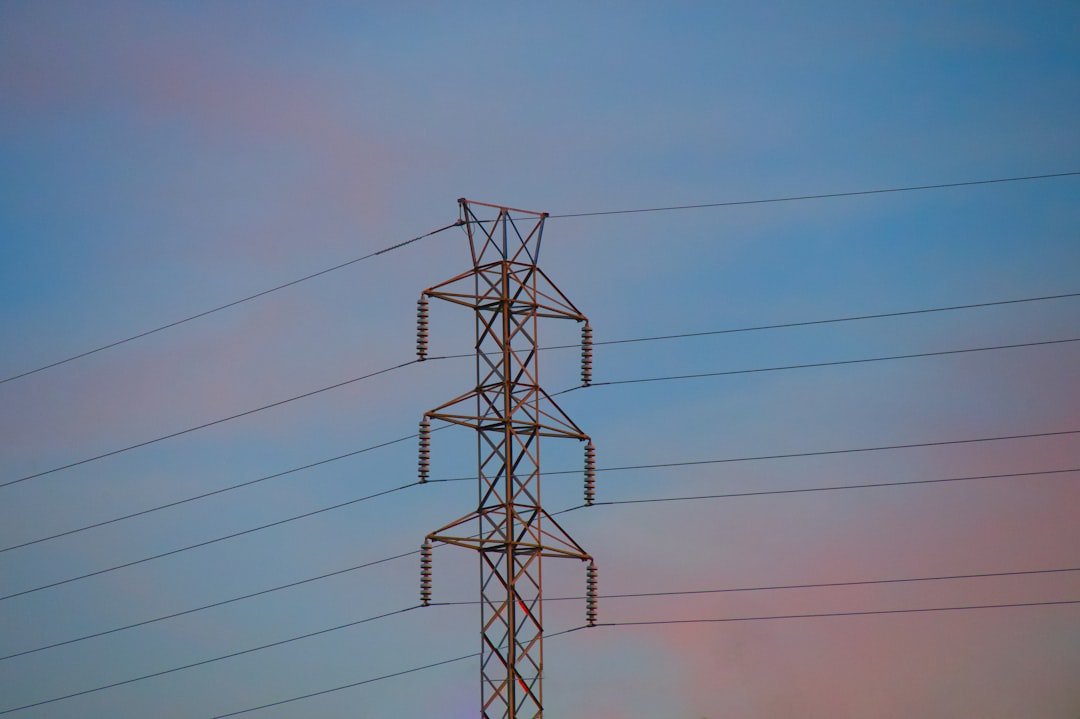
- The immediate priority is Phase I of the Independent Transmission Projects, which will build new high-voltage transmission lines. South Africa’s grid has been a binding constraint on renewable energy deployment: the country has some of the world’s best solar and wind resources but cannot connect new generation capacity at pace because the transmission network is full. The final Request for Proposals for Phase I ITP is expected in 2026.
- The $350 million World Bank commitment builds directly on prior engagement. The Bank approved a $1.5 billion Infrastructure Modernisation Development Policy Loan for South Africa in June 2025, and a separate $1 billion Sustainable and Low-Carbon Energy Transition DPL in September 2023. The CGV is the next logical instrument: where DPLs fund reform, the CGV funds the projects those reforms unlock. South Africa’s first utility-scale battery storage project at Worcester illustrated how co-financed infrastructure can end load shedding at a local level; the CGV is designed to replicate that model at national scale.
- South Africa’s 2026 Budget confirmed public-sector infrastructure spending exceeding R1 trillion over the medium term, with R577.4 billion from state-owned companies and public entities, R217.8 billion from provinces, and R205.7 billion from municipalities. Rail reform targets an increase in network capacity from 25% to 65% by 2027 and the entry of at least four private rail operators. The CGV is designed to sit alongside this broader reform programme, guaranteeing transmission projects in the same way that the reform agenda is opening freight corridors.
The structural logic of the CGV matters as much as its size. South Africa’s fiscal position, with debt near 78% of GDP and debt-servicing costs absorbing around 5% of GDP, leaves little room for large direct government expenditure on infrastructure. The CGV solves this by transferring risk to a vehicle capitalised with multilateral money rather than adding new sovereign debt. Godongwana’s framing is precise: the goal is to attract institutional investors who require a guarantee to participate, while protecting the national balance sheet from direct exposure. The World Bank’s $350 million serves as the anchor that makes the vehicle credible to those investors. If development partners confirm participation and the CGV reaches its $500 million initial capitalisation target, the leverage ratio of roughly 20-to-1 would make it one of the most capital-efficient infrastructure financing tools South Africa has ever deployed.
The Bigger Picture: South Africa’s electricity crisis has cost the economy an estimated R1.4 trillion over the past decade in lost output from load shedding alone. The transmission grid is now the rate-limiting factor: generation capacity is available, from Eskom’s recovering coal fleet, from the renewable energy programme, and from a pipeline of independent power producers, but it cannot all reach consumers because the grid cannot carry it. The CGV directly attacks that constraint by mobilising the private capital needed to build the lines. At $10 billion over ten years, the vehicle would dwarf anything South Africa has previously deployed through a single guarantee instrument. Whether it performs at that scale depends on execution: the Prudential Authority licence, the ITP Request for Proposals, and the pace at which development partners capitalise the vehicle. But the World Bank’s $350 million anchor gives the CGV a credibility that previous South African infrastructure financing vehicles have lacked.