
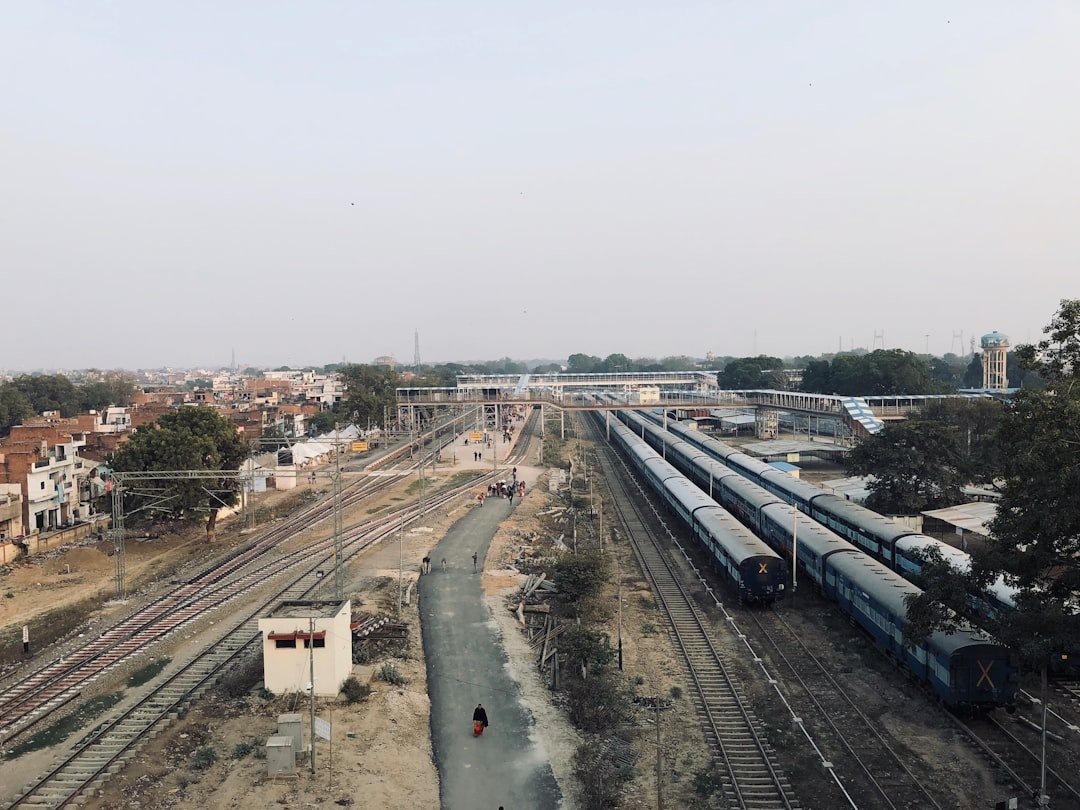
The World Bank has committed $500 million (Sh64.6 billion) to transform Nairobi’s commuter rail network, upgrading the 57km Nairobi Central to Thika corridor into a modern urban rail system in one of the largest single transport investments in Kenya’s history. The project also covers institutional reform of urban transport governance and integrated land use planning around stations. It comes as Kenya navigates a difficult external financing environment, with IMF talks concluding last week without a new lending agreement.
- The financing will fund the upgrade of the 57km Nairobi Central to Thika commuter rail line into a modern urban rail system, with improvements to safety, capacity, and passenger experience.
- The project is part of a broader Kenya Urban Mobility Improvement Project and includes expansion of the Nairobi Commuter Rail network from 35 to 53 stations, with priority upgrades on the Nairobi to Ruiru to Thika line.
- The World Bank will also fund feasibility studies, preliminary design work, and electrification readiness assessments, as well as technical assistance for carbon financing opportunities on the rail network.
- A Kenya Integrated Automated Fare Collection System is part of the package, enabling passengers to pay electronically across rail, buses, and matatus. A stakeholder training workshop was held on February 18, 2026.
- Transport Cabinet Secretary Davis Chirchir said the project targets 100,000 passengers daily. Total project costs are estimated at $1.7 billion, with the World Bank covering $500 million of that figure.
The project is currently at concept review stage, meaning disbursements are not yet flowing. But the commitment is significant in scale and ambition. Nairobi’s road network is among the most congested in sub-Saharan Africa, and the commuter rail corridor connecting the city centre to Thika serves one of the fastest-growing urban corridors on the continent. A modern rail system on that route, with integrated ticketing and electrification readiness, would materially shift the economics of commuting for hundreds of thousands of residents while reducing the city’s dependence on road-based matatu transport.
The Bigger Picture: A $500 million World Bank commitment to Nairobi’s rail network is a signal that multilateral lenders see Kenya’s urban infrastructure as a bankable long-term bet, even as the country’s fiscal position remains under pressure. The total $1.7 billion project cost means Kenya will need to close a $1.2 billion financing gap through a combination of government resources, other development finance institutions, and potentially private capital. The integrated fare collection system and electrification readiness components are the most strategically important elements: they create the technical foundation for a rail network that can scale, attract private operators, and generate its own revenue stream rather than remaining a subsidy-dependent public asset.
Source: Capital FM Business