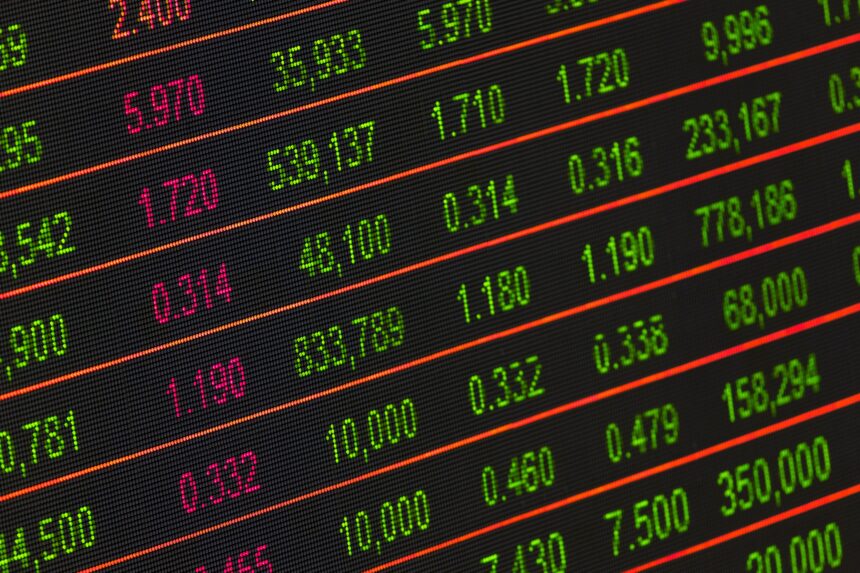

Bank of America has told investors that South Africa’s record 12-month stock market rally has more room to run, pointing to a rare convergence of surging metals prices, a strengthening rand, and improving domestic fundamentals that BofA strategist John Morris says creates a window investors rarely encounter. The JSE All Share Index hit a fresh record high on Monday, up 44% over the past year, even as the Middle East conflict roiling global markets adds fresh energy to the gold prices that underpin the rally.
- The FTSE/JSE Africa All Share Index surged 44% over the past 12 months, with metals and mining stocks leading the advance. The benchmark touched a fresh all-time high on Monday after the US-Israeli strikes on Iran sent gold and silver prices sharply higher, and while the index pulled back as the session progressed, it still outperformed the broader emerging markets gauge on the day
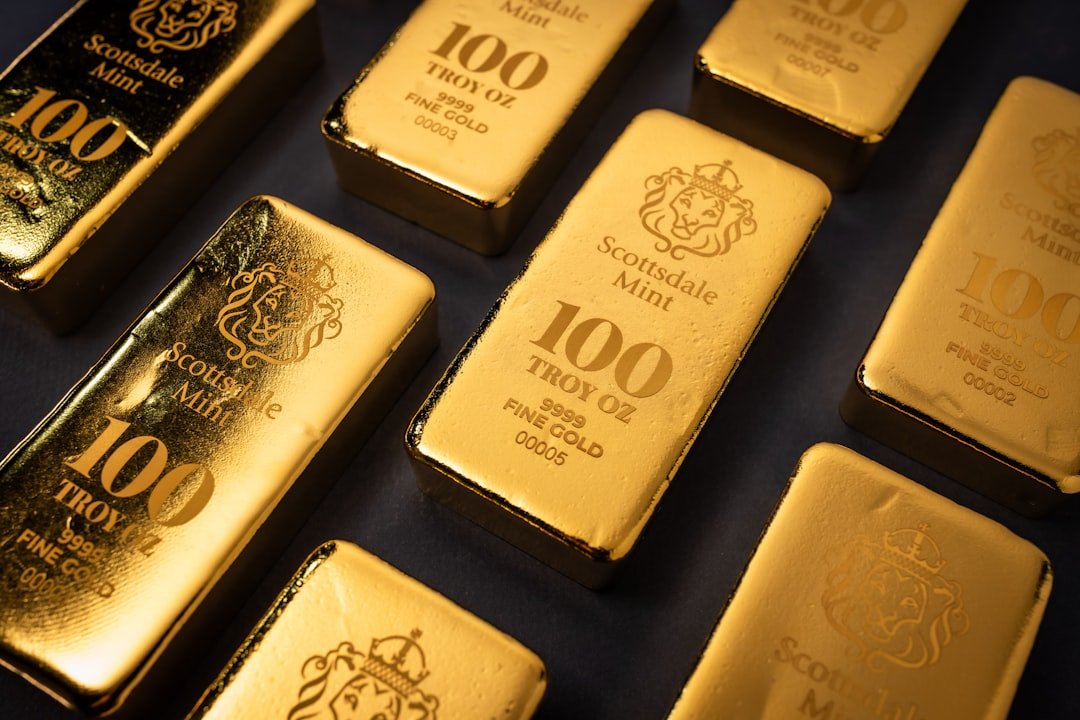
- Gold has risen 86% in the past year, now trading above $5,400 an ounce following the Middle East escalation, while platinum is up 146% over the same period. BofA commodity strategists forecast gold will average $4,500 per ounce across 2026, up significantly from $3,200 in 2025, with platinum averaging around $1,825 per ounce. Higher platinum prices alone contribute an estimated 0.7% of GDP to South Africa’s exports
- BofA South Africa strategist John Morris said the country is in “a sweet spot” driven by a rare alignment of elevated metals prices and expectations of a weaker dollar. “You don’t often see this combination, and we still have runway,” he said. Morris added that the commodity cycle could underpin markets for the next 12 to 15 months and that the geopolitical situation in the Middle East does not change his constructive outlook, noting that precious metals prices remained strong on Monday
- The rand has strengthened approximately 15% against the dollar in the past year and BofA forecasts it ending 2026 at R15.60 per dollar, a significant improvement from R16.65 at the end of 2025. On Monday the rand was trading at R15.96 to the dollar. BofA views the rand as undervalued, arguing that further appreciation would push bond yields lower and support banks and other domestic sectors. Morris flagged that financial and industrial shares could deliver meaningful returns as they catch up to miners
- Higher commodity prices are narrowing South Africa’s current account. BofA forecasts a current account surplus of 0.5% of GDP in 2026 and a balanced current account in 2027, a structural improvement that reinforces the rand’s strength and reduces South Africa’s external financing vulnerability. Investec chief economist Annabel Bishop noted the rand is up 7.7% on a trade-weighted basis year to date, strengthening not just against the dollar but 1.4% against the euro and 5.3% against the British pound
- Sentiment among institutional investors is at multi-decade highs. BofA’s latest fund manager survey on South Africa shows 78% of respondents are bullish on equities and 89% see buying opportunities at levels not seen since 2008. The survey also found improving confidence in the domestic economy, with the rand expected to strengthen further
- Domestic structural reforms are adding a second engine alongside commodity tailwinds. S&P Global upgraded South Africa’s sovereign credit rating in November 2025, citing stronger fiscal performance and improved revenue collection. Operation Vulindlela has made measurable progress on infrastructure constraints, with Transnet stabilised, port traffic improving, and private rail operators expected from 2026 to 2027. The South African Reserve Bank lowered its inflation target to 3%, anchoring expectations and creating space for three further rate cuts in 2026
- BofA draws a parallel to the 2002 to 2003 rand rally, when a commodity-driven recovery lifted the currency sharply after years of underperformance. Chief Economist for Sub-Saharan Africa Tatonga Rusike said South Africa is “in a good space” and the bank forecasts USDZAR at 16.50 by end-2026, with potential to reach 13.75 if the current gap between the rand and its historical peers closes halfway
The significance of BofA’s call is that it comes from a bank with full visibility into global fund flows, and its fund manager survey data showing 89% of respondents seeing buying opportunities is the kind of sentiment reading that historically precedes sustained institutional inflows rather than retail-driven spikes. The alignment of factors Morris describes is genuinely unusual: most commodity-driven rallies in South Africa have been offset by domestic political risk, currency volatility, or infrastructure dysfunction. The current environment sees all three of those traditional headwinds reduced simultaneously. Load-shedding has eased materially, the Government of National Unity has stabilised the political environment, port and rail throughput is recovering, and inflation is low enough for the Reserve Bank to keep cutting. The risk to this picture is the same one that ended every previous South African sweet spot: a commodity price reversal. Morris himself notes that falling commodity prices remain the primary risk, though it is not his base case. A sustained period of Middle East-driven oil above $100 could eventually dampen global growth enough to pull metals prices lower, turning the current tailwind into a headwind. For now, the numbers are moving in South Africa’s favour and BofA is telling its clients to stay long.
The oil price surge driving gold higher is not an isolated event. Africa holds 125 billion barrels of oil reserves yet still pays world prices — a structural vulnerability the Iran conflict has brought into sharp relief. For South Africa specifically, rising fuel import costs represent the main risk to the current bullish picture, given the country produces no oil of its own. Separately, South Africa’s debt-to-GDP is forecast to stabilise in 2026, adding a fiscal dimension to the investment case BofA is making.
The Bigger Picture: South Africa is delivering a genuine turnaround story at a moment when global capital is actively seeking alternatives to US assets. The rand’s 15.5% appreciation against the dollar, the JSE’s 44% gain, and a current account moving into surplus together represent a macro picture that would have seemed implausible two years ago when load-shedding was at its worst, Transnet was paralysed, and the country was on the FATF grey list. The commodity windfall from the Middle East crisis is accelerating a recovery that was already underway on structural grounds. BofA’s 12 to 15 month commodity cycle view means investors who act now are not chasing a trade that has already run but positioning for one that, according to the bank’s analysis, still has most of its duration ahead of it. The risk is real: South Africa’s political calendar in 2027 introduces uncertainty, and a Fed that refuses to cut could bring the dollar back. But the base case, backed by BofA’s full research weight, is that the JSE’s record run has more chapters to write.
Sources: Bloomberg | Daily Investor | Business Day