
Egypt is building four nuclear reactors at once, placing it among the world’s most active nuclear constructors at a moment when the United States, France and Canada have none under construction — and when Africa’s entire nuclear future may hinge on whether El Dabaa delivers on time.
- A new global ranking puts Egypt joint third for reactors under construction, alongside Turkey, behind China (37 reactors) and India and Russia (six each)
- The El Dabaa Nuclear Power Plant, located 320 km northwest of Cairo on the Mediterranean coast, will be Africa’s first new nuclear station since South Africa’s Koeberg was built nearly four decades ago
- All four units are Generation III+ VVER-1200 pressurised water reactors supplied by Russia’s Rosatom, each generating 1,200 MW for a combined capacity of 4.8 GW
- Construction of units 1 and 2 began in July and November 2022; unit 3 followed in May 2023 and unit 4 in January 2024
- The reactor pressure vessel for unit 1 was delivered in October 2025 and installed in November, a 41-month manufacturing process in Russia
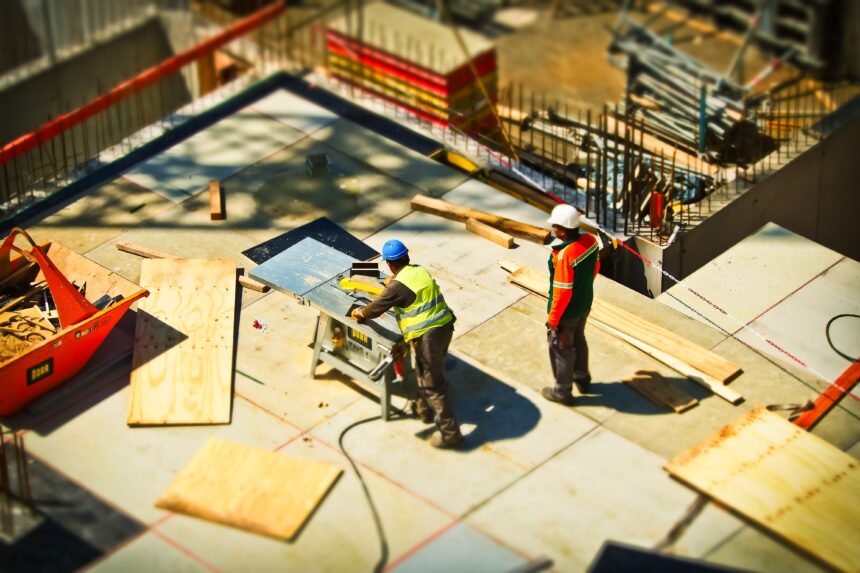
- As of September 2025, 25,000 workers were active on site; the project director expects all four units operational by 2030
- Total project cost is estimated at $28.75 billion, with Russia financing 85% via a $25 billion state loan repayable from 2029 over 22 years
- At full capacity, El Dabaa is projected to supply up to 50% of Egypt’s electricity generation and create up to 50,000 jobs
- Rosatom will supply nuclear fuel for the plant’s entire operational life and support operations and maintenance for the first decade
Egypt’s nuclear ambitions stretch back to 1954, when the country launched its first research programme, and the El Dabaa site itself was first selected in 1983. Plans stalled repeatedly, derailed by the Chernobyl fallout, economic pressure and political turbulence after the 2011 revolution. The current construction push began in earnest only after Egypt and Russia signed binding contracts in November 2015 in the presence of Presidents el-Sisi and Putin, with notices to proceed issued in December 2017. Egypt is betting that nuclear solves a structural problem: annual domestic gas production has been falling since 2021, the country became a net gas importer again in recent years, and renewable capacity alone cannot close the gap fast enough to meet industrial demand from a population of over 100 million growing at more than 1.5 million people per year.
The Bigger Picture: Egypt’s entry into the top tier of nuclear constructors is significant not just for Egypt but for the entire continent. Africa has one operating nuclear power plant — Koeberg in South Africa — and has had only one for forty years. El Dabaa would double that number and, at 4.8 GW, would represent a transformative addition to the regional grid. The geopolitical framing matters too. China and Russia together account for virtually all new reactor construction starts globally in the past five years. Egypt’s project is entirely Russian-designed, Russian-financed and Russian-fuelled, which means the country’s single most strategic energy infrastructure asset will carry a deep dependency on Moscow for its entire operational life. That calculation looked straightforward in 2015; it looks considerably more complex in 2026. What is not in dispute is the scale of what is being built. A country that was importing fuel and rationing electricity two years ago is now running one of the largest nuclear construction sites on earth, with a first unit targeting commercial operation before the decade is out.