
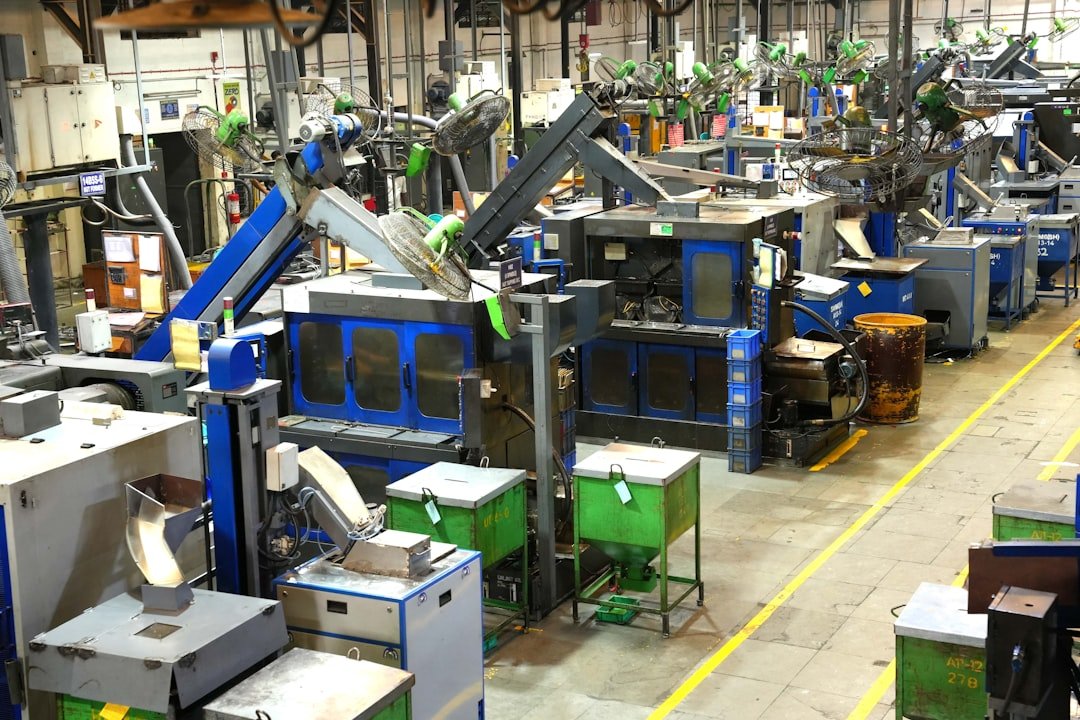
Chinese manufacturing in Africa has moved decisively beyond infrastructure and resource extraction into factories producing vehicles, electronics, textiles, shoes, steel and consumer goods, with Morocco, Ethiopia and Nigeria now leading a continent-wide footprint that spans ten countries and has generated well over 100,000 direct jobs according to a new country-by-country ranking.
Morocco tops the list, anchored by automotive and electronics hubs in Tangier and Kenitra where firms including BAIC Automotive, Hisense and Hengtong have invested between $40 million and $90 million per facility, creating over 18,000 direct jobs and 12,000 indirect roles. Its EU trade agreements make it an export platform as much as a domestic market play. Ethiopia ranks second, built on textiles and footwear concentrated in the Eastern Industrial Zone near Dukem. Huajian Shoes alone invested $70 million to build a facility producing 1.5 million pairs of shoes annually for European and North American markets, and Chinese firms had created over 25,000 direct jobs by 2015 at average wages of around $50 per month, the lowest on the continent. Nigeria ranks third, with automotive assemblers, electronics producers and construction machinery manufacturers concentrated in Lagos, Abuja and Ogun State generating over 20,000 direct jobs and 15,000 indirect roles; its 200 million-person domestic market is the primary draw. South Africa ranks fourth with the most technologically advanced operations, including FAW Automotive, Hisense and Sany Heavy Industry running facilities worth $40 million to over $100 million each in Gauteng and the Eastern Cape, creating over 15,000 direct jobs. Egypt ranks fifth, leveraging the Suez Economic and Trade Cooperation Zone and Mediterranean access to export fiberglass, appliances and electronics from facilities by China Jushi, Haier and Changhong into European markets, generating over 12,000 direct jobs by 2016. Zambia, Kenya, Ghana, Tanzania and Algeria complete the top ten, each offering a combination of industrial parks, tax incentives and regional market access that has attracted between $20 million and $65 million per Chinese facility.
Across all ten markets, over 80 percent of employees in Chinese-operated zones are African nationals, and vocational training in machine operation, quality control and assembly management is a standard part of most investment packages. The analysis notes persistent challenges including energy supply inconsistencies, bureaucratic licensing delays and occasional labour disputes in nearly every country studied, alongside structural concerns about import dependence for key inputs and limited technology transfer above assembly-level roles.
The Bigger Picture China’s manufacturing push into Africa is the most consequential industrial story on the continent and it is still accelerating. The pattern that emerges from this ranking is not random: Chinese firms go where governments have built industrial parks, offered tax clarity and provided logistics access. Morocco, Ethiopia and Egypt have done this deliberately and systematically, and their positions at the top of the ranking reflect that policy investment. Countries further down the list, including Nigeria and South Africa, attract Chinese capital on the strength of market size rather than industrial policy sophistication, which means the jobs created are often in assembly rather than higher-value manufacturing. Africa’s challenge is not to resist Chinese manufacturing but to negotiate terms that deepen local supplier integration, accelerate genuine technology transfer and capture a larger share of the value chain before the window created by China’s own rising labour costs closes.
Source: The African Exponent